South Africa: Ramaphosa defends ANC unity and institutional dialogue amid Mbeki criticism
- Politics
- November 28, 2026

South African president emphasises conflict resolution, collective accountability and party cohesion as the liberation movement confronts mounting electoral pressures.
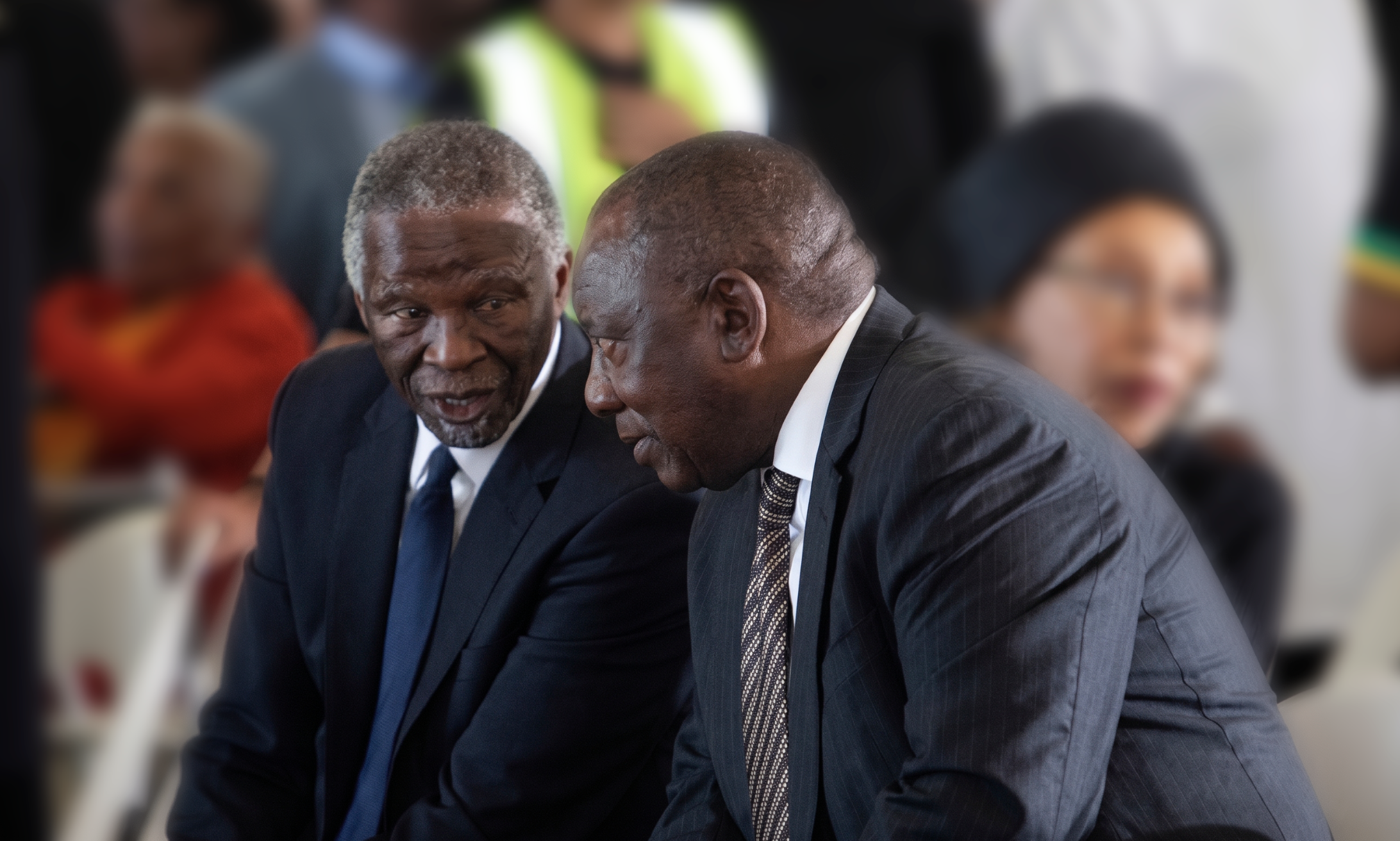
LUANDA — South African President Cyril Ramaphosa advocated an institutional approach to resolving internal divisions within the African National Congress (ANC) on Saturday, November 28, following criticism from former president Thabo Mbeki during the state funeral of former deputy president Phumzile Mlambo-Ngcuka in the Eastern Cape.
Responding to remarks questioning the liberation movement’s electoral trajectory, Ramaphosa acknowledged the significance of his predecessor’s concerns while insisting that such disagreements should be addressed through the party’s established structures rather than prolonging a political confrontation during a state ceremony.
The president’s response underscored an approach to conflict management centred on institutional dialogue, political restraint and organisational cohesion, considerations of growing importance as the ANC navigates electoral setbacks and internal pressures.
Ramaphosa acknowledged the importance of the issues raised by Mbeki and called for a broader examination of the underlying causes of the organisation’s difficulties.
The exchange highlighted contrasting approaches to internal party challenges. While Mbeki publicly confronted the ANC’s electoral decline, Ramaphosa sought to redirect the discussion towards institutional consultation and collective accountability.
Preserving unity without overlooking challenges
The ANC is navigating one of its most challenging periods since coming to power in 1994. Its share of the vote in national elections fell from nearly 70 per cent in 2004 to approximately 40 per cent in 2024.
Against this backdrop, managing internal disagreements, building consensus and maintaining institutional stability have become increasingly important dimensions of Ramaphosa’s leadership.
His response can be interpreted as an exercise in political restraint: acknowledging legitimate criticism, avoiding the personalisation of disagreements and advocating institutional mechanisms through which collective solutions can be developed.
Such an approach does not diminish the importance of political accountability. Rather, it places the structural causes of the ANC’s electoral decline within a broader discussion involving successive generations of its leadership.
The strategic dimension of political leadership
Conflict resolution remains a central component of leadership within an organisation historically characterised by diverse ideological currents, competing interests and internal political sensitivities.
By limiting his response to party-related matters and refocusing attention on Mlambo-Ngcuka’s legacy, Ramaphosa sought to preserve the dignity of the state ceremony while maintaining a distinction between presidential responsibilities and internal party disputes.
Political maturity, in this context, can be reflected both in a leader’s willingness to accommodate criticism and in the choice of institutional mechanisms through which disagreements are resolved.
For Ramaphosa, the challenge lies in reconciling the preservation of ANC unity with organisational renewal, internal democracy and the restoration of public confidence.
The movement’s future will depend not only on its ability to manage historical divisions but also on translating institutional dialogue into tangible progress in economic growth, employment creation, anti-corruption efforts and public service delivery.
The exchange ultimately illustrates the delicate balance between political accountability and organisational stability, two imperatives that will continue to shape the ANC’s evolution within South Africa’s increasingly competitive political landscape.