New Research Reveals Why Mars is Covered in Red Dust
- Science & TechWorld
- March 13, 2025
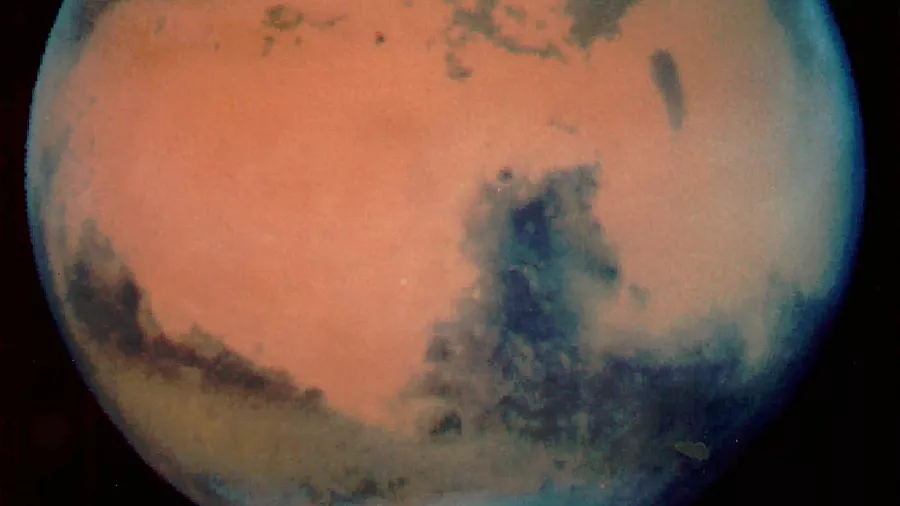

Lagos, Nigeria – For decades, spacecraft have explored Mars, uncovering evidence of ancient lakes and rivers that suggest the planet once had liquid water. Now, new research is shedding light on another mystery—why Mars is covered in its signature red dust.

AfricaHeadline Reports Team
editorial@dw-demosnewstaion.online
A study published in Nature Communications confirms that this red hue comes from iron oxides, or rust, which formed in the presence of liquid water, reinforcing theories that Mars once had a much wetter environment.
Colin Wilson, a scientist with the European Space Agency’s ExoMars and Mars Express missions, highlights that while Mars’ atmosphere is extremely dry, its rust contains more water than previously believed.
“The atmosphere of Mars has only a few hundredths of a percent water vapor, so we expected the rust to be extremely dry. But this research, based on data from European and American orbiters and landers, shows that the kind of rust found on Mars is much more similar to what we see on Earth—it contains significant water content,” Wilson said.
The study, led by Adomas Valantinas of Brown University, challenges previous assumptions about how Mars acquired its red color. While confirming earlier findings of liquid water, it reveals that the rusting process required some form of oxygen, possibly from water, the atmosphere, or other sources.
“Our study changes our understanding of why and how Mars rusted. We now know that rust formed when liquid water was present, and some oxygen played a role in the process,” Valantinas explained.
Unlike Earth, where rain cleanses dust from the surface, Mars lacks precipitation, leaving its iron-rich dust undisturbed. Winds continue to spread the rusted particles across the planet, creating its distinct red landscape.
“On Earth, Saharan dust sometimes reaches Europe, covering everything—but rain eventually washes it away. On Mars, there’s no such process. The dust remains, shaped only by the winds,” Valantinas added.