Namibia leads education spending as Africa seeks job-ready graduates
- NamibiaScience & Tech
- September 27, 2026
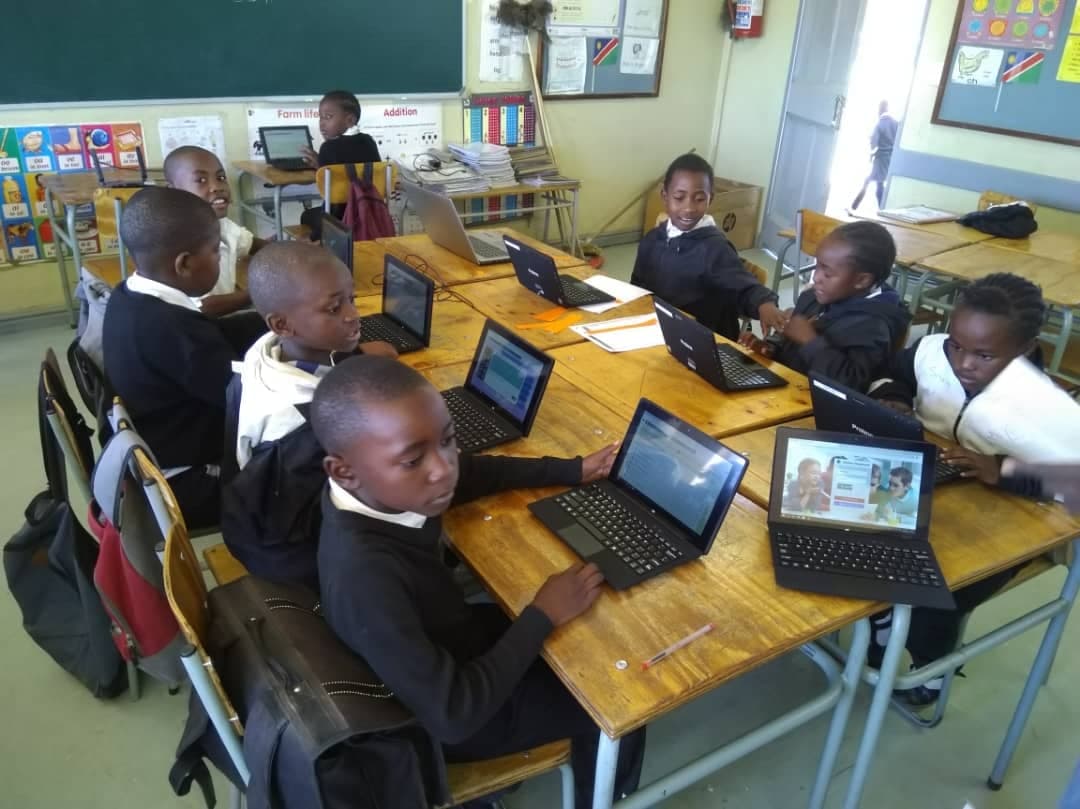

Namibia, Algeria and Botswana allocate some of the continent’s largest shares of economic output to public education, while Kenya’s 2025/26 budget puts education among its biggest spending priorities. The figures show fiscal commitment, but do not establish which country spent the most on workforce training in 2025, or which got the best results.
MAPUTO – African governments are increasing or protecting education allocations as demand for schooling and skilled workers grows. Yet a clean ranking of 2025 spending is not possible: comparable, final expenditure data are incomplete, and national budgets do not all use the same fiscal year or definition of education.
The available figures point to two different leaders, depending on the measure, UNESCO data compiled by Our World in Data put public education spending at 9.1% of GDP in Namibia, 9% in Algeria and 8.1% in Botswana.
Mauritania is listed at 7.6%, Tunisia at 6.7% and Senegal at 6.2%, these figures describe spending relative to the size of each economy. Where a 2025 observation is unavailable, the series uses the closest available year from 2015 to 2024, so the figures are not a uniform snapshot of actual 2025 expenditure.
Namibia’s 2025/26 national budget offers a more direct, though still budget-based, example: N$24.8bn was allocated to education, equivalent to 23.4% of the total budget and about 8.9% of GDP, according to reporting by The Namibian, these are planned allocations, not audited expenditure.
Kenya’s allocation depends on the denominator
Kenya’s 2025/26 estimates earmarked KSh702.7bn for education from a headline national budget of KSh4.239tn. Dividing those figures gives about 16.6%.
Parliament also reported a 28.1% share in a separate analysis of the education allocation. Those percentages use different budget totals or accounting bases; they should not be treated as interchangeable. The clearest comparable statement is that education received the largest sector allocation, at KSh702.7bn.
A separate 2025 cross-country compilation attributed to UIS data lists education at 28.5% of government expenditure in Kenya, 24.6% in Namibia and 20.9% in Senegal. It also places Sierra Leone at 20.5%, Eswatini at 19.2% and South Africa at 19.1%.
Because the years, fiscal periods and reporting methods behind every country observation are not clearly harmonised in the compilation, these figures are indicative, not a definitive 2025 league table.
Spending is not the same as skills investment
Neither the GDP measure nor the budget share shows how much was spent specifically on vocational training, apprenticeships, technical-college equipment or university programmes tied to labour-market demand.
Kenya’s education allocation includes schools, TVET, universities, teacher pay and infrastructure, but the headline total does not reveal the size or impact of each component.
That distinction matters for governments seeking to build a skilled workforce, a high spending ratio can reflect a real commitment to education, but it does not by itself tell us how much a country spends per student, whether pupils are learning, how many technical qualifications are awarded, or whether graduates find work.
The evidence therefore supports a narrower conclusion than a ranking of who “invested most in training cadres” in 2025.
Namibia stands out in the available figures for education spending relative to both GDP and its 2025/26 budget. Kenya made a large sector allocation in its 2025/26 estimates.
Algeria and Botswana rank highly on the GDP measure. The data do not establish which country had the largest actual 2025 outturn for workforce training, or which converted spending into the strongest employment results.