Cyril Ramaphosa: A Father’s steady hand in the service of a Nation
- Opinions
- August 24, 2026

Leadership shaped by prudence, stability and African wisdom in an age of mounting pressure
By Pedro Ivanov
Governing South Africa has never been an ordinary undertaking.
The president must lead one of the continent’s largest, most industrialised and most influential economies while confronting the enduring wounds of apartheid, profound inequality, high unemployment, crime, migration pressures and a continuing dispute over the distribution of land and wealth.
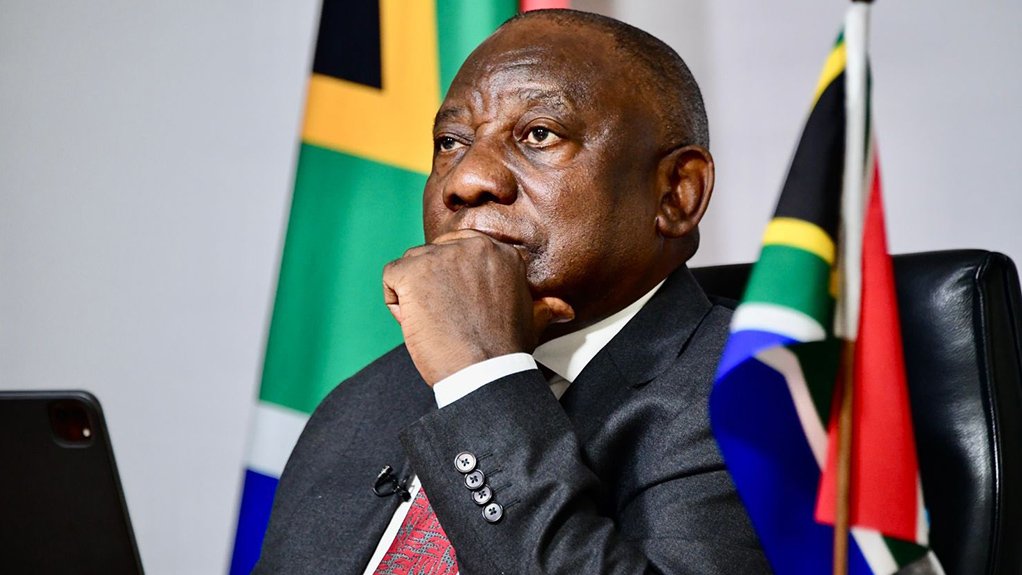
On this difficult terrain, Cyril Ramaphosa has displayed an often-underestimated political quality: composure.
This is not the composure of passivity, nor the silence of a leader who ignores his country’s problems.
It is the calm of someone who understands that a complex nation cannot be governed through impulse, public humiliation or inflammatory rhetoric.
Ramaphosa often leads like an experienced father faced with a divided family: he listens before deciding, seeks to lower the temperature and protects the shared home.
His approach evokes a virtue traditionally associated with African elders, an authority that does not need to shout to command respect.
The clearest demonstration of this quality came after the May 2024 election. For the first time since the end of apartheid, the African National Congress lost its parliamentary majority.
A less prudent leader might have responded with resentment, exclusion or an attempt to retain power at any cost. Ramaphosa chose the more difficult and responsible course: negotiating a Government of National Unity with parties from across the political spectrum.
When announcing the new executive, he said South Africans expected political parties to work together in pursuit of “transformation, growth and renewal”.
The phrase captured his mature reading of the electorate’s verdict. Rather than treating the result as a defeat to be avenged, he interpreted it as an instruction to cooperate.
The agreement among the participating parties placed respect for the Constitution, the rule of law, transparency and good governance at its centre. In a young and polarised democracy, securing a peaceful transition and a functioning multiparty government was itself an achievement in political stability.
This preference for consensus is rooted in Ramaphosa’s own career. As a trade unionist, a negotiator during South Africa’s democratic transition, a businessman and, later, head of state, he learnt that politics is not merely the art of winning.
It is also the art of making coexistence possible after the contest is over. His deliberative pace can be criticised, and frequently is, but in a country where rash decisions can reopen racial, social and political divisions, careful judgement is itself a form of responsibility.
In the economy, presidential composure has been accompanied by concrete reforms. South Africa endured years of power cuts, declining railway performance, congested ports and falling confidence.
Coordinated by the Presidency and the National Treasury, Operation Vulindlela has focused reforms on energy, logistics, water and the visa system.
The International Monetary Fund has acknowledged the importance of reforms under way in electricity and freight transport, while stressing the need for faster implementation.
Ramaphosa’s merit lies in recognising that the chief responsibility of a leader overseeing a major African economy is not to proclaim its greatness, but to create the conditions that sustain it: reliable electricity, efficient ports, legal certainty, responsible public finances, sound infrastructure and trust among government, business and labour.
His administration has identified three sensible priorities: inclusive growth and employment; reducing poverty and the cost of living; and building a capable, ethical and developmental state.
Irregular migration demands the same measured balance. South Africa attracts workers and refugees from across the region, but porous borders, fraudulent documents and pressure on public services fuel insecurity and, at times, xenophobia.
Ramaphosa supported the establishment of the Border Management Authority, formally launched in October 2023, to integrate border enforcement, combat unlawful entry and facilitate the legitimate movement of people and goods. The authority has reported seizures of fraudulent documents, drugs, counterfeit products and stolen vehicle parts.
Here, too, the country needs leadership that is fatherly without being paternalistic, protecting the border without turning foreigners into enemies; enforcing the law without permitting persecution; recognising the contribution of lawful migration while disrupting criminal networks and human trafficking. State firmness must proceed alongside human dignity and cooperation with neighbouring countries.
On the international stage, Ramaphosa has faced disinformation campaigns, diplomatic pressure and narratives depicting South Africa as a country at war with itself along racial lines.
During his May 2025 meeting with Donald Trump, he was publicly confronted with allegations of systematic persecution of white farmers.
Rather than respond with hostility or abandon the discussion, he remained composed, rejected violence and explained that extremist statements by opposition figures did not represent his government’s policy. International reporting focused precisely on the calm with which he handled the tense encounter.
The episode demonstrated how a leader can respond to what may be understood as one dimension of hybrid warfare: economic pressure, diplomatic confrontation, manipulated imagery, online disinformation and the exploitation of internal divisions.
Ramaphosa did not answer propaganda with propaganda. He sought to defend South African sovereignty, preserve trade relations and present the facts without surrendering national dignity.
Months earlier, amid external threats, he had summed up the country’s position in firm terms: “We will not be bullied.”
Ramaphosa’s composure is also evident in his defence of an African and multilateral foreign policy. South Africa is seeking to retain an independent voice in a divided world by maintaining relations with different blocs, advocating reform of international institutions and placing the interests of the Global South on the agenda. That independence can provoke clashes with external powers, but it demonstrates that Pretoria will not accept a return to the role of a mere spectator in world affairs.
A serious assessment, however, should not turn admiration into blindness. The World Bank notes that economic growth remains too weak to bring about a decisive reduction in poverty and unemployment, which remained above 30 per cent in 2025.
Inequality, corruption, crime, failing municipal services and the slow pace of some reforms continue to burden millions of citizens.
This may be Ramaphosa’s greatest test: converting patience into execution, dialogue into jobs and political stability into shared prosperity.
Consensus cannot become an excuse for postponing decisions, just as prudence cannot provide shelter for bureaucracy. A responsible father does not merely calm the family; he also secures its food, safety, education and future.
Despite these limitations, Cyril Ramaphosa offers the continent a valuable model of leadership. At a time when global politics rewards spectacle, aggression and the easy soundbite, he reminds us that real authority can speak quietly. His strength lies in restraint, negotiation and a refusal to allow each provocation to determine his country’s course.
South Africa has always needed leaders with a vision of stability. Its history means that any act of political irresponsibility can carry profound consequences. Ramaphosa appears to understand that burden. He leads the nation with the caution of a man who knows that power is temporary, but presidential decisions can leave their mark for generations.
His composure should therefore not be mistaken for weakness. It represents a distinctly African form of political wisdom, listening to many voices, protecting unity without erasing differences and responding to provocation without losing self-command.
It is the composure of an elder and the care of a father, not one who decides alone, but one who keeps the family together while guiding it, firmly and hopefully, through the storm.