Angola, 2017–2026: An economy in transition and a country with renewed ambition
- AngolaEconomic Outlook
- August 21, 2026

ECONOMIC ANALYSIS
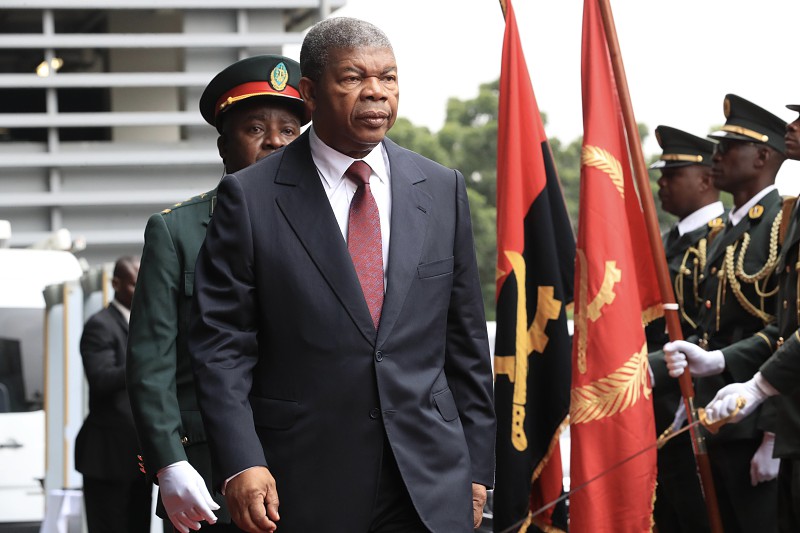
After nearly a decade of reforms under President João Lourenço, Angola has emerged with a more disciplined economy, a more open investment regime and a growth model that is becoming progressively less reliant on oil. Diversification remains a work in progress, but the signs of change are increasingly visible, measurable and difficult to ignore.
LAGOS – When João Lourenço became president in September 2017, Angola was confronting one of its most difficult economic transitions since independence. The oil boom had ended, growth had stalled, public debt was rising, foreign-exchange reserves were under pressure and a heavily managed currency was masking imbalances accumulated over years.
Nine years later, Angola still faces significant challenges. But it is no longer the same economy.
Public debt has fallen sharply from its crisis peak, the exchange-rate regime has become more market-oriented, private investment has gained greater room to operate, non-oil sectors are contributing more to growth and large investments in energy, agriculture, industry and logistics are expanding the country’s productive capacity.
More importantly, Angola is beginning to demonstrate that it can grow even when its oil industry does not.
That may be the most consequential economic shift of the Lourenço era: diversification is gradually moving from political aspiration into the growth numbers.
The transformation can be understood through four broad pillars: stabilisation, diversification, investment and Angola’s international repositioning.
Pillar I: Stabilising the economy to restore growth
The first phase of reform was about restoring macroeconomic room for manoeuvre.
Public debt reached about 136.8 per cent of GDP in 2020, at the height of the combined pandemic, oil-price and currency shocks. By 2024-25, the ratio had fallen to roughly 60 per cent of GDP.
Few indicators better illustrate the scale of the adjustment.
A three-year programme with the International Monetary Fund between 2018 and 2021, exchange-rate reform, tighter fiscal management and the gradual rationalisation of subsidies helped Angola rebuild its macroeconomic position.
Inflation has also improved, though less smoothly. After running at about 32 per cent in 2017, it fell to roughly 13.6 per cent in 2023, before accelerating again as the kwanza weakened and fuel-price reforms fed into transport and other costs. Inflation ended 2025 at about 15.7 per cent and moved back on a downward trajectory in 2026.
The kwanza, meanwhile, has progressively moved away from an artificially supported exchange rate towards one that better reflects market conditions. The adjustment has imposed costs on companies and consumers, particularly in an economy still reliant on imports, but it has also removed distortions that for years undermined competitiveness and transparency in the foreign-exchange market.
The result highlights one of the central trade-offs of Lourenço’s economic record: macroeconomic imbalances have been reduced, but households have borne part of the adjustment through weaker purchasing power.
International rating agencies have recognised the improvement. In November 2025, Fitch reaffirmed Angola’s sovereign rating at B-, with a stable outlook.
The significance goes beyond credit ratings. A less indebted state and a more market-oriented economy provide stronger foundations for productive investment gradually to replace government spending as a driver of growth.
Pillar II: The non-oil economy is becoming a second engine
For decades, talking about Angolan growth largely meant talking about oil.
That relationship is beginning to change.
Real GDP expanded by about 4.4 per cent in 2024, its strongest performance in five years. In the fourth quarter of 2025, growth reached approximately 5.7 per cent year on year, with agriculture, fisheries, construction, trade and services playing an increasingly important role.
The significance is amplified by what has happened in oil.
Angola once produced close to 2mn barrels a day at its historical peak. Output is now around 1mn b/d.
Yet the broader economy has returned to stronger rates of expansion.
That supports one of the more encouraging conclusions about Angola’s economic transition: falling oil production no longer automatically translates into an equivalent contraction in the wider economy.
Oil’s direct share of GDP, historically above half of economic output, has fallen to roughly 30 per cent, depending on prices and the period measured.
Hydrocarbons nevertheless continue to generate about 90-95 per cent of merchandise export earnings.
The contrast captures both the progress already made and the scale of the opportunity ahead.
Angola has made headway in diversifying what it produces. The next frontier is diversifying what it exports.
Agriculture: producing at home what Angola consumes
Agriculture has become one of the principal fronts of this strategy.
For a country with extensive arable land, significant water resources and a young population, expanding agricultural output can simultaneously create jobs, reduce imports, preserve foreign exchange and support a domestic food-processing industry.
Government programmes targeting grains, livestock, coffee, fisheries and other value chains aim to shift Angola from being a large importer of food towards an economy increasingly capable of supplying its own market. The multiplier effect could be considerable.
An additional tonne of maize produced domestically is more than an agricultural statistic. It can supply animal-feed producers, livestock farmers, flour mills, logistics companies, retailers and food processors.
This is how diversification begins to acquire scale: one sector creates demand for another.
Industry: from import substitution to export capacity
Manufacturing is the second major component.
New production facilities in food processing, beverages, construction materials, consumer goods and other segments are expanding domestic supply.
The strategy of competitive import substitution aims to retain within Angola a greater share of the value that previously left the country through purchases of finished goods abroad.
But the longer-term ambition must go further.
Industrial success will ultimately be measured by whether companies operating in Angola can move beyond replacing imports and begin competing across SADC, central Africa and, through the African Continental Free Trade Area, a continental market of more than 1.4bn people.
Angola has a combination of advantages few countries in the region can match: territory, natural resources, hydropower potential, an Atlantic coastline, ports, oil, gas, minerals and access to both central and southern African economies.
Turning those natural advantages into industrial productivity is the next stage of the transition.
Pillar III: Creating more room for private capital
Some of the most consequential reforms since 2017 have taken place in the rules governing investment.
The 2018 Private Investment Law broadly removed the requirement for foreign investors to have a majority Angolan partner and opened a range of sectors to full foreign ownership.
The ProPriv privatisation programme added another dimension.
Privatisations between 2019 and 2022 raised more than €1bn, while the government subsequently moved towards a new phase involving larger state-owned assets.
The intended shift is structural: gradually moving away from a model in which the state, oil and public expenditure dominated capital formation towards one in which domestic and foreign private companies play a larger role.
That should mean more investment, greater competition, more innovation and, crucially, a stronger capacity to create employment outside the public sector.
The next leap: financing those who produce
Angola’s banking system will be critical in determining how quickly this transition proceeds.
For years, buying government securities could be more attractive to banks than financing a small factory, a commercial farm or an export-oriented business.
Diversification requires that equation gradually to change.
Angola needs to turn savings into productive investment, credit into factories and financing into export capacity.
The greater the access of small and medium-sized companies to capital, the greater the potential to convert macroeconomic growth into jobs.
In that sense, the next important measure of Angola’s reform programme may not simply be the public-debt ratio, but how much credit reaches the productive private economy.
Pillar IV: The Lobito Corridor turns geography into economic leverage
Few projects better capture Angola’s new economic ambition than the Lobito Corridor.
The railway and logistics network links the Atlantic port of Lobito to the copper and cobalt-producing regions of the Democratic Republic of Congo and Zambia, bringing some of the world’s most important critical-mineral deposits closer to Atlantic markets.
European commitments associated with the corridor had exceeded €2bn by late 2025, while the US had mobilised more than $1bn in related investment and financing.
But the economic potential extends far beyond the headline sums.
The corridor could create a development axis spanning agriculture, mining, logistics, warehousing, manufacturing, energy and services.
For Angola, Lobito offers the opportunity to add another economic identity to that of oil producer: an Atlantic logistics hub connecting central and southern Africa to global markets.
Energy: turning megawatts into industry
Angola has invested heavily in expanding electricity generation, particularly through large hydropower projects.
The Laúca hydropower plant has become one of the symbols of that expansion and helped elevate Angola among Africa’s significant hydroelectric producers.
The next task is to convert installed capacity into economic activity.
More transmission and distribution infrastructure means more households connected to electricity, but it can also mean factories with lower operating costs, irrigation systems, cold-storage networks, food-processing plants and new industrial opportunities.
The advantage could become strategic.
At a time when industrial investors increasingly value competitively priced, lower-carbon electricity, Angola’s hydropower potential could become a tool for attracting manufacturing investment.
The megawatts built during this decade could become the factories of the next.
A more globally connected Angola
The economic transition has coincided with a significant diplomatic repositioning, in December 2024, Joe Biden became the first sitting US president to visit Angola, placing the Lobito Corridor at the centre of his trip.
The significance extended well beyond presidential symbolism.
Washington increasingly came to view Angola as a relevant partner in infrastructure, critical minerals, regional security and African economic integration. The European Union has also deepened its engagement.
At the same time, Angola has preserved its economic relationship with China, maintained longstanding channels with Russia and expanded engagement with Gulf governments and investors.
Lourenço has not sought to replace Beijing with Washington. He has pursued something potentially more valuable: giving Angola more partners, more sources of capital and greater room to negotiate.
That diplomatic diversification mirrors the economic strategy itself.
The more sources of investment, technology, financing and market access available to Angola, the greater the country’s bargaining power.
Angola as an African diplomatic actor
The repositioning has not been confined to relations with global powers.
Angola expanded its diplomatic role in the Great Lakes region, seeking to mediate tensions between the Democratic Republic of Congo and Rwanda through the Luanda Process.
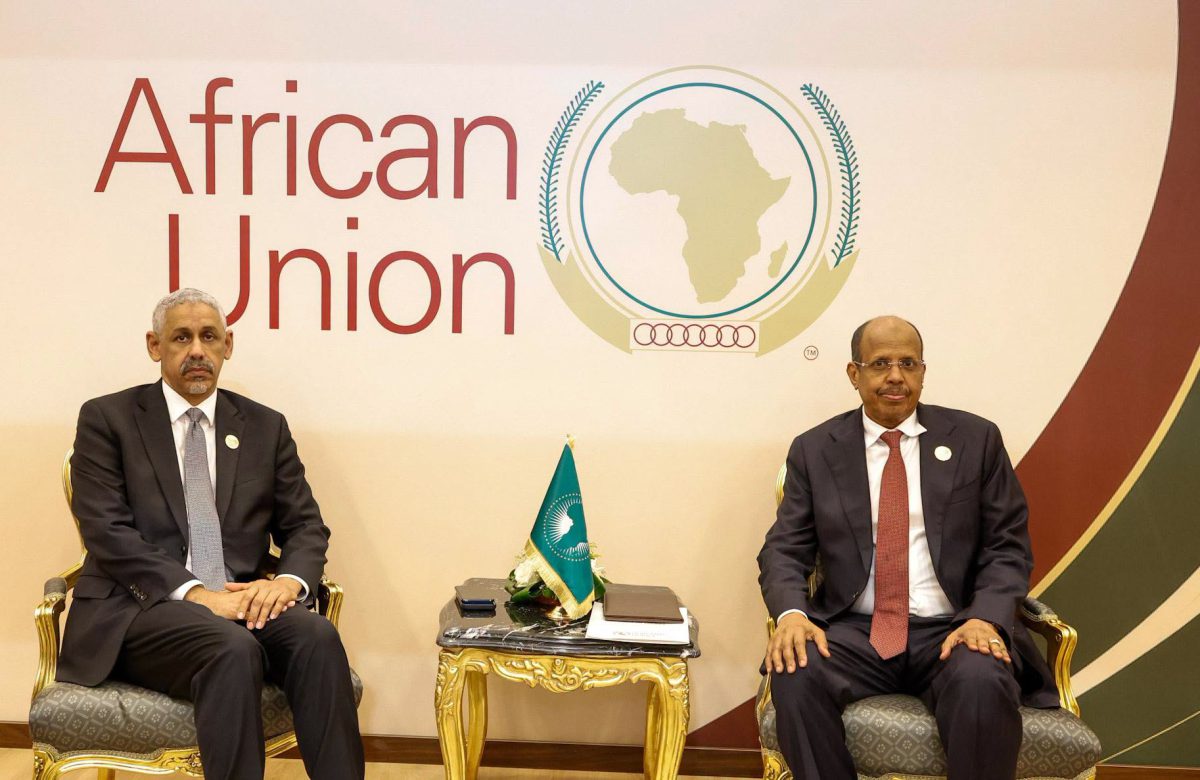
In February 2025, Angola assumed the rotating chairmanship of the African Union, placing Lourenço at the centre of some of the continent’s most important political and security debates.
The decision to leave Opec in December 2023 added another dimension to this policy of strategic autonomy.
The immediate production benefits were limited, but the decision demonstrated Luanda’s willingness to defend what it regarded as its economic interests even when that meant breaking with an organisation it had belonged to for almost two decades.
The principle has become increasingly clear: partnerships, but not automatic dependence.
Angola: then and now
The trajectory becomes clearer when some of the principal indicators are placed side by side.
| Indicator | Starting point/peak | Recent position |
|---|---|---|
| Public debt/GDP | 136.8% in 2020 | About 60% in 2024/25 |
| Inflation | ~32% in 2017 | 15.7% at end-2025,
with a downward trend in 2026 |
| Real GDP growth | Recession/weak growth after 2016 | 4.4% in 2024; 5.7% y/y in Q4 2025 |
| Oil production | Close to 2mn b/d at historical peak | About 1mn b/d |
| Oil share of GDP | Historically above 50% | Roughly 30% |
| Oil exports | Near-total dominance | Still about 90-95%, leaving
substantial room for diversification |
| Fitch rating | Greater sovereign vulnerability | B-, stable outlook, Nov. 2025 |
| European commitments linked to Lobito | Project at an early stage | More than €2bn |
| US mobilisation for Lobito | Limited | More than $1bn |
| Potential commercial reach | Domestic market of roughly 38mn people | Access to an African market
of more than 1.4bn through AfCFTA |
The social dividend is the next frontier
The fact that reform has delivered macroeconomic gains does not mean that all of those gains have yet reached households.
Unemployment remains high. Electricity access needs to expand further. Cumulative inflation and currency depreciation have weakened purchasing power, while transport and food costs continue to weigh on household incomes.
But this also helps define the second generation of reforms.
If the first stage was about stabilising public finances, correcting the exchange rate and rebuilding credibility, the next must convert those achievements into jobs, wages, productivity and household income.
Agriculture needs to feed industry. Electricity needs to power factories. Lobito needs to generate businesses along the corridor. Banks need to finance producers. Foreign investment needs to develop Angolan supply chains.
It is precisely this transition from stability to prosperity that could define the next phase of Angola’s economic transformation.
Stabilisation has created a platform for transformation
The record from 2017 to 2026 should not be judged on the assumption that all of Angola’s problems have been solved, they have not. It should be judged against the starting point and the direction of travel.
Angola moved from a public-debt peak equivalent to 136.8 per cent of GDP to roughly 60 per cent. Growth returned to above 4 per cent. The non-oil economy gained importance. Private investment operates under more open rules. The country expanded its electricity-generating capacity. Lobito became a project of international strategic significance. And Luanda acquired diplomatic relevance extending beyond its traditional role as an oil producer.
Perhaps the most encouraging indicator is this: Angola is growing while producing roughly half as much oil as it did at its historical peak.
That suggests a second economy is gradually taking shape beneath the first.
The test beyond 2026
The question is no longer simply whether Angola can survive with less oil. Recent years have begun to provide an answer. The question now is how much faster it can grow without it.
Angola has land, water, energy, minerals, an extensive Atlantic coastline, ports, railway corridors and a geographic position capable of connecting central Africa to international markets. It also has a young population and an increasingly integrated African market on its doorstep.
Lourenço’s reforms have not completed diversification. They have built a stronger platform from which to accelerate it. That distinction may ultimately define the historical significance of the period that began in 2017.
The Lourenço era may not be remembered as the period in which Angola abandoned oil. It may instead be remembered as the moment when the country began, in measurable terms, to build something more ambitious: an economy capable of turning stability into investment, investment into production, production into exports, and growth into prosperity.