Niger’s path to peace: Navigating internal struggles and regional instability
- NigerPolitics
- October 9, 2024
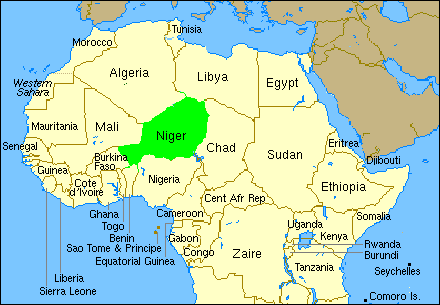

Peace in Niger is a delicate and deeply relevant issue, given the growing political and social instability in the country. Located in one of Africa’s most volatile regions, Niger faces complex challenges that involve not only internal struggles for power and ethnic tensions but also the influence of external conflicts, particularly in the Sahel, where armed groups and jihadist insurgencies are active.
The peace process in Niger cannot be understood in isolation from regional dynamics. Neighboring countries like Mali and Burkina Faso are also grappling with severe security issues, and this instability has a ripple effect on Niger, further weakening its already fragile borders.
This, in turn, facilitates the movement of armed militias and weapons trafficking, complicating efforts by both the government and the international community to stabilize the nation.
Internally, recent political instability, including coups and failed attempts at democratic transitions, has eroded public trust in government institutions. Inefficient governance and endemic corruption continue to fuel extreme poverty and underdevelopment, creating fertile ground for radicalization and recruitment by terrorist groups.

However, there are also reasons for cautious optimism. The majority of Niger’s population longs for stability and development. Regional initiatives, such as the G5 Sahel, aim to foster cooperation among neighboring countries to combat extremism and promote development.
The key to peace in Niger lies in a combination of good governance, social justice, regional integration, and inclusive economic development. Sustainable peace will only be achieved through collective efforts that include internal dialogue among different groups, as well as international support aimed at socioeconomic development.
The pursuit of peace in Niger, therefore, presents a long-term challenge that goes beyond military responses to terrorism. It requires building a strong rule of law, reducing inequalities, and creating opportunities for the youth. With its historical resilience, Niger has the potential to recover, but this will depend on a genuine commitment to reforms and the ability to unite the various social and political forces for a future of peace and stability.