The impact of Akinwumi Adesina on the African development bank
- CEOCEO - Leadership LegendsNigeria
- October 6, 2024
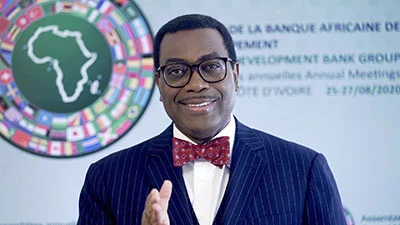

Akinwumi Adesina is a key figure in Africa’s agricultural and economic development. Born on February 6, 1960, in Ibadan, Nigeria, he grew up in a family that placed a strong emphasis on education, shaping his future as one of the continent’s most influential leaders. Adesina earned a degree in Agricultural Economics from Obafemi Awolowo University in Nigeria and later completed a Ph.D. in Agricultural Economics at Purdue University in the United States.
Before taking on high-profile leadership roles, Adesina built a solid career in international organizations. He worked for the Consultative Group on International Agricultural Research (CGIAR) and later served as Vice President for Policy and Partnerships at the Alliance for a Green Revolution in Africa (AGRA). During this period, he advocated for using agriculture as a lever for economic and social development in Africa, promoting innovation and productivity in the sector.
In 2011, Adesina was appointed Minister of Agriculture and Rural Development of Nigeria. His tenure was marked by deep reforms aimed at eliminating corruption and increasing efficiency in the agricultural sector. His most notable project was the e-wallet system, which allowed farmers to receive fertilizer and seed subsidies directly via SMS, cutting out corrupt intermediaries. This initiative revolutionized smallholder farmers’ access to essential inputs, leading to significant increases in agricultural productivity.
Adesina also attracted substantial private investments to Nigeria’s agribusiness sector, positioning agriculture as a critical part of the country’s development agenda. His leadership during this period received widespread acclaim both in Nigeria and internationally.
In 2015, Adesina was elected president of the African Development Bank (AfDB), becoming the first Nigerian to lead the institution. Re-elected in 2020, he continued to focus on the AfDB’s five strategic priorities, known as the “High 5s”:
- Light up and Power Africa;
- Feed Africa;
- Industrialize Africa;
- Integrate Africa;
- Improve the Quality of Life for the People of Africa.
These priorities aim to accelerate sustainable development across the continent, focusing on infrastructure, agriculture, and energy. During the COVID-19 pandemic, Adesina played a crucial role by launching economic and healthcare support packages, helping mitigate the crisis’s impact on African economies.
Adesina’s work has earned him numerous global accolades. In 2017, he was awarded the World Food Prize in recognition of his contributions to food security. In 2020, he was named one of the 100 Most Influential People in the World by TIME magazine, highlighting his role in advancing Africa’s economic development.
Adesina strongly believes that Africa can become self-sufficient through industrialization, financial inclusion, and increased agricultural productivity. He has been a vocal advocate for treating agriculture as a business capable of generating mass employment and transforming economies. Furthermore, Adesina insists on the need for an energy revolution across the continent to expand access to electricity for millions of Africans.
His optimistic vision and commitment to sustainable development have positioned Akinwumi Adesina as one of the most influential voices in modern Africa. Under his leadership, the AfDB remains a key player in transforming Africa into a global economic powerhouse.