DRC puts military elite on trial as eastern conflict tests state stability
- Democratic Republic of the Congo (DRC)
- June 5, 2026
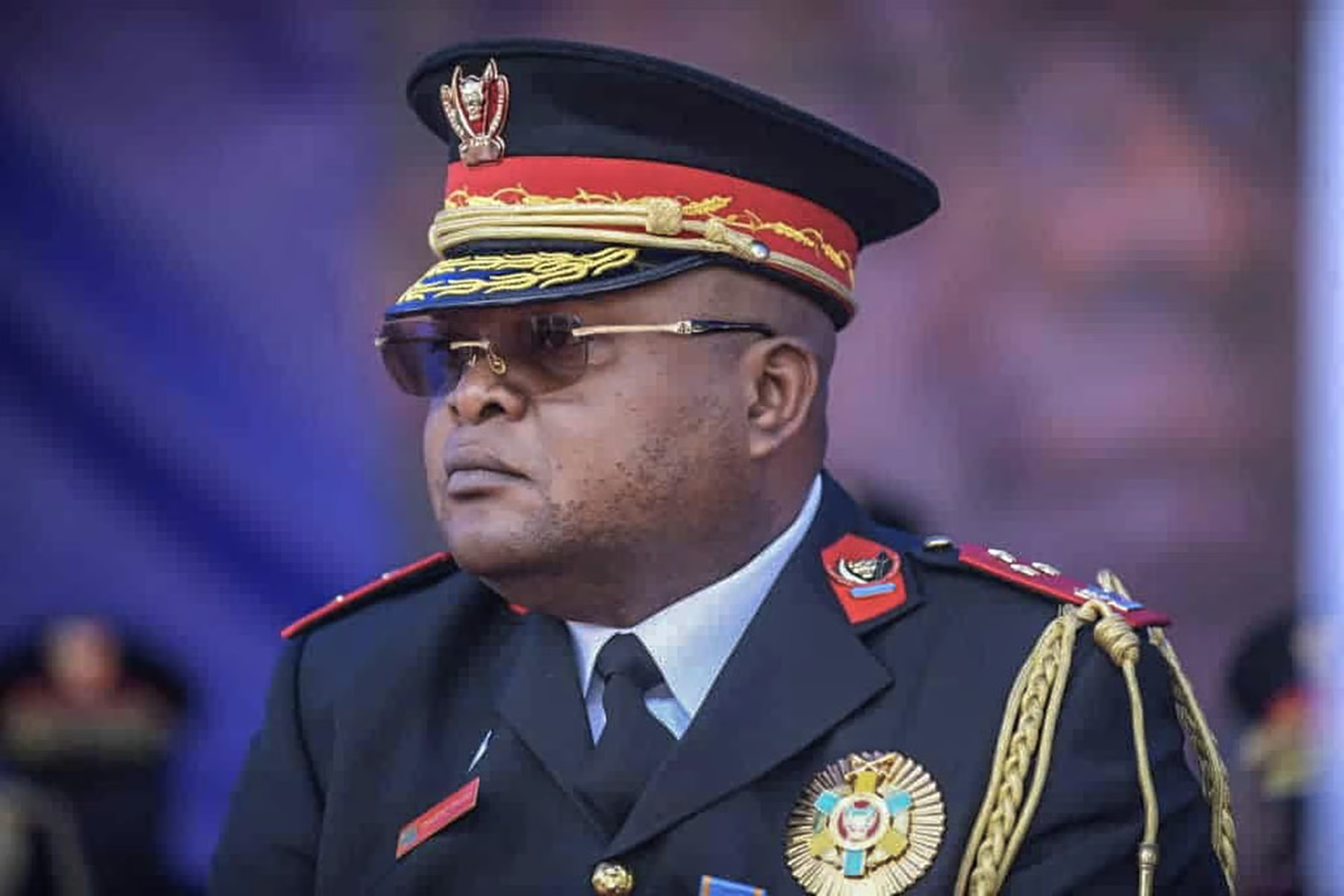

Army General Christian Tshiwewe Songesa, former FARDC Chief of General Staff under President Félix Tshisekedi.
Trial of former army chief and senior officers raises questions about military reform, power dynamics and national security
KINSHASA — The opening of an unprecedented trial against a former Chief of General Staff of the Armed Forces of the Democratic Republic of the Congo (FARDC), a fugitive general, a former aide linked to ex-President Joseph Kabila and eight senior military officers is being viewed as far more than a judicial proceeding. Security analysts say the case has become a test of the Congolese state’s ability to reform its military institutions at a time when the country is confronting one of the most serious security crises in its recent history.
The trial, which opened on June 4 before the High Military Court in Kinshasa, comes as FARDC forces remain engaged in military operations against the M23 rebel movement and other armed groups operating in eastern Democratic Republic of the Congo. The conflict has displaced millions of civilians, intensified regional tensions and increased pressure on the government of Félix Tshisekedi to strengthen military discipline, improve operational effectiveness and restore public confidence in national security institutions.
Beyond determining the legal responsibility of the defendants, the proceedings have triggered a broader question within security and intelligence circles: is the Democratic Republic of the Congo witnessing a genuine effort to strengthen accountability within its armed forces, or a deeper reconfiguration of power inside the military establishment?
Why this trial is different
The Congolese military justice system has prosecuted senior officers before. However, it is rare for a single case to involve a former army chief, a fugitive general, a figure connected to a former presidential administration and multiple high-ranking officers simultaneously.
The scale of the proceedings suggests that authorities are seeking to send a strong signal regarding military discipline and institutional accountability. For many observers, the trial represents an attempt to demonstrate that no individual, regardless of rank or political influence, is beyond the reach of the law.
At the same time, the case could expose long-standing structural weaknesses within the defense establishment, bringing to light networks of influence, command relationships and institutional practices that rarely become public.
What the case reveals about FARDC
From a military intelligence perspective, the most significant aspect of the trial is not only who is being prosecuted but what the proceedings may reveal about the inner workings of FARDC’s command structure.
The Congolese military has undergone repeated phases of restructuring since the end of the country’s major wars. The integration of former rebel groups, logistical constraints, funding challenges and continuous combat operations have created a highly complex operational environment.
Security specialists argue that cases of this magnitude often expose disputes involving resource management, command authority, information flows and operational control. As a result, analysts are paying close attention to what may emerge during testimony and court proceedings.
The shadow of the war in the East
The trial comes as Kinshasa seeks to strengthen its military position against the continued threat posed by the M23 rebellion and other armed groups active in the eastern provinces.
The resurgence of armed conflict has exposed vulnerabilities within FARDC and sparked renewed debate over military leadership, troop readiness and the state’s ability to maintain territorial integrity.
Against this backdrop, any legal action involving former military leaders inevitably carries strategic implications. The court’s decisions could influence perceptions of military cohesion and shape how regional and international partners assess the country’s security capabilities.
Key signals analysts are watching
The presence of a fugitive general remains one of the most sensitive elements of the case. Within intelligence circles, such circumstances are often viewed as indicators of potential support networks, informal protection structures or concerns about the disclosure of sensitive information.
Another key factor is whether the investigation expands beyond the current defendants. The emergence of additional names linked to military logistics, defense finances or intelligence operations could significantly increase the political and strategic importance of the proceedings.
Analysts are also closely monitoring any changes within the military hierarchy. Dismissals, promotions or command reshuffles may provide valuable insight into the trial’s broader impact on the country’s security architecture.
Three scenarios for stability
The first scenario is that the trial strengthens institutional credibility, reinforcing both military discipline and public confidence while allowing security operations to continue without significant disruption.
A second possibility is that the proceedings uncover additional irregularities, leading to broader investigations and a deeper restructuring of military leadership.
The third and most sensitive scenario would involve internal tensions emerging if segments of the military perceive the process as selective or politically motivated. Such a development could affect institutional cohesion at a time when national security challenges remain acute.
Between accountability and reform
Regardless of the final verdicts, the trial has already become one of the most consequential political and military events in the Democratic Republic of the Congo this year.
For Kinshasa, the challenge is to demonstrate that accountability and transparency can be strengthened without undermining military effectiveness. For international observers, the central question is whether these proceedings represent a decisive step toward institutional reform or the beginning of a broader struggle for influence within the Congolese security establishment.
The coming weeks may determine not only the fate of the defendants but also the future direction of military reform in a country where the stability of the armed forces remains one of the most critical factors shaping security across Central Africa.