South Africa’s housing crisis puts DA’s governance model under pressure
- Uncategorized
- November 1, 2026
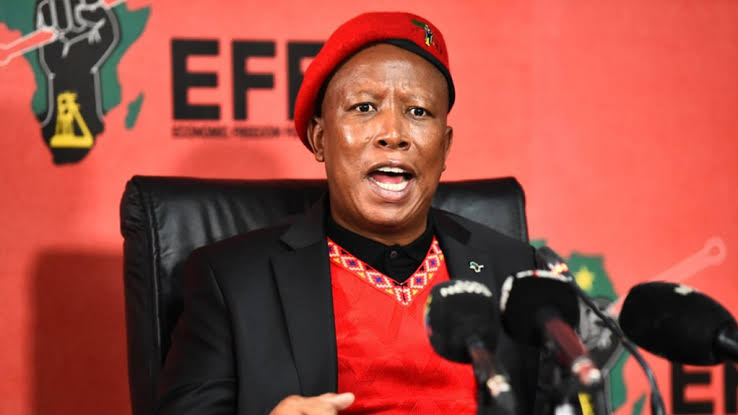

Julius Malema’s accusations against Cape Town expose the tensions between administrative efficiency, social inequality and economic redistribution ahead of municipal elections.
CAPE TOWN — South Africa’s housing crisis has returned to the centre of the political debate after Julius Malema, leader of the Economic Freedom Fighters (EFF), accused the Democratic Alliance (DA), which governs Cape Town, of failing to provide adequate housing, sanitation and basic services to residents of informal settlements.
Speaking at the EFF’s final campaign rally in Soweto on 31 October, Malema questioned the municipality’s governance record, arguing that administrative efficiency cannot be measured without considering living conditions in the country’s most vulnerable communities.
His intervention comes ahead of the 4 November municipal elections, highlighting one of South Africa’s most persistent structural challenges: translating institutional stability and public investment into economic inclusion.
According to municipal figures, more than 270,000 households live in informal settlements across Cape Town. The city estimates that more than 500,000 households will require housing assistance by 2028.
The crisis reflects structural constraints, including high land costs, limited affordable housing and spatial segregation inherited from apartheid.
In July 2026, the Public Protector identified service-delivery failures in Langa Flats and parts of Khayelitsha, including shortcomings in water provision, sanitation and infrastructure maintenance.
However, the municipality has also reported investment. During the 2025/26 financial year, it installed 815 additional water taps and 6,505 toilets across informal settlements, representing an investment of approximately R46 million.
The political dispute reflects three distinct approaches. The DA prioritises fiscal discipline, private investment and public-private partnerships. The EFF advocates stronger state intervention, land redistribution and public housing. The ANC, which has overseen national housing programmes since 1994, continues to face the challenge of reducing housing shortages and persistent spatial inequalities.
Beyond Cape Town, coalition instability in Johannesburg and Tshwane demonstrates that municipal governance challenges extend beyond party politics.
The central electoral question is not simply who can manage cities more efficiently, but who can translate public resources, investment and housing policies into measurable improvements in living conditions.
South Africa’s fundamental challenge remains the same, turning democratic equality into meaningful economic and social inclusion.