Ismaël Lô and “Tajabone”, The song that turned a Senegalese tradition into a symbol of Pan-African cultural identity
- Culture & Arts
- June 7, 2026
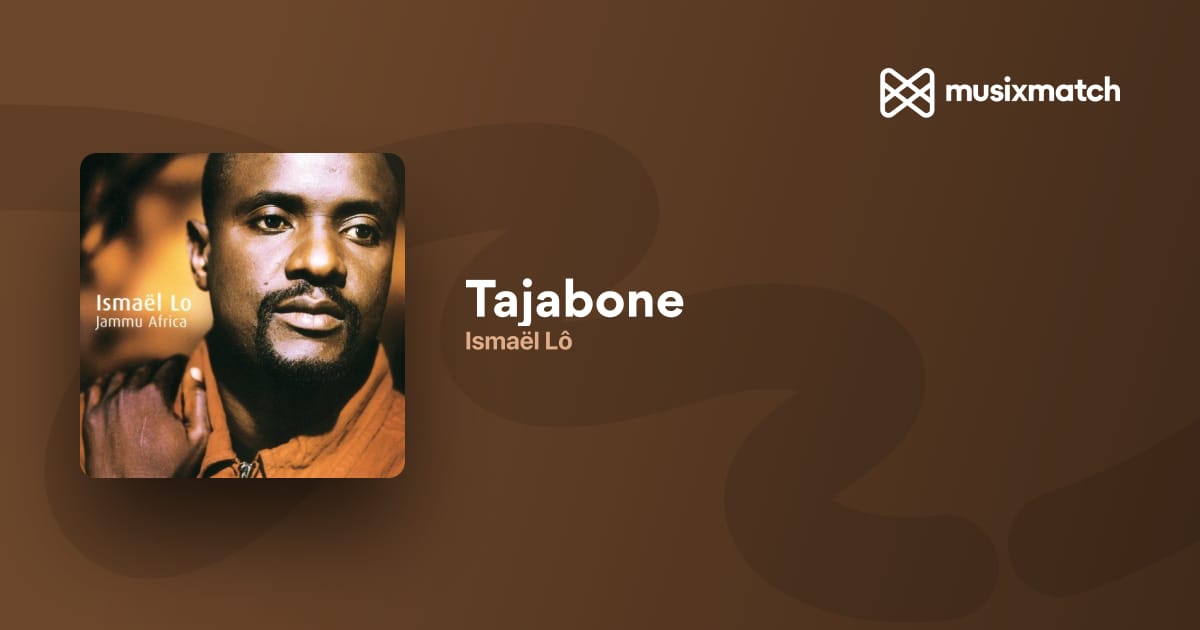

DAKAR — In a continent whose history has been shaped by colonial borders, political struggles and the pursuit of development, culture has remained one of Africa’s most enduring forces of unity. Long before the launch of the African Continental Free Trade Area (AfCFTA), the African Union’s Agenda 2063 or today’s debates on continental integration, African music was already connecting communities, preserving collective memory and passing values from one generation to the next.
Few works embody that legacy as profoundly as “Tajabone”, by Senegalese singer-songwriter Ismaël Lô. Released in the 1990s, the song quickly evolved from a commercial success into one of the defining cultural expressions of contemporary Africa. More than three decades later, it continues to resonate across concert halls, festivals and cultural institutions worldwide, preserving an ancient Senegalese tradition while reaffirming culture as one of the strongest foundations of Pan-Africanism.
The man behind the melody
Born in 1956 in Dogondoutchi, Niger, to a Senegalese father and a Nigerien mother, Ismaël Lô grew up in Rufisque, near Dakar, during a period when newly independent Senegal was forging its national identity. Living at the crossroads of West African cultures profoundly shaped his artistic vision and inspired a body of work rooted in Africa’s social realities and cultural heritage.
Before committing fully to music, Lô studied fine arts, developing the visual sensitivity that would later define the elegance and simplicity of his compositions. As a young man, he built his own guitar and mastered the harmonica, an instrument that would become one of his signature sounds. His years with the legendary Senegalese band Super Diamono, one of the country’s most influential musical groups, established his reputation before he embarked on a solo career distinguished by poetic songwriting, introspection and powerful social commentary.
Over the years, Ismaël Lô earned comparisons to Bob Dylan, not because of musical similarities, but for his ability to use music as a vehicle for reflection, dignity, justice and hope. His lyrics consistently explore universal themes through an unmistakably African lens, making him one of the continent’s most respected singer-songwriters.
Reviving an ancient tradition
“Tajabone” draws inspiration from one of Senegal’s oldest cultural celebrations, observed during Ashura, the tenth day of the Islamic month of Muharram. During the festivities, children dress in colourful costumes, walk through neighbourhoods singing traditional songs and receive small gifts from families in a celebration that reinforces solidarity, community ties and the transmission of cultural values.
Although outsiders sometimes compare Tajabone to Halloween, the resemblance is largely superficial. Within Senegalese society, the celebration represents a living expression of collective memory, social cohesion and cultural continuity, preserving traditions that have united communities for generations regardless of ethnicity or social background.
Rather than merely documenting the celebration, Ismaël Lô transformed it into a broader metaphor for childhood innocence, hope and Africa’s ability to preserve its identity amid rapid political, economic and social change.
Culture as the first language of Pan-Africanism
While discussions of Pan-Africanism often focus on politics, economics and regional institutions, “Tajabone” demonstrates that culture remains one of Africa’s most powerful instruments of integration.
Long before modern treaties and continental organisations emerged, songs, oral traditions, rhythms and shared customs travelled freely across West Africa, creating a common cultural heritage that survived colonial rule and artificial borders. Lô’s work reminds audiences that Africa’s unity has always rested as much on its shared civilisation as on its political aspirations.
That message carries particular significance today, as Africa becomes the world’s youngest continent. With more than 60% of its population under the age of 25, rapid urbanisation and digital transformation present both opportunities and challenges. “Tajabone” argues that sustainable development depends not only on economic growth but also on protecting cultural identity, historical memory and indigenous traditions.
An Ambassador of African music
Alongside artists such as Youssou N’Dour, Baaba Maal, Salif Keïta, Mory Kanté, Manu Dibango and Angélique Kidjo, Ismaël Lô belongs to the generation that introduced African music to global audiences without compromising its authenticity.
While many artists adapted their sound to international markets, Lô remained committed to singing in Wolof, blending traditional African rhythms with acoustic guitar and harmonica. That artistic integrity allowed “Tajabone” to transcend language barriers, finding audiences across Europe, the Americas and Asia while appearing in international film soundtracks and becoming a landmark of world music.
Its international success demonstrated that music’s universal appeal lies not in language but in emotion, storytelling and shared human experience. Through melody and poetry, “Tajabone” became a cultural bridge, proving that African artistic traditions possess a universal relevance capable of inspiring audiences worldwide.
Africa’s cultural capital
As African governments seek to accelerate industrialisation, diversify their economies and strengthen regional integration, the continent’s creative industries are increasingly recognised as strategic drivers of economic growth, employment and international influence. Music, film, literature, fashion and cultural heritage are emerging as powerful components of Africa’s soft power and global competitiveness.
Within that broader context, “Tajabone” transcends its artistic origins. It has become an instrument of cultural diplomacy, historical preservation and continental identity, demonstrating that Africa’s greatest strategic asset extends beyond its natural resources to the richness of its civilisation.
Nearly four decades after its release, the song continues to inspire new generations without losing its relevance. More than a celebration of a Senegalese tradition, Ismaël Lô’s masterpiece has become part of Africa’s shared cultural heritage.
In an increasingly globalised world, “Tajabone” reminds audiences that preserving tradition is not an exercise in nostalgia but an investment in the future. It stands as a timeless testament to the Pan-African ideal: that Africa’s greatest strength lies not only in its economies or institutions, but in the enduring power of its cultures to unite, inspire and shape the continent’s place in the world.