Micron bets $115 billion to reposition the U.S. in the global semiconductor race
- Science & Tech
- June 16, 2026
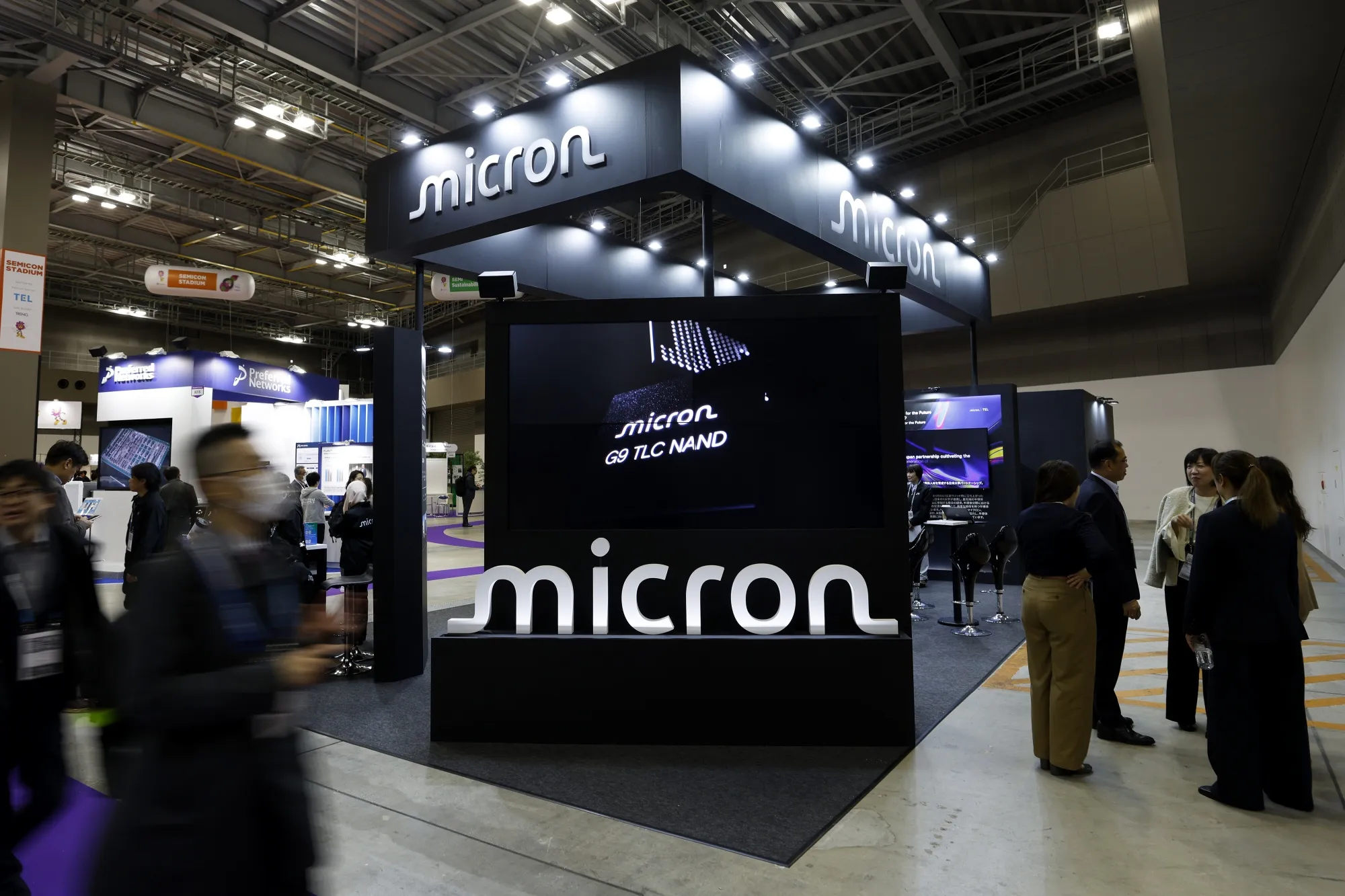

New York — For decades, the global memory-chip industry has been dominated by Asian manufacturers. Today, however, Micron Technology is leading one of the most ambitious efforts to rebuild America’s industrial capacity in a sector increasingly viewed as critical to national security, artificial intelligence, and economic competitiveness.
The semiconductor manufacturer has committed more than $115 billion to expand domestic production, including a new fabrication facility in Boise, Idaho, and a massive manufacturing complex in Syracuse, New York. The project could dramatically reshape the U.S. position in the global memory market, increasing America’s share of memory-chip production from roughly 2% today to as much as 15% over the next two decades.
The investment represents more than a corporate expansion. It reflects Washington’s broader effort to reduce reliance on Asian supply chains and restore advanced manufacturing capabilities that gradually migrated overseas over the past several decades.
In the process, Micron has become a central player in one of the defining economic and geopolitical stories of the 21st century: the global competition for technological leadership.
The memory behind the AI revolution
Artificial intelligence has emerged as the primary driver behind Micron’s expansion strategy.
While advanced processors and graphics chips often dominate headlines, industry experts argue that memory technologies are equally essential to the AI ecosystem. Every large language model, cloud computing platform, and AI training system depends on vast amounts of high-performance memory to move, store, and process data efficiently.
Micron specializes in two critical categories of memory chips: DRAM (Dynamic Random Access Memory), which temporarily stores active data used by processors, and NAND Flash, which provides long-term storage for smartphones, solid-state drives, cloud infrastructure, and enterprise systems.
The rapid rise of generative AI platforms such as ChatGPT, Gemini, Claude, and other advanced models has created unprecedented demand for memory solutions. Modern AI systems process trillions of data points and require significantly greater memory capacity than traditional computing applications.
Particularly important is the growing market for High Bandwidth Memory (HBM), a specialized technology that enables AI accelerators to handle enormous volumes of information at high speed. Industry analysts expect demand for HBM to remain one of the fastest-growing segments of the semiconductor market throughout the decade.
Global investment in AI infrastructure is projected to exceed $1 trillion by the early 2030s, creating a potentially long-term growth opportunity for companies positioned at the center of the memory supply chain.
America’s attempt to rebuild a strategic industry
Micron’s expansion is unfolding against the backdrop of a dramatic shift in U.S. industrial policy.
For much of the past three decades, semiconductor production increasingly moved to Asia, where lower costs, government incentives, and established supply-chain ecosystems attracted investment. Today, countries such as South Korea, Taiwan, Japan, and China play dominant roles in semiconductor manufacturing.
The United States, despite maintaining leadership in chip design and research, has seen its manufacturing share decline substantially.
In response, lawmakers passed the CHIPS and Science Act in 2022, allocating approximately $52.7 billion to strengthen domestic semiconductor production, research, and workforce development.
The legislation was driven by lessons learned during the COVID-19 pandemic, when chip shortages disrupted industries ranging from automotive manufacturing to consumer electronics and medical equipment.
For policymakers, semiconductors are no longer viewed solely as commercial products. They are increasingly considered strategic assets with implications for economic resilience, military readiness, and technological sovereignty.
“This is no longer just an economic issue,” industry observers note. “It’s a national security issue.”
The U.S.-China technology conflict
Few industries illustrate the growing rivalry between the United States and China more clearly than semiconductors.
Over the past several years, Washington has expanded export controls restricting China’s access to advanced semiconductor technologies, manufacturing equipment, and AI-related hardware. U.S. officials argue that such measures are necessary to protect national security interests and maintain a technological edge in critical sectors.
China, meanwhile, has accelerated efforts to develop a self-sufficient semiconductor ecosystem, investing hundreds of billions of dollars in domestic chip production and research.
Micron finds itself directly affected by this geopolitical confrontation.
China accounts for roughly one-quarter of the company’s revenue, making it one of Micron’s most important markets. However, regulatory restrictions imposed by Chinese authorities on certain Micron products have raised concerns about future access to the world’s second-largest economy.
The situation highlights a growing challenge facing multinational technology companies: operating across two increasingly divergent economic and regulatory systems.
Analysts warn that continued fragmentation of global technology markets could increase production costs, reduce supply-chain efficiency, and create long-term uncertainty for companies with significant exposure to both countries.
Intellectual property as a strategic asset
At the heart of Micron’s competitive advantage lies its intellectual property portfolio.
The company holds more than 54,000 patents worldwide covering advanced memory architectures, storage technologies, manufacturing processes, and emerging AI-related innovations.
These patents represent one of Micron’s most valuable assets in an industry where developing a single breakthrough technology can require billions of dollars in research and development spending.
The strategic importance of intellectual property became particularly evident in 2018, when U.S. authorities accused Chinese chipmaker Fujian Jinhua of misappropriating Micron trade secrets.
The case underscored how intellectual property disputes in the semiconductor sector increasingly overlap with broader concerns surrounding national security, technology transfer, and global economic competition.
The environmental cost of advanced manufacturing
Building the next generation of semiconductor fabrication plants also presents significant environmental challenges.
Modern fabs consume enormous amounts of electricity and water to maintain highly controlled manufacturing environments. Some facilities require energy levels comparable to those used by small cities and process millions of gallons of water each day.
Micron says it plans to recycle approximately 75% of the water used in its manufacturing operations while expanding its use of renewable energy sources, including hydroelectric, solar, and wind power.
Nevertheless, environmental experts note that the rapid expansion of AI infrastructure could place increasing pressure on regional water supplies and electricity grids.
As governments pursue industrial growth and technological leadership, balancing economic development with sustainability objectives will likely become an increasingly important policy challenge.
More than a corporate investment
Micron estimates that its expansion plans could generate approximately 50,000 direct and indirect jobs over the coming decades, including engineers, researchers, technicians, construction workers, and supply-chain specialists.
The Syracuse project alone is expected to create roughly 9,000 permanent high-skilled positions while supporting tens of thousands of additional jobs throughout the regional economy.
Economists argue that projects of this scale often produce effects extending far beyond employment. Large semiconductor investments tend to attract suppliers, research institutions, universities, startups, and venture capital, creating innovation ecosystems that can reshape entire regions.
For the United States, Micron’s success will serve as a test of whether the country can rebuild advanced manufacturing capacity in one of the world’s most strategically important industries.
For investors, the company represents a key bet on the continued expansion of artificial intelligence.
And for governments around the world, the semiconductor race has become a contest not only for economic growth, but also for technological leadership, geopolitical influence, and national security.
At the center of that competition lies an increasingly clear reality: in the age of artificial intelligence, memory chips are no longer merely electronic components. They are strategic assets that could help determine which nations lead the next phase of the global economy.