Can Constitutions solve Africa’s education and food security deficit?
- Opinions
- June 17, 2026
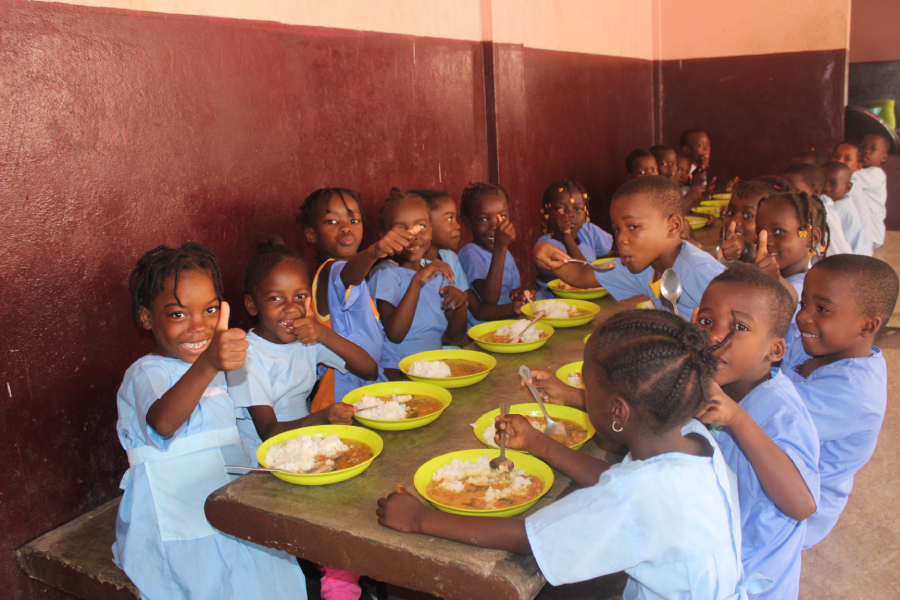

As Africa’s population heads toward 2.5 billion by 2050, a growing debate is emerging over whether education and agriculture should become permanent constitutional priorities.
Africa is approaching one of the most consequential periods in its economic history. Over the next three decades, the continent is expected to add roughly one billion people, making it the world’s largest source of population growth. At the same time, it continues to face persistent challenges including food insecurity, youth unemployment and low productivity.
These pressures are prompting economists, policymakers and development experts to revisit a question that until recently received little attention: should education and agriculture be constitutionally protected as long-term national priorities across Africa?
While the idea remains largely theoretical, supporters argue that embedding these sectors in national constitutions could help governments maintain consistent investment in human capital and food production, regardless of political cycles.
Africa’s development paradox
Few regions illustrate the gap between potential and performance as sharply as Africa.
The continent is home to approximately 60% of the world’s uncultivated arable land, yet many countries remain heavily dependent on food imports. At the same time, Africa has the youngest population globally, but millions of young people still lack access to quality education and employment opportunities.
For many analysts, these two challenges are closely connected.
The ability to educate a rapidly growing population while increasing agricultural productivity could determine whether Africa becomes a major economic powerhouse or remains dependent on commodity exports and imported goods.
Why education matters
Global economic history suggests that long-term prosperity is built on investment in people.
Countries such as South Korea, Singapore, Finland and Ireland transformed their economies through sustained investment in education, science and workforce development.
Within Africa, Rwanda is frequently cited as an example of how investments in education, digital transformation and institutional reform can support broader economic development.
Advocates of constitutional protection argue that education should not be treated as a short-term policy priority but as a permanent national commitment that transcends changes in government.
Agriculture as an engine of growth
Agriculture remains one of Africa’s largest employers, yet productivity levels in many countries remain well below global averages.
Supporters of reform argue that agriculture should be viewed not only as a social sector but also as a strategic driver of industrialization, job creation and export growth.
Morocco’s agricultural modernization programs are often highlighted as evidence that long-term investments in irrigation, technology and agricultural infrastructure can improve competitiveness and expand export markets.
Economists note that stronger agricultural value chains could generate millions of jobs while reducing the continent’s dependence on imported food.
Not everyone agrees
The proposal is not without critics.
Some economists argue that constitutions alone do not create economic growth and warn that mandated spending targets could limit governments’ fiscal flexibility during periods of crisis.
Others contend that many African countries already possess ambitious development strategies, and that implementation—not legislation—is the primary challenge.
Supporters counter that constitutions help establish national priorities, create accountability mechanisms and encourage policy continuity beyond electoral cycles.
The geopolitical dimension
The implications of a more educated and food-secure Africa would extend far beyond the continent.
Higher agricultural productivity could strengthen global food security and reduce exposure to international supply disruptions. Improved education systems could also enhance Africa’s competitiveness in technology, manufacturing and services.
For international partners—including the European Union, the United States, China and Gulf nations—a stronger African economy would represent both a new source of growth and a contributor to long-term stability.
The test of the coming decades
The central question may not be whether education and agriculture should be national priorities. Few policymakers would dispute that.
The real challenge is how to transform those priorities into durable commitments capable of surviving political transitions, economic shocks and changing global conditions.
As Africa moves toward 2050, the continent’s future may depend less on the resources beneath its soil and more on its ability to invest consistently in its people and the productivity of its land.
The answer could shape not only Africa’s economic trajectory, but also its role in the global economy throughout the 21st century.