The Petrodollar at 50: How a changing global financial order could reshape Africa’s economic future
- World
- June 17, 2026
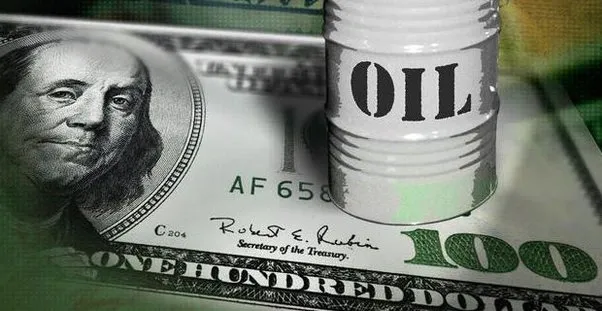

LONDON — For more than five decades, the global economy has operated under an unwritten rule: if countries want to buy oil, they need dollars.
That arrangement, known as the petrodollar system, has helped cement the United States’ position at the center of global finance, creating a steady flow of international demand for the dollar and enabling Washington to finance deficits, impose sanctions, and project economic influence far beyond its borders.
Today, however, that system is facing its most significant challenge since its creation in the aftermath of the 1973 oil crisis.
As China expands its economic influence, BRICS nations seek alternatives to dollar-based trade, and geopolitical tensions reshape global supply chains, policymakers and investors are increasingly asking whether the petrodollar era is entering a new phase.
A system built on Oil and Trust
The foundations of the modern financial order were established at the 1944 Bretton Woods Conference, which positioned the U.S. dollar as the anchor of the global monetary system.
Initially backed by gold, the dollar became the world’s primary reserve currency as the United States emerged from World War II as the dominant economic power.
That framework changed dramatically in 1971 when President Richard Nixon ended the dollar’s convertibility into gold, effectively creating the modern fiat currency era.
Two years later, the global oil crisis provided Washington with an opportunity to reinforce the dollar’s central role.
Following the Arab oil embargo of 1973, the United States reached a strategic agreement with Saudi Arabia under which oil exports would be priced exclusively in U.S. dollars. In exchange, Washington provided military protection, security guarantees, and political support to the kingdom.
The arrangement was gradually adopted by other major oil producers and laid the foundations of the modern petrodollar system.
The result was transformative: every country importing oil needed access to dollars, creating a continuous and structural demand for the U.S. currency.
The financial engine behind American power
The petrodollar system generates benefits that extend far beyond energy markets.
Approximately 58% of global foreign exchange reserves remain denominated in U.S. dollars. More than 80% of global trade finance transactions involve the currency, while nearly 90% of foreign exchange trades include the dollar on at least one side of the transaction.
That dominance provides the United States with what economists often describe as an “exorbitant privilege.”
Because global demand for dollars remains consistently high, Washington can borrow at lower costs than most nations. The U.S. Treasury market, valued at more than US$ 28 trillion, remains the world’s largest and most liquid sovereign debt market.
Oil-exporting countries have historically reinforced this advantage through a process known as petrodollar recycling.
Rather than holding idle dollar reserves, major energy exporters frequently reinvest oil revenues into U.S. Treasury securities, equities, real estate, and financial assets. This recycling mechanism has helped support American financial markets while providing oil-producing nations with relatively safe and liquid investment opportunities.
The rise of alternative currencies
Recent geopolitical developments have accelerated efforts to reduce reliance on the dollar.
China has expanded the use of yuan-denominated energy contracts and promoted settlement mechanisms that bypass traditional Western financial channels.
Russia, following extensive Western sanctions, has significantly increased the use of yuan and ruble-based transactions in energy trade.
Meanwhile, BRICS countries have intensified discussions around local currency settlements, cross-border payment systems, and alternative reserve assets.
China’s Cross-Border Interbank Payment System (CIPS) continues to expand as Beijing seeks to create an alternative to the dollar-dominated global payments infrastructure.
At the same time, central banks worldwide have accumulated gold at the fastest pace in decades. Annual central bank gold purchases have exceeded 1,000 tonnes in recent years, with China among the most aggressive buyers.
Many analysts interpret this trend as part of a broader strategy to diversify reserve holdings and reduce exposure to dollar-related geopolitical risks.
Why the Dollar remains difficult to replace
Despite growing political momentum behind de-dollarization, replacing the dollar presents formidable challenges.
Global oil markets are deeply integrated into a financial ecosystem built around dollar-denominated contracts, insurance structures, derivatives markets, and commodity exchanges.
Brent and West Texas Intermediate crude benchmarks remain priced in dollars. Energy companies hedge risk using dollar-based instruments. International banks maintain extensive dollar liquidity networks.
No competing currency currently offers the same combination of liquidity, legal certainty, institutional stability, and market depth.
China’s yuan, while increasingly important, remains subject to capital controls and regulatory restrictions that limit its global appeal. The euro remains a major reserve currency but lacks the unified fiscal and political framework that underpins the U.S. Treasury market.
As a result, most analysts view the transition away from the petrodollar as evolutionary rather than revolutionary.
The world may be moving toward greater currency diversification, but not necessarily toward a post-dollar financial system.
What it means for Africa
For Africa, the future of the petrodollar system is far more than a debate about international finance. It has direct implications for government revenues, sovereign debt costs, foreign investment flows, exchange-rate stability and long-term economic development.
Many of Africa’s largest economies remain deeply integrated into the dollar-based system. Oil exporters such as Angola, Nigeria, Algeria, Libya and Equatorial Guinea continue to sell most of their crude exports in U.S. dollars, generating billions of dollars annually in foreign exchange earnings.
Across the continent, commodities account for more than 60% of exports in many economies, with the overwhelming majority of transactions settled in dollars. This means that fluctuations in the U.S. currency directly affect fiscal balances, inflation, foreign reserves and debt-servicing costs.
For Angola, where hydrocarbons still account for roughly 90% of exports and a significant share of government revenues, the implications are particularly important. A stronger dollar can boost oil revenues in local currency terms but may simultaneously increase the cost of servicing external debt and importing essential goods.
At the same time, Africa is becoming increasingly connected to alternative economic blocs.
China has emerged as Africa’s largest bilateral trading partner, with annual trade exceeding US$ 280 billion. As Beijing promotes greater use of the yuan in trade settlements, infrastructure financing and commodity transactions, some African nations may gradually diversify their currency exposure.
The expansion of BRICS has added another dimension to this debate. Several African economies are exploring mechanisms that could reduce transaction costs, strengthen regional trade and lessen dependence on a single reserve currency.
However, most economists believe that Africa is unlikely to move away from the dollar in the foreseeable future. The liquidity of U.S. financial markets, the depth of dollar-denominated assets and the central role of the currency in global commodity trading continue to offer advantages that no alternative system currently matches.
Instead, the continent is likely to evolve toward a more diversified monetary landscape, where the dollar remains dominant but increasingly coexists with the yuan, the euro and regional payment mechanisms.
The next chapter of global finance
The petrodollar system remains one of the most powerful pillars of the post-war economic order, yet the forces challenging it are becoming increasingly difficult to ignore.
China’s rise, expanding BRICS cooperation, growing geopolitical fragmentation and accelerating efforts to diversify reserve assets are gradually reshaping the architecture of international finance.
The question is no longer whether alternatives to the dollar will emerge, the question is whether those alternatives can replicate the trust, liquidity, legal protections and institutional depth that have sustained dollar dominance for more than half a century.
For now, the dollar remains unrivaled, but as energy markets evolve and geopolitical competition intensifies, the foundations of the global financial system are entering a period of transformation that could define the next generation of international trade and capital flows.
For Africa, the real opportunity lies not in choosing between the dollar and its challengers, but in leveraging an increasingly multipolar financial system to attract investment, strengthen economic sovereignty and accelerate development. The countries that successfully navigate this transition may emerge as some of the biggest beneficiaries of a changing global order.