China built Africa’s roads, now the Continent is weighing the cost
- Business and Networking
- June 17, 2026
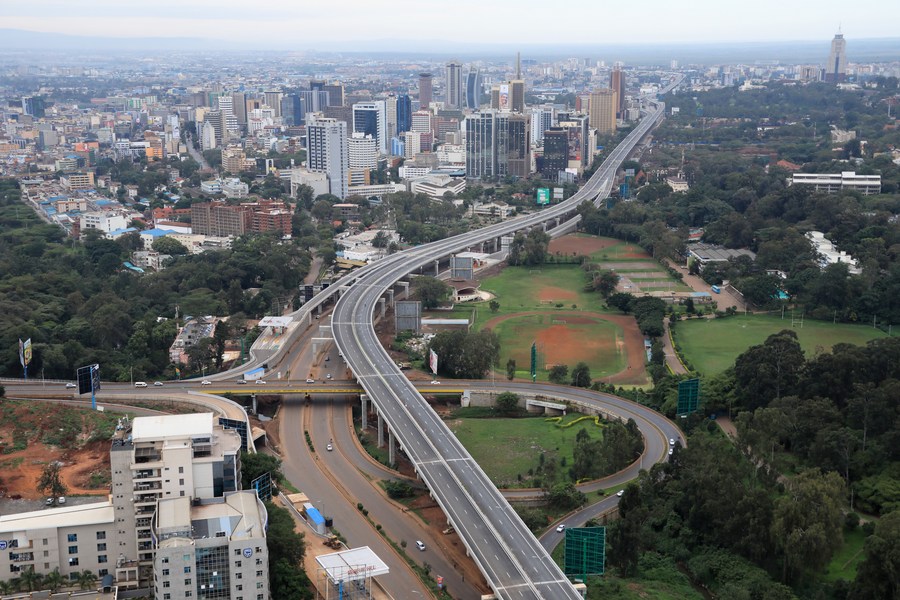

Beijing helped finance railways, ports and power plants across Africa. Two decades later, the debate is shifting from infrastructure delivery to debt sustainability, governance, industrialisation and geopolitical influence.
NAIROBI — Every day, freight trains move thousands of tonnes of cargo between Kenya’s port city of Mombasa and the capital, Nairobi, on a Chinese-financed railway that has become one of Africa’s most visible infrastructure projects.
For supporters, the railway symbolizes what China has delivered across Africa over the past two decades: roads, ports, airports, power plants and transport corridors that many countries struggled for decades to finance through traditional development channels.
For critics, however, the same railway represents a broader concern—that African nations may be becoming increasingly dependent on Chinese financing and vulnerable to debt burdens that could constrain future economic choices.
These competing narratives lie at the heart of one of the most important economic and geopolitical debates shaping Africa today.
China has become the continent’s largest bilateral lender, largest trading partner and one of its most influential economic actors. Yet despite persistent accusations of “debt-trap diplomacy,” the evidence suggests a more complex reality—one in which Chinese capital has played a critical role in closing Africa’s infrastructure gap while simultaneously exposing weaknesses in governance, transparency and debt management.
The question facing Africa is no longer whether Chinese investment has transformed the continent. It is whether that transformation can be translated into sustainable economic growth, industrialisation and long-term prosperity.
Filling a US$170 Billion Infrastructure Gap
Africa’s infrastructure deficit remains one of the continent’s greatest barriers to economic development.
According to the African Development Bank, Africa requires between US$130 billion and US$170 billion in infrastructure investment every year, yet faces an annual financing shortfall of approximately US$100 billion.
Roads, railways, electricity networks, ports and logistics systems remain inadequate in many parts of the continent, raising transportation costs, reducing competitiveness and limiting industrialisation.
Following independence from European colonial powers between the 1950s and 1970s, many African governments inherited infrastructure networks designed primarily for resource extraction rather than economic integration.
Decades of underinvestment left many countries struggling to keep pace with rapid urbanisation and population growth.
China entered this environment with a proposition many governments found attractive: fast financing, engineering expertise and fewer political conditions than those typically attached to Western development assistance.
Since 2000, Chinese lenders have provided more than US$160 billion in loans to African governments and state-owned enterprises, helping finance thousands of kilometres of roads and railways, major hydropower projects, industrial zones, ports, airports and telecommunications infrastructure.
For all the criticism directed at Beijing, many of Africa’s most important infrastructure assets built during the last twenty years might not exist today without Chinese financing.
Beyond the Debt-Trap Narrative
The concept of “debt-trap diplomacy” emerged prominently in Western political discourse during the late 2010s.
The theory suggests that China intentionally lends excessive amounts to developing countries in order to gain strategic leverage when borrowers struggle to repay.
Yet numerous academic studies, policy analyses and debt assessments have found limited evidence supporting the claim that China systematically seizes assets in Africa through debt defaults.
One of the most frequently cited examples involved Uganda’s Entebbe International Airport.
Reports suggested that repayment difficulties could allow China to take control of the airport.
Subsequent reviews found no evidence supporting those claims.
Similarly, concerns surrounding Chinese-funded rail projects in Kenya and Nigeria have generated significant political controversy but have not resulted in Chinese ownership of strategic national infrastructure.
This does not mean there are no risks.
Rather, it suggests that Africa’s debt challenges are often driven by multiple factors, including commodity price volatility, currency depreciation, fiscal mismanagement, weak revenue collection systems and borrowing from diverse international creditors.
Debt vulnerability is rarely the result of a single lender.
The Fine Print Matters
Where concerns about Chinese lending become more compelling is in the structure of the agreements themselves.
Unlike financing from institutions such as the World Bank or International Monetary Fund, many Chinese loan contracts remain confidential.
This lack of transparency can make it difficult for citizens, parliamentarians, journalists and civil society organisations to assess the long-term obligations being undertaken by governments.
Legal experts note that many Chinese agreements contain provisions that strongly protect lenders, including accelerated repayment clauses, cross-default provisions and restrictions on restructuring.
However, these features are not unique to China.
Most sovereign lending agreements are designed primarily to protect creditors from repayment risks.
The distinction lies less in the clauses themselves than in the degree of public disclosure.
Transparency, rather than debt alone, remains one of the central issues in the China-Africa financing relationship.
The Resource-for-Infrastructure Model
Perhaps the most controversial aspect of Chinese financing involves natural resource-backed loans.
The Democratic Republic of Congo offers one of the clearest examples.
Under a multi-billion-dollar infrastructure-for-minerals agreement, Chinese companies secured access to valuable copper and cobalt resources in exchange for funding roads, hospitals and public infrastructure.
Supporters viewed the arrangement as an innovative way to convert natural resource wealth into development.
Critics argued that opaque structures and limited public oversight increased the risk of corruption and weakened accountability.
Subsequent investigations raised concerns regarding governance standards, revenue distribution and the extent to which local populations benefited from the projects.
The Congolese case illustrates a broader lesson: the success or failure of infrastructure financing often depends less on the nationality of the lender and more on the strength of domestic institutions.
China’s Strategic Interests
China’s involvement in Africa is not solely about development.
The continent supplies many of the minerals essential to China’s long-term industrial ambitions, including cobalt, copper, lithium, manganese and rare earth elements.
These materials are critical for electric vehicles, renewable energy technologies, batteries and advanced manufacturing.
At the same time, Africa is becoming an increasingly important market for Chinese exports and investment.
Trade between China and Africa reached a record US$295.6 billion, reinforcing Beijing’s position as Africa’s largest trading partner for more than fifteen consecutive years.
Infrastructure investments have helped facilitate these trade flows while expanding China’s diplomatic and economic influence across the continent.
For African governments, however, the relationship is often viewed through a pragmatic lens.
Many leaders see Chinese financing not as aid, but as a business partnership capable of accelerating national development objectives.
A New Phase in China-Africa Relations
While much of the debate around China in Africa has focused on lending, the relationship is entering a new phase.
Recent data show that Chinese lending to Africa fell to approximately US$2.1 billion in 2024, down sharply from the peak years of the Belt and Road Initiative when annual commitments exceeded US$28 billion in 2016.
Rather than financing large, debt-heavy infrastructure projects, Beijing is increasingly prioritising commercially viable investments, public-private partnerships, manufacturing ventures, digital infrastructure and projects denominated in renminbi (yuan).
This shift reflects growing concerns about debt sustainability across Africa, but it also signals a broader evolution in China’s strategy.
Instead of acting primarily as a lender, Beijing is positioning itself as a long-term investor, trading partner, industrial collaborator and supply-chain partner.
The result is a profound transformation in the financial relationship between China and Africa.
In many countries, debt repayments to China now exceed the value of new loans received, marking the transition from an era of large-scale borrowing to one increasingly focused on repayment, investment and economic integration.
For African governments, this new reality creates both challenges and opportunities.
Access to easy infrastructure financing may become more limited, but investment models that emphasise industrialisation, local value addition and job creation could prove more sustainable over the long term.
Angola: China’s Largest African Borrower
No country better illustrates the opportunities and complexities of China’s engagement in Africa than Angola.
Following the end of its civil war in 2002, Angola faced one of the largest reconstruction challenges on the continent.
Roads, bridges, railways, schools, hospitals and energy infrastructure required urgent rebuilding.
China became a crucial partner in this process.
Over the past two decades, billions of dollars in oil-backed financing supported major reconstruction programmes, including transport corridors, housing developments, electricity projects and railway rehabilitation.
At its peak, Angola’s exposure to Chinese creditors exceeded US$20 billion, making it one of Beijing’s largest borrowers worldwide.
Supporters argue that Chinese financing enabled the country to rebuild vital infrastructure at a speed that few other partners could match.
Critics point to concerns surrounding procurement practices, transparency and the long-term sustainability of resource-backed debt structures.
Today, as Angola seeks to diversify its economy beyond oil, its relationship with China provides valuable lessons for other African nations balancing development ambitions with debt management.
At the same time, Angola finds itself at the centre of a new geopolitical competition.
The Lobito Corridor, linking Angola’s Atlantic coast to the copper and cobalt belts of the Democratic Republic of Congo and Zambia, has emerged as one of Africa’s most strategically important infrastructure projects.
Supported by Western financing and international partnerships, the corridor illustrates how Africa is increasingly becoming a battleground for competing economic visions from China, the United States and Europe.
China vs. The West: Two Competing Models
| Area | China | Western Institutions |
|---|---|---|
| Speed of Delivery | High | Moderate |
| Project Scale | Large | Medium to Large |
| Transparency | Lower | Higher |
| Governance Requirements | Limited | Extensive |
| Environmental Standards | Variable | Generally Higher |
| Political Conditions | Informal | More Explicit |
| Project Approval Process | Faster | Slower |
| Infrastructure Focus | Strong | Increasing |
The comparison helps explain why many African governments continue to engage with both sides.
China often delivers projects quickly and at scale.
Western institutions generally provide stronger governance safeguards and transparency standards.
Increasingly, African policymakers are seeking to benefit from both approaches.
By the Numbers: China’s Infrastructure Footprint in Africa
Chinese Engagement Since 2000
US$160+ billion in loans to African governments and state-owned enterprises.
US$295.6 billion in annual China-Africa trade.
54 African countries engaged in cooperation frameworks with China.
US$130–170 billion required annually for African infrastructure development.
US$100 billion estimated annual infrastructure financing gap.
US$2.1 billion in new Chinese lending to Africa in 2024.
US$28.8 billion peak annual Chinese lending recorded in 2016.
Major African Borrowers
| Country | Estimated Chinese Debt | Major Projects |
|---|---|---|
| Angola | US$20–25 billion | Roads, railways, energy, housing |
| Ethiopia | US$13–15 billion | Addis-Djibouti Railway, industrial parks |
| Zambia | US$10–12 billion | Roads, airports, hydropower |
| Kenya | US$8–10 billion | Standard Gauge Railway |
| Egypt | US$7–9 billion | New Administrative Capital |
| Nigeria | US$6–8 billion | Railways, airports, power infrastructure |
| Cameroon | US$5–7 billion | Ports, roads, hydropower |
| DRC | US$5–7 billion | Mining-for-infrastructure projects |
What This Means for Africa
The debate over China’s role in Africa is often framed as a choice between opportunity and dependency.
In reality, it is neither.
Africa’s challenge is not deciding whether Chinese or Western financing is preferable. The real challenge is ensuring that any infrastructure project generates economic returns greater than its financing costs.
Without reliable electricity, modern transport networks and efficient logistics systems, industrialisation, regional integration and economic diversification will remain difficult.
The African Continental Free Trade Area (AfCFTA), one of the continent’s most ambitious economic projects, depends heavily on infrastructure investments of the kind China has helped finance.
The critical issue is therefore governance.
Countries that negotiate transparently, conduct rigorous feasibility studies and manage debt prudently are more likely to benefit from foreign financing.
Those with weak institutions and limited oversight remain vulnerable regardless of whether funds originate from Beijing, Washington, Brussels or private capital markets.
A More Complex Reality
China’s role in Africa cannot be reduced to slogans about debt traps, nor can it be portrayed solely as a benevolent development partnership.
The reality lies somewhere in between.
Chinese financing has helped build roads, railways, ports and power plants that many African countries urgently needed and that few other partners were willing to finance at comparable speed and scale.
At the same time, concerns about transparency, governance and debt sustainability remain legitimate and deserve continued scrutiny.
The debate over China’s role in Africa is no longer about whether Beijing is building roads, railways and ports. Those projects already exist across the continent.
The real question in 2026 is whether Africa can leverage a new phase of China-Africa relations—defined increasingly by trade, investment, industrialisation and strategic competition—to accelerate economic transformation while avoiding the debt vulnerabilities of the past.
As China, the United States and Europe compete for influence across Africa, the continent’s greatest opportunity may be its growing ability to negotiate from a position of strength.
In a multipolar world, Africa is no longer merely a destination for foreign capital. It is becoming one of the most important arenas where the future balance of global economic power will be shaped.