South Africa’s Matlala inquiry puts cash, police contracts and political influence under scrutiny
- Politics
- September 14, 2026
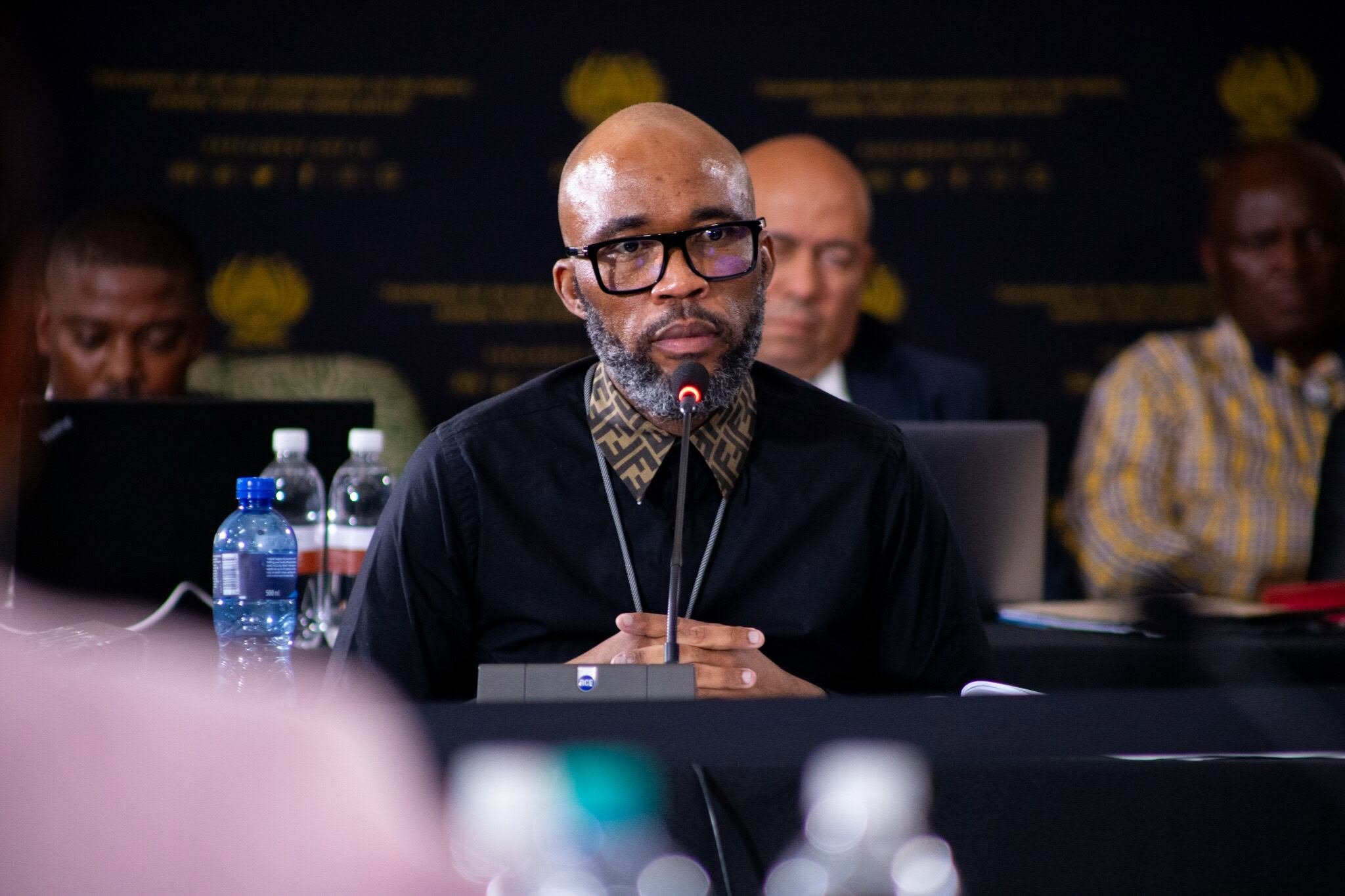

JOHANNESBURG — Testimony by businessman Vimu Matlala before South Africa’s Matlanga Commission has put a series of cash payments, an undocumented R15 million loan and alleged political intervention in police affairs under scrutiny, highlighting the overlap between private business interests, government contracts and senior officials.
Matlala, who is under criminal investigation and awaiting trial in connection with allegations surrounding the Medicare 24 contract, repeatedly invoked his constitutional right against self-incrimination during questioning.
His testimony was therefore incomplete, but it nevertheless provided the commission with details of financial arrangements and interactions involving people linked to the police and political establishment.
One of the most significant issues concerns an alleged R15 million loan from Sullean Karim, a businessman Matlala said he knew through the security industry.
Matlala testified that there was no written agreement, collateral or other formal security for the transaction. Repayment was allegedly tied to 10% of payments received from SAPS contracts.
The arrangement is likely to receive close scrutiny because it links private financing directly to revenue generated from government business.
Investigators will need to establish the source of the R15 million, the precise terms of the agreement and whether the repayment mechanism represented a legitimate commercial arrangement or concealed another financial relationship.
The testimony also focused on Brown Mahudzi, who Matlala said received R20,000 and later R150,000, as well as airline tickets.
According to Matlala, the payments were connected to the ANC’s January 8 celebrations and followed instructions attributed to the former police minister.
Matlala further alleged that the former minister advised him to continue payments to Mahudzi because they could help uncover alleged misconduct involving senior police officials, including General Kumalo.
The testimony also referred to an alleged plan involving the replacement of Kumalo by Major General Khan.
Those allegations have not been established as fact by the commission, if corroborated, however, they could raise questions about the use of private individuals and financial transactions in efforts to obtain information about senior police officials, as well as the extent to which political considerations influenced police management.
Raid raises further questions
The inquiry is also examining events surrounding a 6 December 2024 raid at Matlala’s home.
Matlala said the individuals involved initially appeared to him to be robbers because they were wearing unofficial clothing. He later established that they were police officers. He said he attempted to open a case relating to what he regarded as harassment but was initially unable to do so.
Mahudzi subsequently contacted Matlala, presenting himself as someone connected to the police minister’s office and offering assistance. Matlala said he eventually provided money to support efforts to investigate the raid, despite having reservations about Mahudzi’s request.
The episode adds another dimension to the commission’s examination of whether police powers and political connections were used outside normal institutional channels.
Recordings could become a key legal battleground
The reliability and admissibility of evidence are emerging as important issues in the case.
Matlala disputes aspects of recorded interrogations and their transcripts and has indicated that he intends to challenge the material on legal grounds. He has also said that he expects to provide further information through a supplementary affidavit, while citing ongoing disputes over the recordings.
His repeated refusal to answer questions reflects the tension between the commission’s fact-finding mandate and the constitutional protection against self-incrimination.
For the commission, the issue is particularly significant because some of the questions it seeks to answer concern the very transactions and relationships that could expose Matlala to criminal liability.
The inquiry will therefore need to distinguish carefully between what Matlala admits, what he alleges, what other witnesses can corroborate and what documentary evidence establishes.
That distinction is critical in a case where testimony could have consequences beyond the commission itself and potentially affect parallel criminal proceedings.
Wider implications for the police service
The allegations extend beyond a single business transaction.
References to senior police officers, political intermediaries and attempts to influence the position of senior SAPS officials raise broader questions about governance and institutional independence.
If evidence ultimately establishes that political actors used private businessmen or intermediaries to influence police investigations, appointments or intelligence operations, the implications would extend well beyond the Medicare 24 matter. It could point to weaknesses in the separation between political authority, policing and private commercial interests.
But the commission still has to establish the evidentiary basis for those claims. Being named in testimony does not in itself establish wrongdoing, and the allegations concerning individual police officials will require independent corroboration.
The financial trail may ultimately prove more important than the most contentious testimony. Bank records, contract payments, communications and corporate documents could help determine whether the transactions described by Matlala were legitimate business dealings or part of a wider network of influence and payments.
For the government and the SAPS, the stakes are significant. The inquiry is testing not only the conduct of individuals but also the effectiveness of the controls intended to prevent private money, public contracts and political influence from becoming intertwined.
For Matlala, meanwhile, the central issue remains his legal exposure. His willingness to provide information is constrained by the possibility that his answers could later be used against him.
The commission’s challenge is consequently straightforward but difficult, turn allegations into verifiable facts without compromising constitutional protections or prejudging the criminal cases that may follow.
Its eventual findings will depend less on the most dramatic claims heard in testimony than on whether those claims can be matched against financial records, official documents and independent evidence.
That process will determine whether the Matlala affair represents an isolated dispute around a controversial contract or evidence of deeper weaknesses in South Africa’s systems for policing, public procurement and political accountability.