South Africa defeated apartheid, but its deepest legacy still shapes the nation
- SAUTI
- June 29, 2026
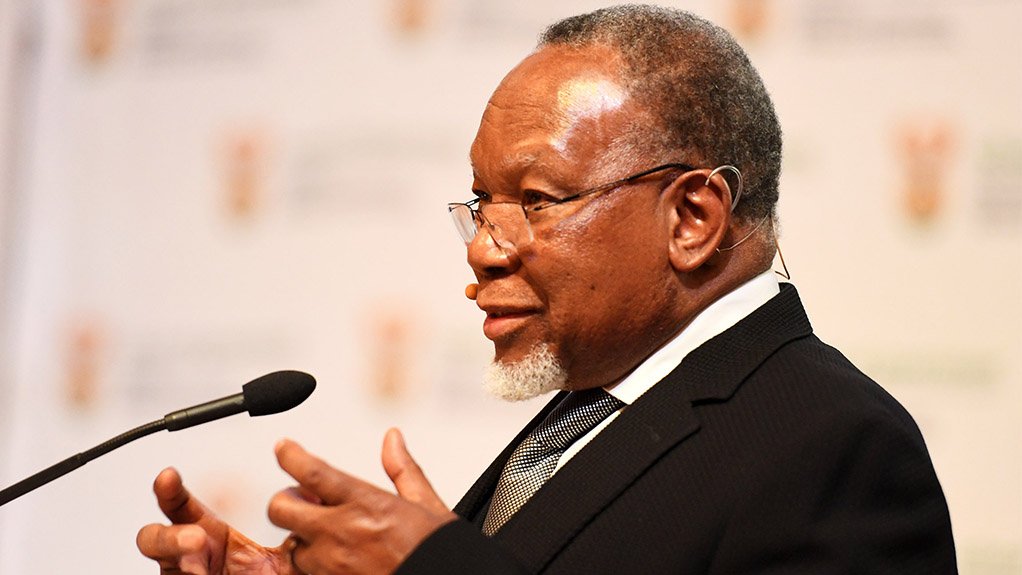

Former President Kgalema Motlanthe reflects on why South Africa’s greatest challenge today is no longer dismantling apartheid, but overcoming its enduring consequences.
LAGOS – For much of the world, South Africa stands as one of the greatest democratic success stories of the modern era. The fall of apartheid, the election of a democratic government in 1994, and the adoption of one of the world’s most progressive constitutions transformed the country into a global symbol of reconciliation and hope.
Yet, more than three decades later, South Africa continues to wrestle with a difficult reality, while apartheid ended as a political system, many of the structures it created remain deeply embedded in society.
Few people are better placed to explain that contradiction than former President Kgalema Motlanthe.
His life mirrors South Africa’s modern history, from growing up under apartheid laws, joining the underground African National Congress (ANC), spending years imprisoned on Robben Island, leading one of the country’s most influential trade unions, serving as ANC Secretary-General, and ultimately becoming President.
His reflections offer more than personal memories, they provide a window into the unfinished business of South Africa’s democracy.
Apartheid was never simply a system of racial discrimination, it was an elaborate legal and political framework designed to regulate every aspect of Black South Africans’ lives.
Pass laws restricted freedom of movement, the Bantu Education Act deliberately created an inferior education system for Black communities. Forced removals uprooted families from their homes, while economic policies ensured a steady supply of low-cost labor for the country’s industries.
Growing up in Alexandra Township, Motlanthe recalls a society where carrying the wrong document, or no document at all, could lead to arrest. Political activism was criminalized, while detention without trial, torture, and deaths in custody became common features of state repression, these experiences shaped an entire generation of political leaders.
For many imprisoned activists, Robben Island became an unlikely political classroom, despite harsh prison conditions, political education continued behind bars. Prisoners debated ideas, secretly preserved books, and prepared themselves for a future in which they hoped to govern a democratic South Africa.
That experience also helps explain why South Africa’s democratic transition prioritized institutions over revenge.
Rather than pursuing a military victory, the liberation movement negotiated a constitutional settlement that established an independent judiciary, robust protections for civil liberties, and one of the strongest bills of rights anywhere in the world.
But, as Motlanthe suggests, building democratic institutions is only the beginning. Sustaining them is a far more complex task.
One of his most thought-provoking observations concerns the relationship between political parties and the state.
The ANC’s long-standing policy of deploying party members into key government positions was originally intended to ensure policy continuity during the democratic transition. Over time, however, critics have argued that the practice blurred the distinction between party interests and state institutions, contributing to weakened governance and declining public trust, the issue extends far beyond South Africa.
Across Africa, many former liberation movements now face the same challenge: how to preserve their historic legitimacy while strengthening institutions that must ultimately serve citizens rather than political organizations, Motlanthe’s own presidency illustrates that tension.
Following the ANC’s internal decision to recall President Thabo Mbeki, Motlanthe assumed the presidency through constitutional parliamentary procedures. Legally, the transition respected South Africa’s democratic framework. Politically, however, it highlighted the enormous influence that dominant political parties can exercise within parliamentary democracies.
The interview also challenges a common misconception, that South Africa’s current economic and social struggles are simply the result of recent policy failures.
Persistent inequality, exceptionally high unemployment, uneven educational outcomes, and continuing debates over land ownership all have deep historical roots in apartheid-era policies deliberately designed to exclude the majority of the population from economic opportunity.
Land reform remains one of the country’s most politically sensitive issues, reflecting the difficult balance between historical justice, constitutional protections, and economic stability.
Education presents an equally formidable challenge, undoing decades of deliberate underinvestment requires more than curriculum reform; it demands rebuilding opportunity itself.
Despite these difficulties, Motlanthe’s outlook remains notably measured.
Rather than advocating exclusion or political revenge, he argues for inclusive governance that draws talent from across political divides. His perspective carries particular relevance as South Africa enters a new era of coalition politics following the ANC’s loss of its parliamentary majority, ultimately, Motlanthe’s reflections offer lessons that extend well beyond South Africa.
Democracy is not secured simply by adopting a constitution or holding elections. It depends on strong institutions, accountable leadership, and the ability to confront historical injustice without undermining the rule of law, South Africa succeeded in dismantling apartheid as a legal system in 1994.
The country’s defining challenge today is dismantling the economic, social, and institutional legacy that apartheid left behind, that task, Motlanthe suggests, may prove even more difficult than winning democracy itself.