Emirates and South African Airways deepen three-decade alliance to strengthen Johannesburg’s role as Southern Africa’s aviation hub
- Business and NetworkingWorld
- August 5, 2026
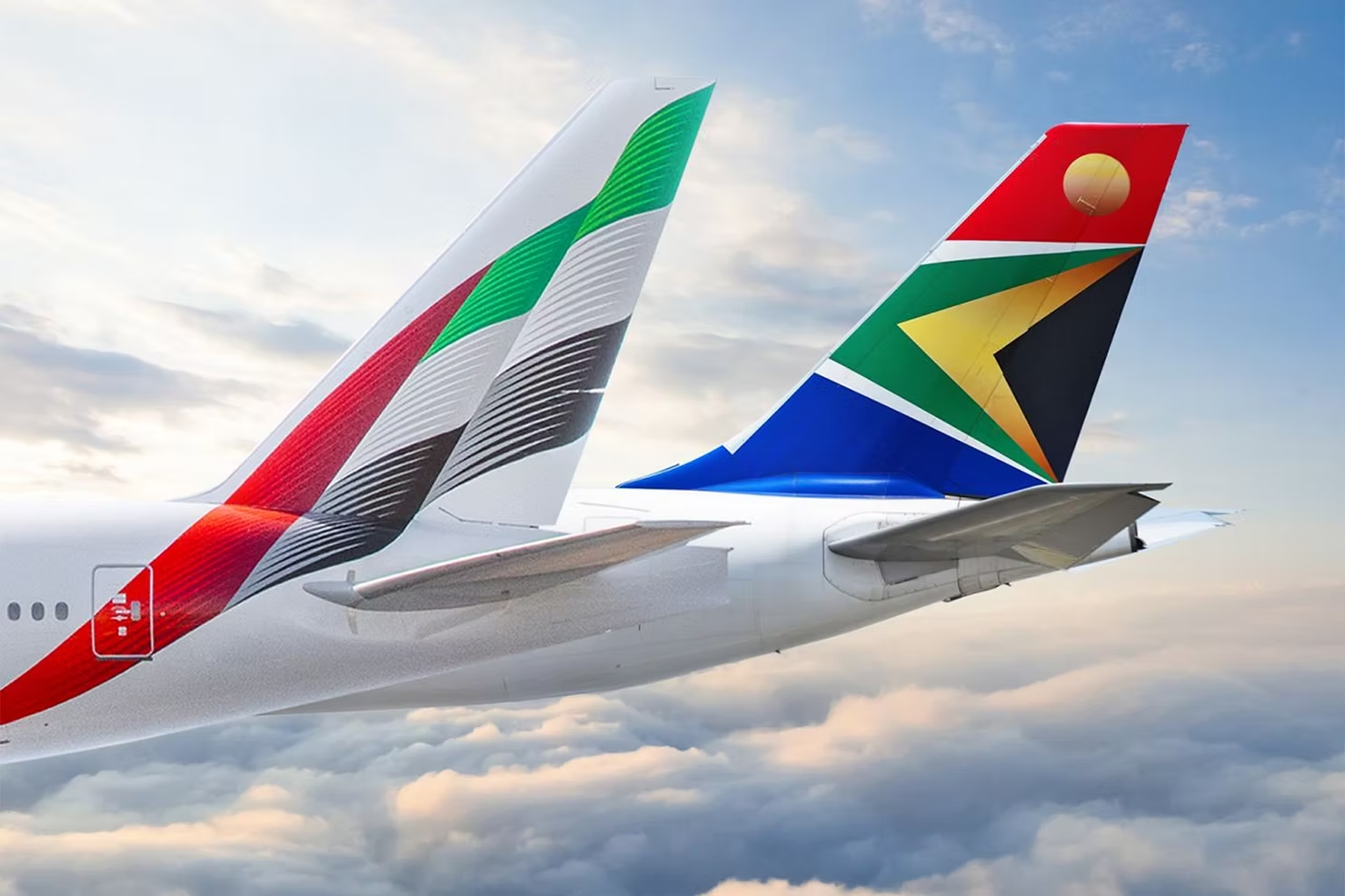

Reciprocal codeshare agreement adds nine destinations to the joint network, reinforcing southern and central Africa’s integration with global markets via Dubai as international demand for travel to the continent continues to accelerate.
JOHANNESBURG — Emirates and South African Airways (SAA) have unveiled a significant expansion of their long, standing partnership, transforming a largely one-sided codeshare arrangement into a reciprocal agreement that substantially broadens connectivity between Africa and global markets while reinforcing Johannesburg’s position as one of the continent’s principal aviation gateways.
The agreement marks the first time Emirates will place its code on flights operated by South African Airways. Until now, the partnership had largely worked in one direction, with SAA marketing Emirates-operated services between Dubai and Johannesburg, Cape Town and Durban. Following regulatory approvals, Emirates customers will now gain seamless access to SAA’s domestic and regional network under a single booking.
The expanded partnership introduces nine additional destinations, including three domestic South African routes linking Johannesburg with Cape Town, Durban and Port Elizabeth, alongside six regional services connecting Johannesburg with Kinshasa in the Democratic Republic of the Congo, Gaborone in Botswana, Windhoek in Namibia, Lusaka in Zambia, Harare and Victoria Falls in Zimbabwe.
For African aviation, the significance extends well beyond additional destinations. The reciprocal codeshare simplifies travel across southern and central Africa through coordinated schedules, single-ticket itineraries and through-checked baggage, reducing travel friction for both business and leisure passengers arriving from Europe, the Middle East, Asia and the Americas.
Africa becomes an increasingly strategic market
The announcement reflects a broader shift among leading international airlines, which are positioning Africa as one of the industry’s most promising long-term growth markets amid rising demand for business travel, tourism and intra-African connectivity.
Emirates has served South Africa continuously since 1995, when it launched its inaugural Dubai–Johannesburg service. Over the past three decades, the airline has carried more than 20 million passengers to and from the country while steadily expanding frequencies and destinations.
Today, Emirates operates 56 weekly flights across Johannesburg, Cape Town and Durban, making South Africa the only destination within its African network served by all three of its flagship wide, body aircraft families: the Boeing 777, Airbus A380 and the newly introduced Airbus A350.
The airline has also expanded its premium offering, with its award, winning Premium Economy cabin now available on services to both Johannesburg and Cape Town, targeting the growing corporate and premium leisure travel segments.
Adnan Kazim, Emirates’ Deputy President and Chief Commercial Officer, described the expansion as the natural evolution of a partnership that has served customers for nearly three decades.
“By placing our code on South African Airways’ domestic and regional network, we are opening seamless access to destinations across South Africa and neighbouring countries while reinforcing our long-term commitment to the market and our confidence in Africa’s continued economic and aviation growth.”
SAA’s recovery enters a new phase
For South African Airways, the agreement represents another milestone in the carrier’s post-restructuring recovery strategy.
Following years of financial restructuring, SAA has focused on rebuilding its network through carefully selected commercial partnerships rather than rapid fleet expansion, a strategy increasingly adopted by airlines seeking sustainable growth in the post-pandemic era.
Acting Group Chief Executive Matshela Seshibe said the expanded partnership would strengthen Africa’s connectivity while improving access to international markets.
“This partnership is about far more than connecting destinations. It is about connecting people, businesses and opportunities across Africa and beyond.”
According to Seshibe, combining SAA’s expanding African footprint with Emirates’ global network enhances Johannesburg’s position as a strategic gateway for tourism, trade and investment throughout the continent.
Competition among African hubs intensifies
Strategically, the announcement underscores the intensifying competition among Africa’s leading aviation hubs.
Over the past decade, major international carriers, including Ethiopian Airlines, Qatar Airways, Turkish Airlines and Emirates, have expanded partnerships, frequencies and investment across Africa to capture growing passenger and cargo flows.
While Addis Ababa has emerged as eastern Africa’s dominant aviation hub through Ethiopian Airlines’ extensive continental network, Johannesburg is seeking to reinforce its role as the principal gateway to southern Africa, leveraging South Africa’s industrial economy, sophisticated airport infrastructure and financial services sector.
Industry analysts increasingly view codeshare agreements as one of the most capital, efficient methods of expanding network reach without committing to additional aircraft or launching new point-to-point operations, allowing airlines to improve connectivity while containing operating costs.
Wider economic implications
The benefits are expected to extend well beyond aviation.
Improved air connectivity typically supports tourism, facilitates cross-border investment, strengthens business travel and enhances regional supply chains, particularly for higher, value exports and time-sensitive cargo.
The inclusion of destinations such as Kinshasa, Lusaka, Windhoek, Gaborone and Harare also strengthens links between some of southern and central Africa’s most important mining, industrial and commercial corridors and Emirates’ global network through Dubai.
As implementation of the African Continental Free Trade Area (AfCFTA) gathers pace, aviation infrastructure and seamless regional connectivity are increasingly recognised as essential components of continental economic integration.
Nearly three decades after Emirates and South African Airways first established their partnership in 1997, the expanded reciprocal codeshare demonstrates how commercial alliances have become a strategic instrument for airlines seeking scale, network resilience and sustainable growth without the capital intensity traditionally associated with fleet expansion.