Michael Jordan: The man who learned to wait for the rain
- Opinions
- August 29, 2026

By AfricaHeadline
The world remembers the six championships, the impossible shots and the global icon. What it forgets are the years of rejection, defeat and repetition that came before them. Michael Jordan’s real lesson may have less to do with basketball than with the difficult art of waiting for work to bear fruit.
This is a story about everything except basketball.
It is about a man who learnt to study the climate before planting the seed. He watched the seasons, understood the soil and prepared the ground. Then he planted. The sun came hard and the earth dried. He planted again. Another dry season followed, he kept going.
Eventually, something began to grow, much later came the harvest. By then, Michael Jeffrey Jordan had become one of the greatest athletes in history, and the long years beneath the surface had largely disappeared from the story. The world saw the fruit and called it talent, genius and destiny.
Success has a habit of rewriting its own history.
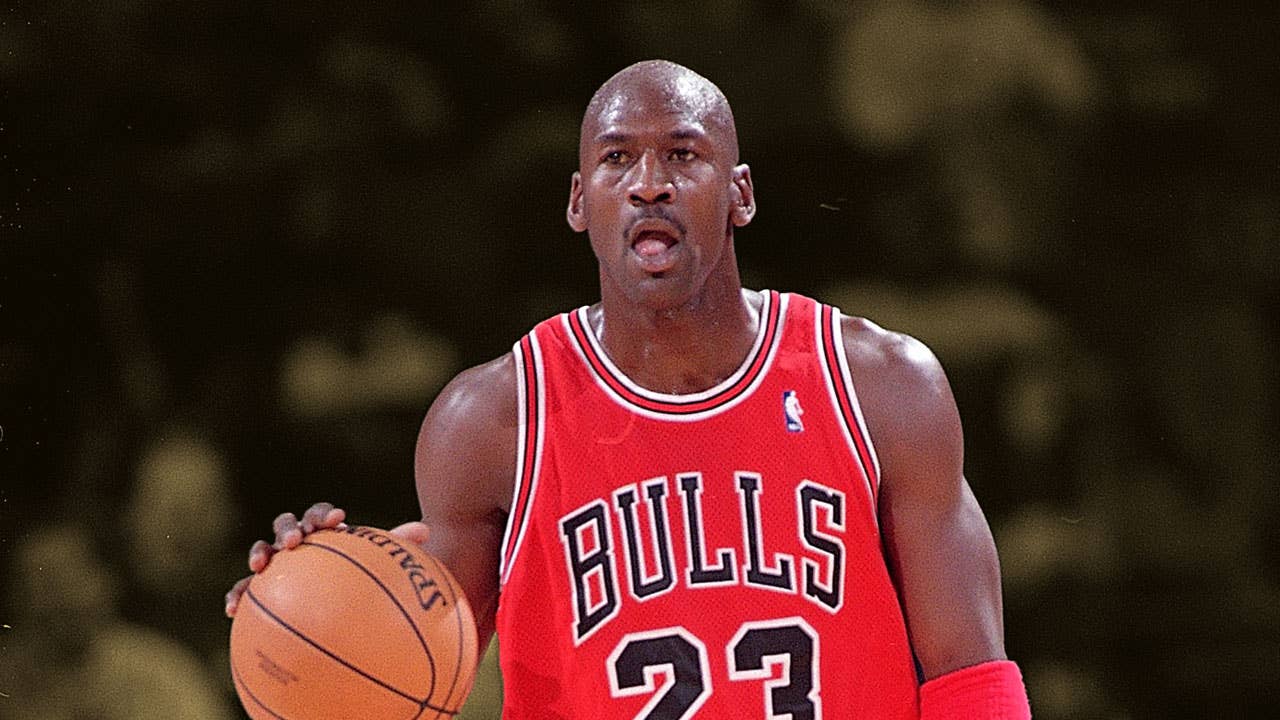
Look backwards from Jordan’s six NBA championships with the Chicago Bulls, five regular-season Most Valuable Player awards, six Finals MVPs and a commercial legacy that transcended sport, and his ascent can appear almost inevitable.
It was anything but. Before Jordan became a global symbol of excellence, there were rejection, defeat, repetition and long periods when effort offered no guarantee of reward.
One of the most frequently retold episodes came at Laney High School in Wilmington, North Carolina. At 15, Jordan did not immediately make the varsity team and instead played junior varsity basketball. Popular mythology would later compress the episode into a cleaner story: Michael Jordan was “cut” from his school team and responded by becoming Michael Jordan.
The truth is less cinematic, but more instructive. At that particular moment, he simply was not yet where he wanted to be, so he worked.
He trained, strengthened his body and refined his game. The disappointment did not disappear. It became fuel. Throughout his career, Jordan displayed an extraordinary ability to turn defeats, criticism and even minor provocations into reasons to practise harder. Sometimes he seemed almost to manufacture grievances simply to give his competitiveness something to consume.
There is an uncomfortable lesson here. Not every disappointment has to be forgotten. Some can be disciplined and put to work.
Jordan entered the NBA in 1984 and quickly demonstrated that he possessed unusual talent. Yet individual brilliance and collective supremacy are different things. For several years, the Chicago Bulls remained a team containing the league’s most spectacular player rather than its dominant force.
The Detroit Pistons became the clearest expression of that difference.
In 1988, 1989 and 1990, Detroit ended Chicago’s playoff campaigns. Their physical approach became associated with the “Jordan Rules”, a defensive strategy designed to make Jordan’s route to the basket as difficult and punishing as possible. For a player accustomed to bending games around his will, the Pistons represented something more valuable than an obstacle: they exposed what was still missing.
Jordan could have waited for Detroit to decline. Instead, he and Chicago changed.
He became physically stronger. The Bulls matured around him. The team learnt that championships could not depend indefinitely on one man producing miracles. Talent had taken Jordan a remarkable distance. Adaptation would have to take him the rest of the way.
In 1991, Chicago finally swept Detroit in the Eastern Conference finals. The Bulls then defeated the Los Angeles Lakers to win the first NBA championship in franchise history, the rain had arrived, it had taken years.
The harvest that followed was extraordinary. Jordan and Chicago won six championships during the 1990s, organised into two three-peats. He collected five regular-season MVP awards, six Finals MVPs and 10 scoring titles. His influence travelled far beyond arenas, helping transform an elite American basketball player into one of the most recognisable individuals on earth.
Success on that scale creates an illusion. Once the ending is known, everything that came before it begins to look like evidence that the ending was inevitable, it was not.
That is one of the reasons biographies of extraordinary people can sometimes teach the wrong lesson. We study them after the breakthrough. We know which company survived, which investor became rich, which scientist made the discovery and which athlete lifted the trophy. Knowledge of the outcome quietly removes uncertainty from the story.
But the person living through it had no such advantage.
The young Jordan training after disappointment did not possess photographs of the six championship rings he would eventually win. The Bulls losing repeatedly to Detroit could not know that a dynasty was approaching. They had only preparation, adaptation and another season.
That is closer to how success is actually experienced: not as destiny, but as uncertainty.
Jordan also understood something that modern culture often prefers to disguise, failure is not necessarily the opposite of success, sometimes it is one of its inputs.
A missed shot, a lost series, a rejected application or a failed venture can close an opportunity without closing the larger trajectory. Failure can provide information. Properly interpreted, it tells us where the soil still needs work.
Yet Jordan’s story should not be sanitised into a comfortable parable about perseverance.
The competitiveness that made him extraordinary could also make him ruthless. He demanded relentlessly from himself and from those around him. His standards could inspire teammates and intimidate them. His obsession with winning had costs. Not everything required to become Michael Jordan should be turned into a management manual.
Greatness is rarely as tidy as the photographs taken after victory.
That complication makes his career more useful, not less. Jordan need not be presented as flawless for his trajectory to contain wisdom. Excellence emerged from a more difficult mixture: exceptional ability, relentless discipline, repetition, adaptation, ego, disappointment and an unusual capacity to continue after losing.
Above all, his career contains a lesson about time.
The modern economy has become increasingly impatient with processes that cannot immediately demonstrate results.
Companies are expected to scale quickly. Investments must generate returns. Careers are measured through promotions, visibility and titles.
Social media has turned progress itself into something to be displayed, creating the impression that everyone else’s harvest is arriving faster than our own, agriculture offers a useful correction, you cannot negotiate with a seed.
Planting does not entitle anyone to fruit the following morning, for a period, effort and visible results can appear almost entirely disconnected.
Something may be happening beneath the surface, but there is little evidence above it. The root forms before the tree becomes impressive.
This is where patience is easily misunderstood, waiting does not mean doing nothing, a farmer waiting for rain still prepares the soil, protects the field and watches the weather. Patience without preparation is merely hope.
Preparation without patience can become frustration, Jordan’s career occupied the space between the two.
He did not control every opponent, injury, selection decision or circumstance, e controlled preparation. He could not command the rain, he could make certain the ground was ready when it came.
That is why this is a story about everything except basketball.
It is about the student studying for months before seeing the result. The entrepreneur building something before knowing whether customers will arrive.
The researcher repeating experiments that fail. The writer producing work before finding readers. The professional whose effort has not yet become promotion. The person rebuilding after a loss while everyone else appears to be moving forward.
Most people, at some point, encounter a season in which effort seems larger than reward.
The temptation is to interpret the absence of visible progress as evidence that nothing is happening.
Sometimes that interpretation is correct, persistence alone cannot rescue every bad idea, and knowing when to change direction is itself a form of intelligence, but sometimes the field does not need to be abandoned. It needs more work, better seed and another season.
The difficult part is knowing the difference.
Michael Jordan became a giant because, long before the world admired the harvest, he was willing to work on the roots. His career reminds us that greatness rarely begins beneath television lights. It starts in the anonymous territory of discipline:
Practising when nobody is watching, improving when nobody is applauding and continuing when there is still no guarantee of reward.
Perhaps success is therefore less mysterious than it appears.
Prepare the ground, study the weather, plant carefully, learn from the dry seasons, change what needs changing. Then plant again.
The fruit comes gradually. And when it finally appears, those arriving at the end of the story will call it talent, luck or genius, only the person who cultivated the field knows how many times it had to be planted.
— AfricaHeadline