Dangote’s $16bn Kenya refinery bets on Lamu becoming East Africa’s energy hub
- Economic
- October 11, 2026
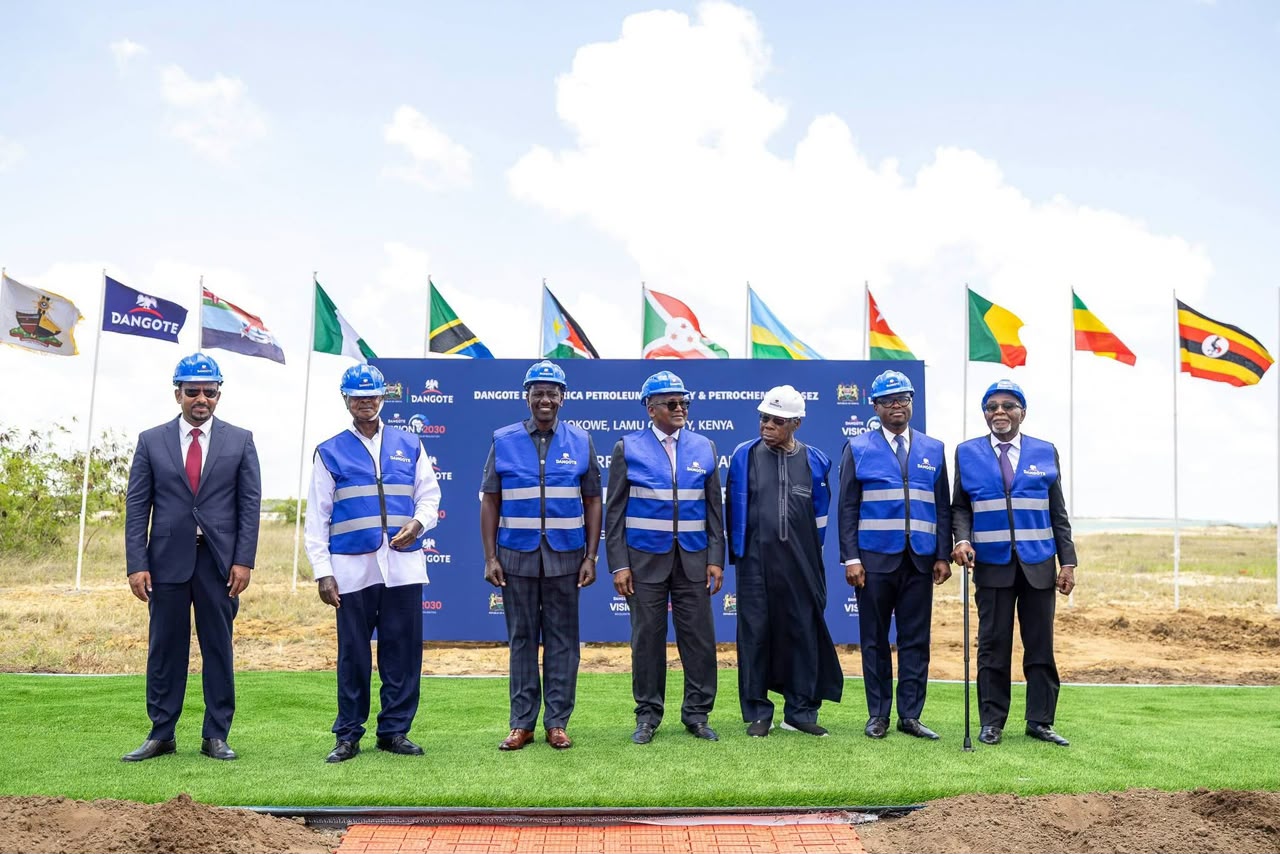

JOHANNESBURG — Kenya is betting $16bn on one of the most ambitious industrial projects in East Africa, as Nigerian industrialist Aliko Dangote and President William Ruto launched construction of an oil refinery and petrochemical complex in Lamu on September 30.
The project, which is expected to process 700,000 barrels of crude a day and be completed by 2030, is being presented by the Kenyan government as the largest foreign investment in the country’s history. Its ambition goes well beyond replacing imported fuel: Nairobi wants Lamu to become an industrial, energy and logistics hub serving a wider East African market.
The scale of the investment raises a more consequential question: can Kenya turn a refinery of continental scale into a durable source of economic growth, industrial capacity and regional trade?
Dangote’s African industrial strategy
The Lamu project extends Dangote’s strategy of building large-scale industrial assets designed to serve markets beyond a single national economy.
At 700,000 barrels a day, the proposed refinery would be comparable in scale with Dangote’s refinery in Lagos, Nigeria. The Lamu complex is also expected to include a 1,000MW power plant and facilities producing petrochemicals, fertilisers and other industrial products.
For Dangote, the logic is to capture more value from Africa’s raw materials within the continent. For Kenya, the attraction is different: replacing some imported refined products with domestic production while creating a platform for manufacturing, logistics and exports.
President Ruto has said the project could increase Kenya’s annual economic output by as much as 12 per cent. That figure should be treated as a government projection rather than an independently established forecast.
The more important question for investors will be how much of the $16bn ultimately translates into local production, tax revenues, skilled employment and new private-sector investment.
The economics of an oil importer building a refinery
The project also carries an unusual contradiction, Kenya is not yet a significant commercial oil producer, until domestic crude production becomes available at sufficient scale, the refinery will have to rely on imported feedstock.
That means the economics will depend on the cost of bringing crude to Lamu, refining it and distributing the resulting products across Kenya and neighbouring markets.
The refinery could reduce Kenya’s dependence on imported refined petroleum products, but it will not remove the country’s exposure to international oil prices. Its competitiveness will depend on crude prices, refining margins, shipping costs, financing costs and, critically, how much of its 700,000-barrel-a-day capacity can be utilised.
That makes the project less a straightforward bet on Kenyan oil demand than a wager on regional scale.
Lamu’s regional opportunity
The location is central to that strategy, Lamu forms part of the LAPSSET corridor, which is intended to connect Kenya with Ethiopia and South Sudan and develop a new trade and transport route along the country’s northern coast.
A large refinery could provide an anchor for additional investment in storage, shipping, transport, engineering and petrochemicals. Its potential customer base could extend beyond Kenya to Uganda, Tanzania, Rwanda and the Democratic Republic of Congo.
That regional dimension could be the difference between a refinery serving a national market and one operating as an East African energy platform.
But it also creates a competitive test. Other countries in the region are seeking to strengthen their own energy infrastructure, while fuel markets remain highly sensitive to international prices and transport costs.
Jobs and local value
The Kenyan government expects the project to create about 60,000 direct and indirect jobs, particularly during construction.
For Lamu, a historically peripheral part of Kenya, the potential impact extends beyond employment. A project of this scale could increase demand for housing, transport, services, engineering and technical training.
The critical question will be how deeply Kenyan companies are integrated into the supply chain.
If local manufacturers and service providers capture a meaningful share of procurement, the refinery could generate economic effects well beyond its physical site. If most high-value contracts remain with international suppliers, the domestic multiplier will be considerably smaller.
The same applies to financing. Kenya’s proposed participation and the potential involvement of regional investors could broaden the ownership base, but the final capital structure and the extent of public-sector exposure will be important for investors assessing the project.
Land, legal and environmental risks
The project is not without political and legal risks, a Malindi environmental and land court has ordered the status quo to be maintained over a disputed parcel in Lamu following a challenge by 133 residents claiming rights over ancestral land. A hearing is scheduled for October 14.
The dispute does not, by itself, amount to a cancellation of the project. But it highlights the risks associated with land acquisition, compensation, community consent and legal certainty around major infrastructure projects.
Environmental scrutiny will also be significant given the project’s coastal location and its potential impact on local ecosystems and communities.
A test of Africa’s industrial ambitions
For Dangote, Lamu would extend an industrial strategy that has already reshaped Nigeria’s energy landscape. For Ruto, it offers the prospect of moving Kenya further up the industrial value chain and positioning the country as an energy and logistics hub for the region.
But a $16bn price tag and a 700,000-barrel-a-day capacity do not, by themselves, guarantee economic transformation.
The real test will be how much value remains in Kenya: how many sustainable jobs are created, how much industrial capacity develops around the refinery, whether regional markets can be captured and whether the project can produce fuel competitively without creating excessive financial or environmental costs.
If it succeeds, Lamu could become more than a refinery. It could become an industrial anchor for East Africa, and a test of whether Africa can build the large-scale infrastructure needed to capture more value from its own resources.