Africa’s 2027 budget ambitions: Seven governments bet on industrialisation, jobs and social investment to accelerate growth
- Economic Outlook
- November 22, 2026
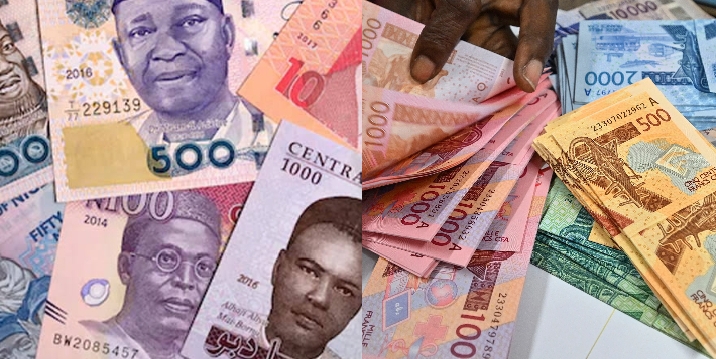

Angola’s $40.6bn spending plan, Ghana’s $10bn industrial transformation initiative and Zambia’s fiscal consolidation strategy illustrate how African governments are seeking to turn economic stability into productive investment. The challenge is to deliver stronger growth while managing debt, inflation and mounting demand for public services.
LAGOS | November 22, 2026
Seven African economies are preparing or debating their 2027 budgets, setting out plans to expand industrial capacity, modernise infrastructure and strengthen social protection as governments seek to translate fiscal stability into higher productivity and household incomes.
Angola has proposed expenditure equivalent to approximately $40.6bn, Ghana is targeting $33.1bn, Zambia has outlined $13.85bn, and Liberia is proposing $1.54bn. Mauritania’s budget amounts to approximately $3.59bn, while Zimbabwe has presented a ZiG358.3bn spending proposal. Kenya is preparing its 2027/28 fiscal framework.
Together, the proposals highlight three overlapping approaches to economic transformation: investment-led industrialisation, fiscal consolidation and the expansion of human capital.
The distinction matters. Large spending programmes can stimulate economic activity, but their long-term contribution depends on whether public investment raises productivity, generates tax revenue and attracts private capital.
Debt-service obligations, exchange-rate volatility and implementation capacity remain significant constraints.
For policymakers, the challenge is no longer simply to allocate more resources to development. It is to ensure that public expenditure produces measurable economic returns.
Angola: José de Lima Massano seeks to turn fiscal stability into production and employment
José de Lima Massano, Minister of State for Economic Co-ordination | Vera Daves de Sousa, Finance Minister
Angola’s proposed 2027 budget totals Kz37.3tn, equivalent to approximately $40.6bn at an indicative exchange rate of Kz918 per dollar.
The government is targeting economic growth of 5.5 per cent, supported by stronger non-oil activity and continued investment in infrastructure and domestic production.
José de Lima Massano, minister of state for economic co-ordination, has presented the fiscal strategy as an effort to reconcile budget discipline with productive investment and social protection.
According to figures cited during parliamentary discussions, approximately 47.56 per cent of primary fiscal expenditure is allocated to the social sector.
The Kwenda social protection programme has a proposed allocation of Kz154.6bn, approximately $168.4mn, with a projected reach of 1.7mn households.
The national school feeding programme aims to benefit around 7mn children, while the Minha Escola, Meu Futuroinitiative has been allocated Kz261.7bn, approximately $285mn, for educational infrastructure.
Public investment is projected at Kz6.2tn, equivalent to $6.75bn, or roughly 16.6 per cent of the headline budget envelope.
Energy, water supply, transport and logistics are among the priority sectors.
The economic rationale is straightforward: more reliable electricity, better transport networks and improved water infrastructure can reduce operating costs and support the expansion of manufacturing and agricultural production.
Massano has also highlighted a reported 31 per cent decline in food imports, linking the reduction partly to increased domestic production. The figure requires confirmation of its reference period and whether it measures import values or volumes.
The government is seeking to strengthen domestic supply chains and reduce reliance on imported food and construction materials.
Privatisation is another component of the reform programme. According to figures presented by Massano, approximately 122 enterprises or assets have undergone privatisation or partial capital opening.
Seven companies are listed on the stock exchange, with more than 30,000 new shareholders and approximately 7,000 jobs associated with the programme.
Angola’s longer-term challenge is to translate these reforms into higher non-oil productivity, stronger exports and sustainable private-sector employment.
Ghana: Cassiel Ato Forson advances a $10bn industrial transformation agenda
Cassiel Ato Forson, Finance Minister
Ghana’s finance minister, Cassiel Ato Forson, presented a proposed 2027 budget of GH₵389.2bn, approximately $33.1bn, equivalent to 21.6 per cent of GDP.
Revenue and grants are projected at GH₵323.4bn, or approximately $27.5bn, while the government is targeting a fiscal deficit of 3.6 per cent of GDP.
Direct capital expenditure is expected to reach GH₵100.4bn, approximately $8.54bn, equivalent to 5.6 per cent of GDP and 25.8 per cent of proposed expenditure.
Including capital transfers to other public entities, the figure rises to GH₵120.5bn, or approximately $10.25bn.
Forson’s proposed New Economy initiative aims to mobilise $10bn over four years, beginning in 2027, with an announced initial allocation of GH₵30bn, approximately $2.55bn.
The programme targets commercial agriculture, manufacturing, energy, technology, textiles and mineral processing.
The government’s Big Push infrastructure programme includes GH₵28bn, approximately $2.38bn, for transport and connectivity.
Among the identified projects are the Ghana Market Access and Connectivity Project, with GH₵2bn, and the Volivo bridge, with GH₵400mn.
Education is allocated GH₵48bn, approximately $4.08bn, while healthcare receives GH₵40.3bn, or $3.43bn.
The government expects growth of 5.2 per cent in 2027, compared with a projected 4.8 per cent in 2026.
Forson’s strategy seeks to shift fiscal policy towards investment that expands productive capacity and increases export earnings.
The central test will be whether infrastructure spending generates sufficient private-sector investment to sustain growth without adding excessive pressure to public finances.
Zambia: Situmbeko Musokotwane targets a 3% fiscal deficit
Situmbeko Musokotwane, Minister of Finance and National Planning
Zambia’s finance minister, Situmbeko Musokotwane, has proposed a ZMW284.8bn budget, approximately $13.85bn, as the government seeks to consolidate recent macroeconomic gains.
The administration aims to reduce its fiscal deficit from 5.9 per cent of GDP in 2026 to 3 per cent in 2027.
The proposed budget places particular emphasis on domestic revenue mobilisation, energy security and productive investment.
Zambia is targeting real GDP growth of at least 4.9 per cent in 2027 and inflation within a 6–8 per cent range.
Domestic revenue is projected at ZMW233.7bn, approximately $11.37bn, representing about 82.1 per cent of the budget’s financing envelope.
Debt-service allocations are estimated at ZMW67.6bn, or approximately $3.29bn, highlighting the continuing pressure of past borrowing.
Nevertheless, the macroeconomic backdrop has improved.
Inflation reportedly declined from 11.2 per cent in December 2025 to 6.3 per cent in October 2026, while international reserves reached approximately $6.1bn at the end of August.
The Bank of Zambia’s policy rate stood at 10.75 per cent, according to the budget-period figures.
The government has also proposed education expenditure of ZMW38.2bn, approximately $1.86bn, alongside plans to recruit 3,125 healthcare professionals.
Musokotwane’s approach is to use improved fiscal credibility to support investment in mining, agriculture, energy and transport.
For investors, the key question is whether lower inflation and a narrower fiscal deficit will translate into reduced financing costs and a stronger private-sector response.
Liberia: Augustine Kpehe Ngafuan allocates $340mn to human capital
Augustine Kpehe Ngafuan, Minister of Finance and Development Planning
Liberia’s finance minister, Augustine Kpehe Ngafuan, has proposed a $1.539bn budget for 2027, an increase of approximately 18.1 per cent from the previous approved budget of $1.303bn.
The government expects to mobilise $1.352bn from domestic sources, equivalent to 87.8 per cent of projected resources.
External budget-support grants are estimated at $92mn, representing about 6 per cent.
The spending plan allocates $339.8mn to human capital, equivalent to 22.1 per cent of the budget.
Public investment is projected at $328.5mn, covering 194 projects and representing approximately 21.3 per cent of total expenditure.
Debt service is estimated at $275.5mn, or 17.9 per cent of the budget.
Ngafuan’s strategy emphasises education, healthcare, infrastructure and stronger domestic revenue mobilisation.
The expansion of public investment could improve transport connectivity and access to essential services, supporting productivity and regional economic integration.
However, Liberia’s ability to sustain higher spending will depend on tax collection, project implementation and the management of recurrent expenditure.
The relatively high share of domestic financing is an encouraging feature, although revenue projections will need to be matched by actual collections.
Zimbabwe: Mthuli Ncube prioritises agriculture, education and income protection
Mthuli Ncube, Finance Minister
Zimbabwe’s finance minister, Mthuli Ncube, presented a proposed 2027 budget containing ZiG358.3bn in expenditure allocations.
The figure should be distinguished from broader financing requirements that may include debt repayments and other statutory obligations.
Primary and secondary education is allocated ZiG47.7bn, equivalent to approximately 13.3 per cent of the reference expenditure envelope.
Healthcare receives ZiG35.5bn, or about 9.9 per cent.
The Pfumvudza/Intwasa agricultural programme is allocated ZiG8.4bn, while the government plans to develop or rehabilitate 65,000 hectares of irrigation infrastructure.
The objective is to strengthen food security, improve agricultural productivity and reduce vulnerability to drought.
Social protection measures include ZiG1bn for cash transfers and ZiG300mn for disability-related assistance.
Ncube has also proposed raising the monthly personal income-tax exemption threshold from $100 to $150, offering relief to qualifying lower-income workers.
The government’s approach combines agricultural investment with measures designed to protect household purchasing power.
Monetary stability will be critical. Inflation and exchange-rate movements can quickly erode the real value of public expenditure, particularly in sectors that rely on imported equipment and materials.
A consistent US dollar equivalent for the ZiG-denominated allocations requires a verified official exchange rate and conversion date.
Mauritania: Capital investment reaches 11% of GDP
Fiscal policy leadership, Ministry of Finance and Ministry of Economic Affairs and Development
Mauritania’s proposed 2027 budget amounts to MRU145.91bn, approximately $3.59bn, with revenue and grants projected at MRU152.11bn, or $3.74bn.
The government forecasts economic growth of 5 per cent and inflation of 3.3 per cent.
Revenue and grants are expected to reach 25.31 per cent of GDP, compared with expenditure and net lending of 24.28 per cent.
The overall fiscal balance, including grants, is projected to record a surplus of MRU6.2bn, approximately $152mn, equivalent to 1.03 per cent of GDP.
The non-extractive primary deficit is targeted at 3.5 per cent of GDP.
Capital expenditure is projected at MRU66.1bn, approximately $1.62bn, representing 45.3 per cent of expenditure and 11 per cent of GDP.
This is among the most investment-intensive fiscal allocations in the seven-country comparison, although differences in budget definitions limit direct ranking.
Mauritania’s multiyear local development programme, valued at MRU26.44bn, approximately $650mn, covers 2025–27.
Its targets include 6,115 classrooms, 104 hospitals and healthcare centres, 939 water boreholes and support for more than 2,300 youth-led small businesses.
The programme is intended to expand access to public services and strengthen local economic activity.
The government is also pursuing tax administration reforms, including digitalisation, changes to mining and property taxation, and rationalisation of fiscal exemptions.
The fiscal strategy seeks to combine infrastructure-led development with stronger revenue mobilisation and expenditure control.
Kenya: John Mbadi confronts a $685mn education funding gap
John Mbadi, Cabinet Secretary for the National Treasury and Economic Planning
Kenya’s Treasury, led by John Mbadi, is preparing the 2027/28 budget against a backdrop of competing demands for public investment, education and debt sustainability.
Unlike the other six economies, Kenya has not yet finalised its budget proposal for the relevant fiscal year.
Preliminary education-sector consultations identified funding requirements of KSh229bn, approximately $1.76bn, against an indicative ceiling of KSh140bn, or $1.08bn.
The resulting shortfall of KSh89bn, approximately $685mn, represents around 38.9 per cent of the identified requirements.
The financing debate covers school feeding, inclusive education, sanitation and improvements to learning facilities.
Mbadi’s broader fiscal priorities include stronger domestic revenue mobilisation, improved expenditure efficiency and the protection of essential services.
The government must also manage the trade-off between expanding public investment and limiting the accumulation of debt.
Kenya’s budget process illustrates how demand for social spending can exceed available fiscal resources, even in economies with relatively diversified private sectors.
The numbers behind Africa’s 2027 fiscal ambitions
Indicative US dollar conversions; rounded values based on reference exchange rates, not a common official budget valuation date.
| Economy | Proposed budget | Key financial indicators |
|---|---|---|
| Angola | $40.6bn | $6.75bn public investment; 5.5% projected GDP growth |
| Ghana | $33.1bn | $8.54bn direct capital spending; 3.6% fiscal deficit target |
| Zambia | $13.85bn | $3.29bn debt service; 3% fiscal deficit target |
| Liberia | $1.54bn | $339.8mn human capital; $328.5mn public investment |
| Mauritania | $3.59bn | $1.62bn capital expenditure; 1.03% projected fiscal surplus |
| Zimbabwe | USD conversion pending | 65,000 hectares of irrigation targeted; 13.3% of reference allocations to schooling |
| Kenya | Budget under preparation | $685mn preliminary education financing gap |
The table should not be interpreted as a ranking of fiscal performance. Countries use different budget definitions, fiscal years and exchange-rate assumptions. Debt-service allocations may also include different combinations of interest and principal repayments.
Three economic models emerge
The seven budgets reveal three broad approaches to fiscal transformation.
Investment-led industrialisation is particularly visible in Angola and Ghana, where governments are seeking to expand productive capacity, reduce infrastructure bottlenecks and strengthen domestic value chains.
Mauritania also places substantial emphasis on capital investment, with spending equivalent to 11 per cent of GDP.
Fiscal consolidation is central to Zambia’s strategy, which aims to reduce the deficit while maintaining essential services and restoring investor confidence.
Ghana is pursuing a related balance between capital spending and fiscal discipline.
Human-capital development is prominent in Liberia, Zimbabwe and Kenya, where education, healthcare and social protection remain important priorities.
These approaches are complementary rather than mutually exclusive.
Infrastructure investment can have limited impact if businesses lack access to finance or skilled workers. Similarly, education spending may fail to deliver its full economic benefits without employment opportunities and a competitive private sector.
Regional trade could amplify the returns
The African Continental Free Trade Area offers opportunities to increase the economic impact of national investment programmes by expanding regional markets and encouraging cross-border value chains.
Angola’s Atlantic transport links, including the Lobito Corridor, could strengthen connections with mineral-producing economies in central and southern Africa.
Ghana’s industrial and logistics investments could support regional exports and domestic processing of agricultural and mineral products.
Zambia could benefit from increased investment in mineral processing, energy and transport, while Mauritania’s infrastructure expansion may improve market access and local enterprise development.
The economic returns will depend on reliable energy supplies, lower trade barriers, predictable regulation and effective project delivery.
International financing from institutions such as the International Monetary Fund, World Bank and African Development Bank may complement domestic resources, but proposed investments should not be treated as fully funded without confirmed agreements.
Outlook: Execution will determine whether 2027 marks a turning point
Africa’s 2027 budget proposals point to a growing emphasis on productive investment, fiscal credibility and the development of human capital.
José de Lima Massano is seeking to link Angola’s macroeconomic stability with domestic production and social investment. Cassiel Ato Forson is advancing an industrial transformation agenda in Ghana, while Situmbeko Musokotwane is pursuing fiscal consolidation as a foundation for renewed investment in Zambia.
Augustine Kpehe Ngafuan is prioritising human capital in Liberia, Mthuli Ncube is targeting agricultural resilience in Zimbabwe, and Mauritania is expanding capital expenditure and local infrastructure.
In Kenya, John Mbadi faces the challenge of reconciling rising demand for education and public services with limited fiscal space.
For international investors, the decisive indicators will include project execution, debt sustainability, inflation, exchange-rate stability and regulatory predictability.
For households, the outcomes will be measured through employment, real wages, food prices and access to essential services.
The opportunities are substantial. Better infrastructure can reduce production costs, improved education can raise labour productivity, and stronger regional trade can expand markets for African businesses.
But ambitious spending plans are not, by themselves, evidence of economic transformation.
The defining test of Africa’s 2027 fiscal agenda will be whether governments can convert billions of dollars in public commitments into productive assets, competitive enterprises, sustainable jobs and lasting improvements in living standards.