Africa overtakes Asia as the global epicentre of hunger
- FeaturedPoliticsSAUTI
- November 26, 2026

With 309 million people facing chronic hunger and two-thirds of its population unable to afford a healthy diet, Africa confronts a structural crisis that threatens economic growth, social stability and food sovereignty.
AfricaHeadline | Africa in Numbers — November 2026
Africa has overtaken Asia as the continent with the largest number of undernourished people, exposing one of the most profound contradictions in its economic development: persistent food insecurity across a region endowed with vast natural resources, considerable agricultural potential and a predominantly young population.
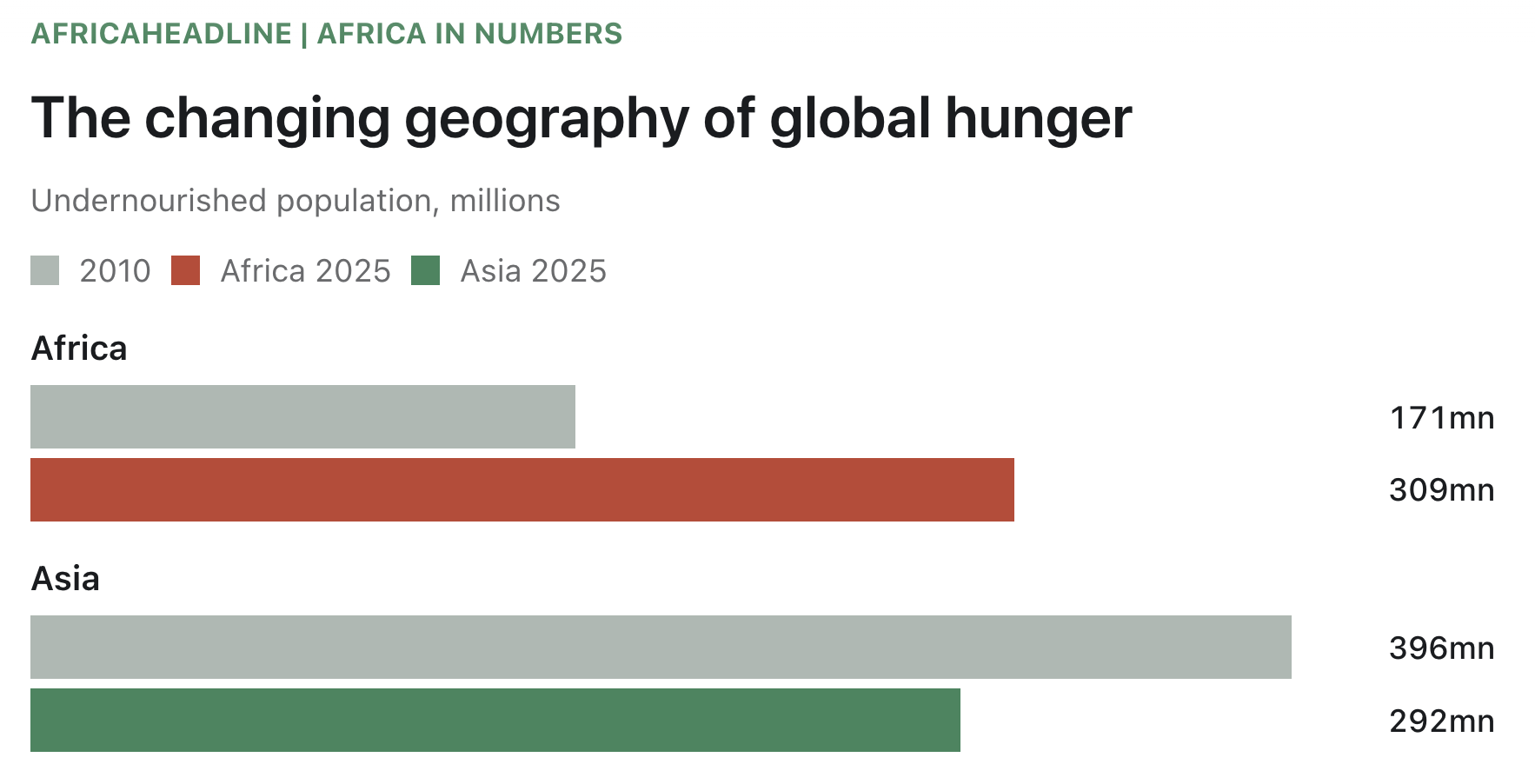
According to AfricaHeadline’s special edition of Africa in Numbers, approximately 309 million Africans faced chronic hunger in 2025, up from 171 million in 2010, an increase of nearly 81 per cent over 15 years. Over the same period, Asia reduced its undernourished population from 396 million to 292 million.
Africa now accounts for approximately 48 per cent of the world’s 645 million undernourished people, compared with 28 per cent in 2010.
A crisis of regional disparities
The geographical distribution of hunger reflects significant differences in economic resilience, climate vulnerability and institutional capacity.
Central Africa recorded the highest prevalence of undernourishment, at 28.9 per cent, while Eastern Africa accounted for the largest absolute number, with 131.3 million people experiencing chronic hunger.
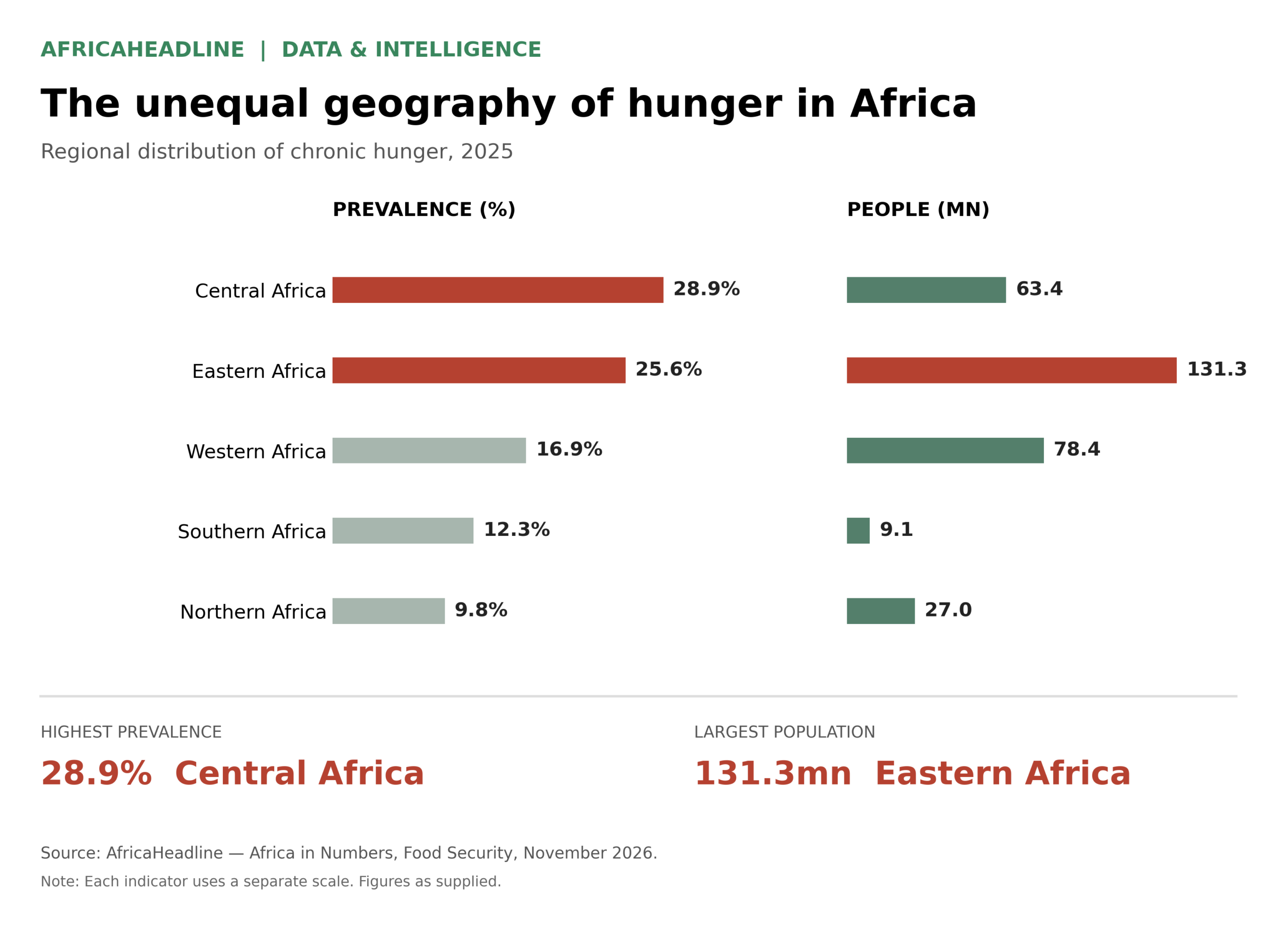
Together, Central and Eastern Africa account for approximately 63 per cent of the continent’s undernourished population. Armed conflicts, climate shocks, inadequate transport infrastructure and persistently low agricultural productivity have compounded these vulnerabilities.
The concentration of hunger in these regions also underscores the relationship between political stability, institutional effectiveness and economic development.
The economic cost of food insecurity
149mn
People facing acute food insecurity, Phase 3 or above
56.6%
Population experiencing moderate or severe food insecurity
66.6%
Population unable to afford a healthy diet
$4.35
Daily cost of a healthy diet in purchasing power parity terms
Food insecurity is no longer merely a humanitarian concern. It has become a macroeconomic constraint, with far-reaching implications for labour productivity, public healthcare expenditure, educational attainment and industrial competitiveness.
Dependence on food imports leaves African economies particularly exposed to international commodity price volatility, exchange rate depreciation and disruptions to global supply chains.
For central banks, persistent food inflation presents an additional monetary policy challenge. Rising prices for essential goods erode household purchasing power, constrain private consumption and complicate efforts to achieve price stability without undermining economic growth.
For governments, the resulting pressure on public finances can divert resources away from productive investment towards emergency interventions and social assistance.
Africa’s widening global food security gap
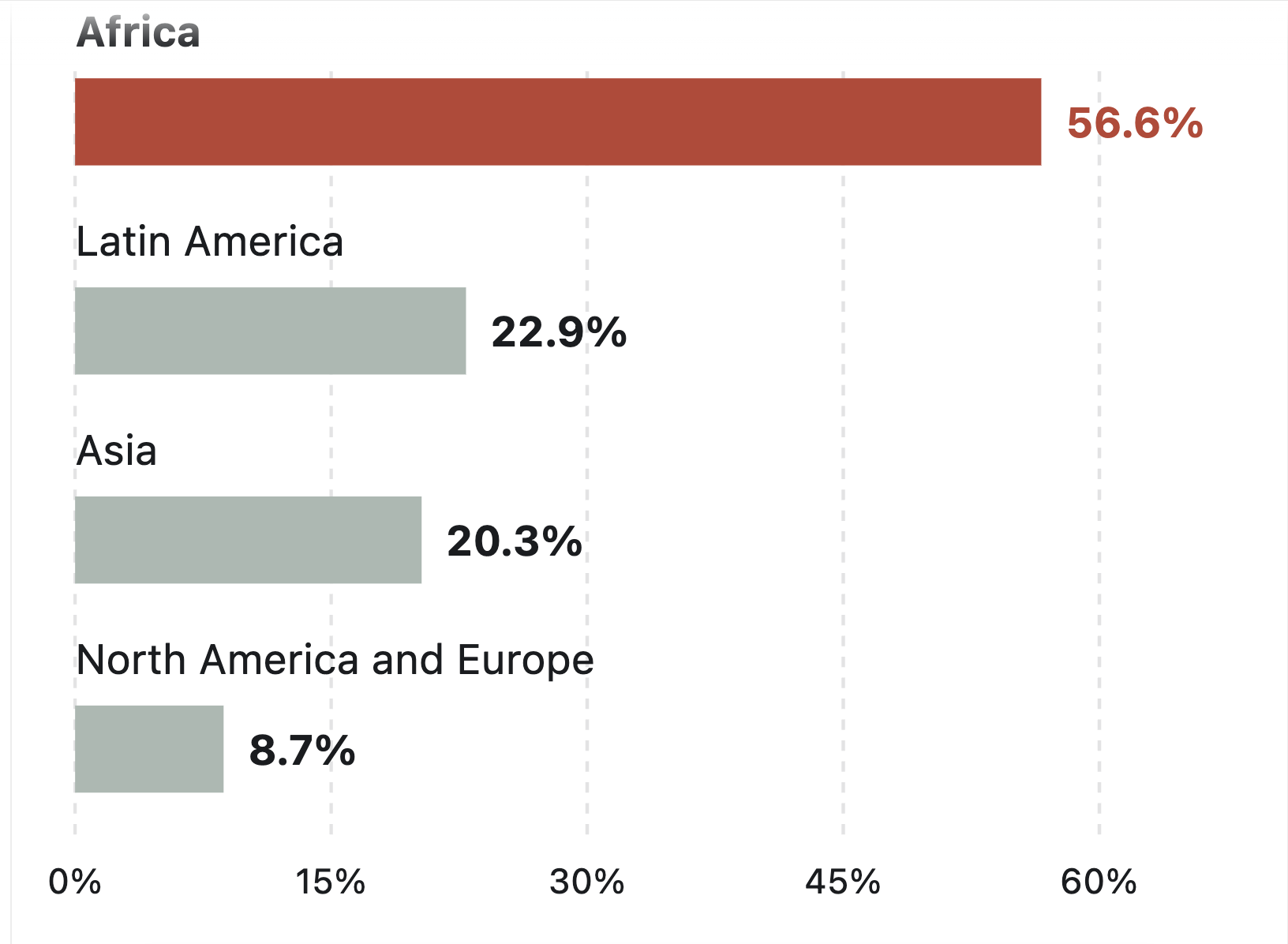
Nutritional indicators are equally concerning. Only 20.5 per cent of African children aged between six and 23 months meet minimum dietary diversity requirements, compared with a global average of 30.9 per cent.
Such disparities threaten human capital formation and could undermine the continent’s ability to capture the economic benefits of its demographic dividend.
Without sustained investment in nutrition, education and productive employment, Africa’s expanding working-age population risks becoming a source of fiscal and social pressure rather than an engine of economic transformation.
From external dependence to food sovereignty
Despite the challenging outlook, there are encouraging signs of structural progress.
21 of 34
African countries reduced undernourishment since 2004–06.
29 of 33
African countries reduced chronic child malnutrition.
These improvements suggest that sustained public policies, targeted investment and institutional reforms can deliver measurable results.
Transforming Africa’s food systems, however, requires an integrated economic strategy encompassing access to agricultural land, mechanisation, irrigation, vocational training, affordable credit, scientific research, agro-industrial development and modern storage and distribution infrastructure.
The African Continental Free Trade Area could play a pivotal role in this transformation by integrating agricultural markets, reducing trade barriers and strengthening regional value chains.
Beyond expanding agricultural output, Africa must develop the industrial capacity to process, preserve, transport and market its products competitively.
Food security should therefore occupy a central position in national strategies for economic diversification, industrialisation, import substitution and youth employment.
Africa’s economic future will depend not only on its ability to attract capital and accelerate GDP growth, but also on its capacity to convert agricultural potential into productive wealth, reduce external vulnerabilities and ensure that economic expansion translates into tangible improvements in living standards.
Food sovereignty is not simply an agricultural ambition. It is a strategic pillar of Africa’s economic independence, macroeconomic resilience and long-term prosperity.