COP31: Africa asserts its diplomatic sovereignty and calls for a new global climate order
- SAUTI
- November 24, 2026
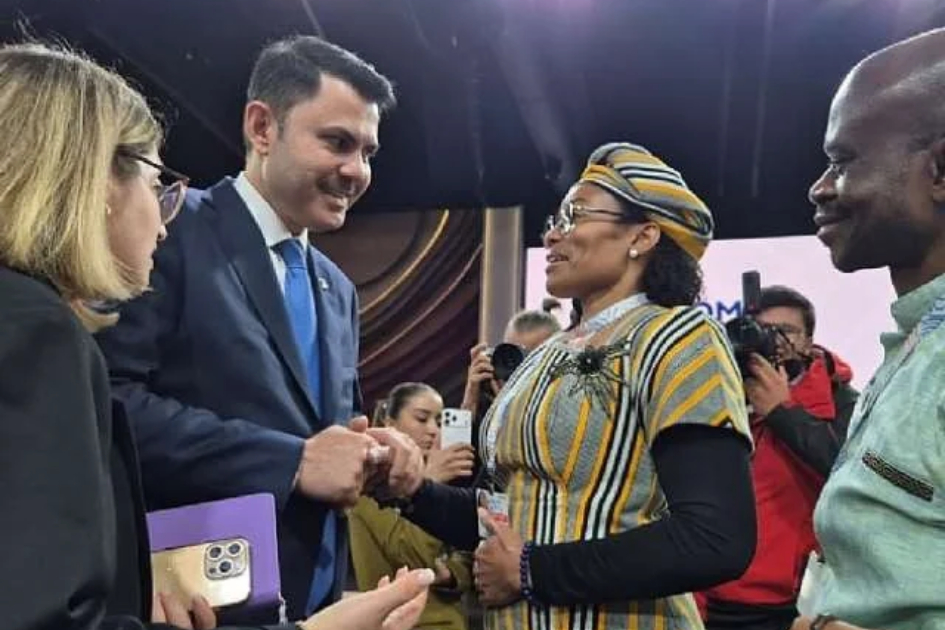

Ghana leads the defence of 54 African nations’ interests in Antalya as the continent seeks to translate its demographic, economic and energy significance into greater international bargaining power.
Antalya — The determination with which Ghana’s environment, science, technology and innovation minister, Zanetor Agyeman-Rawlings, defended Africa’s collective position during the closing plenary of COP31 marked a significant moment in the continent’s diplomatic assertiveness and the evolution of modern pan-Africanism.
Interrupted by COP31 president Murat Kurum while presenting the position of the African Group of Negotiators (AGN), the Ghanaian minister received immediate backing from the bloc’s chair, Nana Dr Antwi-Boasiako Amoah, who challenged the presidency’s conduct and emphasised the legitimacy of representing 54 African states.
Amoah accused Kurum of failing to show respect to the African negotiating bloc and drew his attention to the conference’s code of conduct.
Kurum subsequently apologised to the minister and the African delegation, saying he had not intended to disrespect Ghana or the negotiating bloc.
Beyond diplomatic protocol, the episode demonstrated Africa’s growing capacity to defend its sovereign equality within international institutions without compromising the principles of multilateral co-operation.
Africa’s emergence as a stronger negotiating power
Ghana’s intervention symbolises an important shift in continental diplomacy. Africa increasingly seeks to move beyond being a recipient of international decisions towards becoming an active participant in shaping the rules governing its economic development.
With approximately 1.5bn inhabitants, accounting for 19 per cent of the world’s population but only a small share of global greenhouse gas emissions, Africa has compelling economic, demographic and environmental grounds for demanding greater influence over global climate governance.
The African position rests not solely on the historical responsibility of industrialised economies, but also on the continent’s growing importance to global energy security, technological transformation and economic sustainability.
From the copper reserves of Zambia and the Democratic Republic of Congo to Congolese cobalt, Angola’s hydroelectric potential, the Sahel’s solar resources and East Africa’s geothermal capacity, the continent possesses strategic assets essential to global decarbonisation.
Africa’s priority is to convert these natural advantages into industrial capacity, skilled employment, technological advancement and greater financial autonomy.
Climate justice: from promises to financial commitments
The financial figures illustrate both the scale of the challenge and the potential for economic transformation.
According to figures attributed to the Climate Policy Initiative’s November 2026 assessment, annual climate finance flows to Africa increased from $29.5bn in 2019-20 to $74bn in 2023-24, an expansion of more than 150 per cent.
However, estimated annual financing requirements for 2025-30 stand at $207bn, leaving an annual funding shortfall of approximately $133bn.
The expansion of private investment offers an encouraging signal. Private climate finance reportedly reached $26.5bn in 2023-24, with more than three-quarters originating from African sources.
These developments point to the continent’s increasing ability to mobilise domestic financial resources, although further investment remains dependent on lower capital costs and improved access to concessional financing.
In Antalya, the African negotiating bloc pressed for a tripling of adaptation finance, alongside measurable targets, implementation schedules and accountability mechanisms.
Africa’s right to industrialisation
Europe and the United States built much of their industrial prosperity through the intensive use of fossil fuels. China subsequently combined a similar development trajectory with large-scale investment in renewable technologies.
Africa deserves an equivalent opportunity to pursue economic development through an energy transition aligned with its industrial and social priorities.
According to the International Energy Agency, approximately 600mn Africans remain without access to electricity, while around 1bn lack access to clean cooking solutions.
Against this backdrop, climate justice must encompass energy access, food security, industrialisation, domestic mineral processing and employment creation.
Africa cannot afford to participate in the global energy transition merely as a supplier of raw materials underpinning the industrial competitiveness of other economies.
Its strategic ambition must be to capture a greater share of global value chains, develop domestic manufacturing capabilities and retain more of the wealth generated by its natural resources.
From Antalya to Addis Ababa: a historic opportunity
Although COP31 ended without consensus on its principal political agreement, the forthcoming COP32 in Addis Ababa, Ethiopia, in 2027 offers Africa an opportunity to strengthen its leadership in global climate governance.
The African Union, African Development Bank, Afreximbank and African Continental Free Trade Area could play complementary roles in advancing a common agenda encompassing climate finance, economic integration, energy sovereignty and industrial development.
The Antalya episode illustrates how 21st-century pan-Africanism can assert itself through technical competence, diplomatic intelligence, institutional co-ordination and collective bargaining power.
Ghana defended more than a minister’s right to complete her address. It upheld the principle that a nation’s economic size should not determine the extent of its sovereignty.
Africa is not seeking permission to build its future. It seeks partnerships on equal terms, the freedom to transform its resources into prosperity and a meaningful role in shaping the rules of the global economy.
From Antalya to Addis Ababa, the continent has an opportunity to translate diplomatic unity into economic sovereignty, and climate justice into a powerful instrument of African development.