FATF Grey List remains a challenge to investment ambitions
- Economic
- June 25, 2026
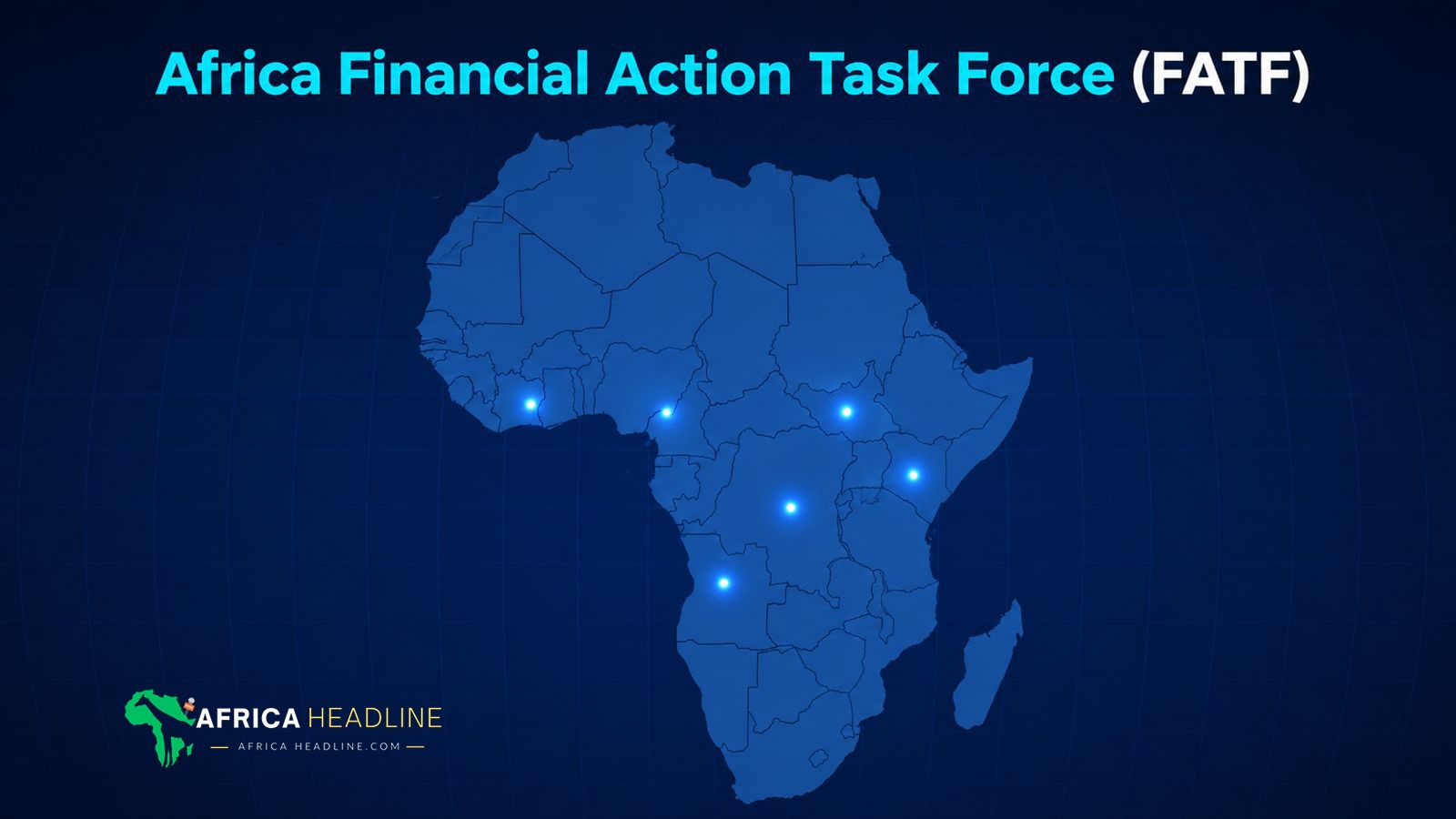

Africa’s financial integrity test.
By AfricaHeadline | Analysis
LAGOS — Africa’s ambition to attract foreign investment and position itself as a global growth destination continues to be constrained by weaknesses in anti-money laundering (AML) and counter-terrorism financing (CTF) frameworks.
The latest review by the Financial Action Task Force (FATF) confirms that Angola, Cameroon, Côte d’Ivoire, the Democratic Republic of Congo, Kenya and South Sudan remain under enhanced monitoring, commonly known as the “grey list”. Meanwhile, Algeria and Namibia exited the list after implementing comprehensive reforms to strengthen financial supervision, transparency and AML enforcement.
Although grey-listing does not impose sanctions, it increases compliance costs for banks and multinational companies, often resulting in stricter due diligence, slower cross-border transactions and reduced correspondent banking relationships, factors that can discourage foreign direct investment.
For Angola, which joined the grey list in October 2024, the priority remains strengthening financial supervision, improving beneficial ownership transparency and enhancing investigations into money laundering and terrorist financing. Authorities have nevertheless made progress in implementing reforms agreed with international partners.
The contrasting experiences across the continent highlight an important lesson, robust financial governance is becoming a competitive advantage.
As global investors place greater emphasis on regulatory quality and institutional resilience, compliance with FATF standards is increasingly viewed as an economic imperative rather than a technical obligation.
Africa’s long-term investment prospects will depend not only on economic growth and natural resources but also on the credibility of its financial systems.
The race to leave the FATF grey list is therefore emerging as one of the continent’s most significant economic reform agendas, shaping investor confidence, access to global capital and Africa’s competitiveness in international financial markets.