Ruto’s bold economic agenda delivers results
- EconomicKenya
- November 20, 2024
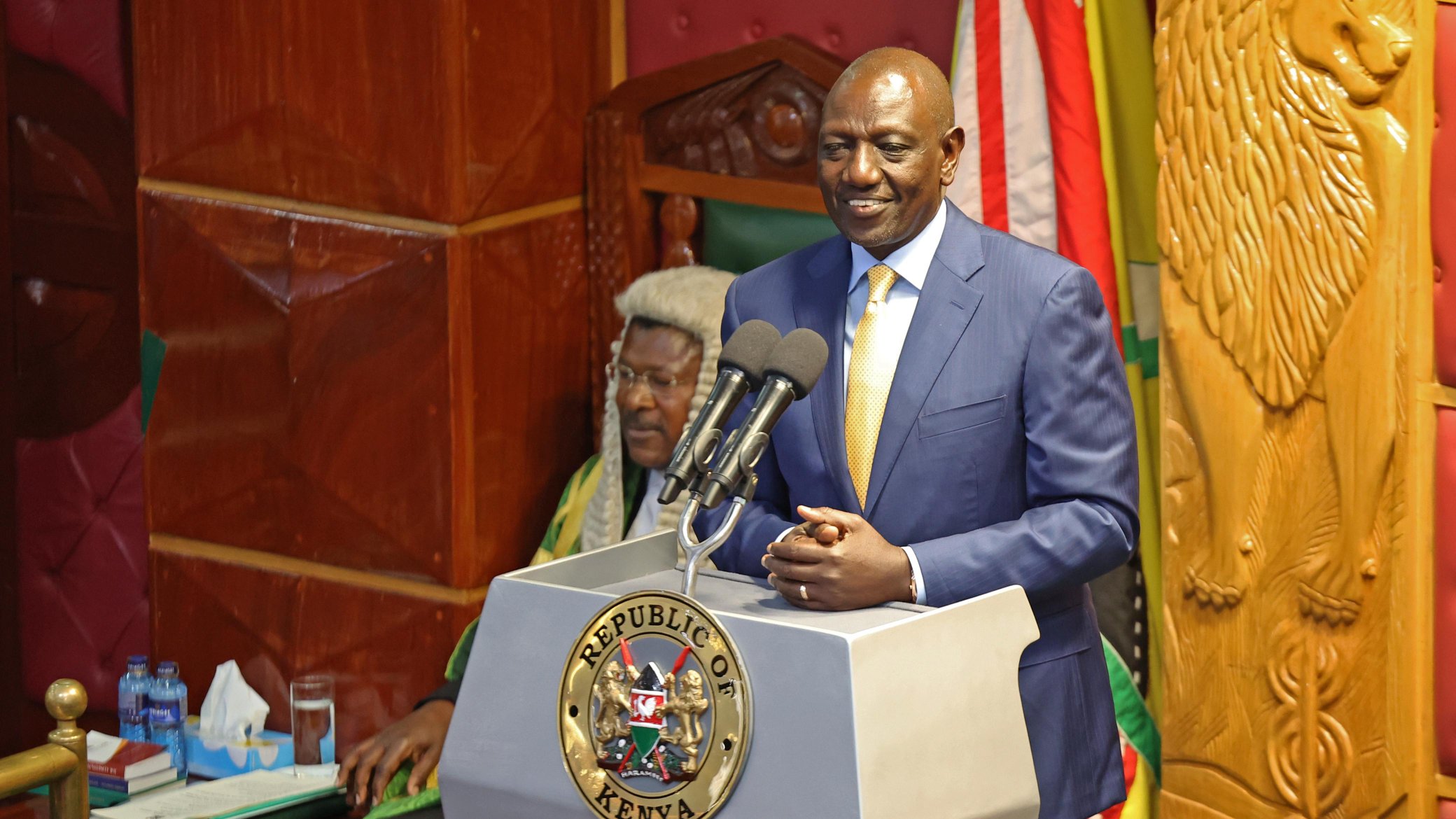

Johannesburg, South Africa – Under the leadership of President William Ruto, Kenya is witnessing remarkable economic progress, with significant gains across key sectors, including transportation, tourism, agriculture, and cost-of-living improvements. The latest data highlights the positive impact of transformative government policies aimed at driving growth and improving the livelihoods of Kenyans.
For the first time in 10 years, Kenya Airways posted a profit of Ksh 513 million (€3.1 million) after tax. This milestone was driven by a stable Kenyan shilling and higher revenues, marking a turning point for the national carrier, which had struggled with consecutive losses over the past decade.
Kenya’s tourism sector, a cornerstone of its economy, recorded revenues of Ksh 142.5 billion (€864 million) in 2024. This significant increase is attributed to the world-famous wildebeest migration in the Maasai Mara, which drew international visitors in record numbers, further solidifying Kenya’s position as a top safari destination.
The country’s sugar production soared by 123.4%, reaching 384,552 tonnes in 2024. Supported by a government-subsidized fertilizer program, this achievement not only boosted domestic supply but also opened the door to potential exports, presenting a new revenue stream for the agricultural sector.
According to the World Bank, Kenya’s economy is forecast to grow by 5.2% in 2024, driven by robust private sector investments and improved business conditions. This growth positions Kenya as one of Africa’s most promising economies, outperforming many of its regional peers.
The government’s employment initiatives have created over 160,000 new jobs in 2024, with significant contributions from the housing sector. More than 112,405 housing units have been completed or are under construction, with plans for an additional 730,062 units to address the rising demand for affordable housing.
Infrastructure development remains a key priority, with the completion of major projects such as the Kenol-Sagana Road, Mteza Dongo Kundu-MPARD 2, and the Eldoret Southern Bypass. These projects are enhancing connectivity, improving logistics, and fostering economic activity across the country.
One of the most impactful measures has been the significant reduction in fertilizer prices, from Ksh 7,000 to Ksh 2,000 (a 71% decrease). This initiative has increased agricultural productivity and slashed the cost of maize flour (unga), bringing prices down from Ksh 230 to Ksh 100. These changes have eased the financial burden on Kenyan households and strengthened food security.
The numbers tell a clear story: President Ruto’s administration is delivering tangible results that are transforming Kenya’s economic landscape. With steady growth, strategic investments, and a focus on improving the lives of ordinary citizens, Kenya is emerging as a model for sustainable and inclusive development in Africa.