The invention of “Hausa-Fulani”, when history becomes a political weapon
- Culture & Arts
- June 29, 2026
 Save as PDF
LAGOS – Few countries illustrate the political power of identity as vividly as Nigeria. With more than 250 ethnic groups, a federal system built on delicate balances and a history punctuated by military rule, civil war and democratic transitions, the country’s politics has always revolved around questions of who belongs, who governs and who controls the national narrative.
The latest controversy concerns two of Nigeria’s largest communities: the Hausa and the Fulani. At first glance, the debate appears to be a matter of historical terminology. In reality, it touches the foundations of political legitimacy, regional power and freedom of expression.
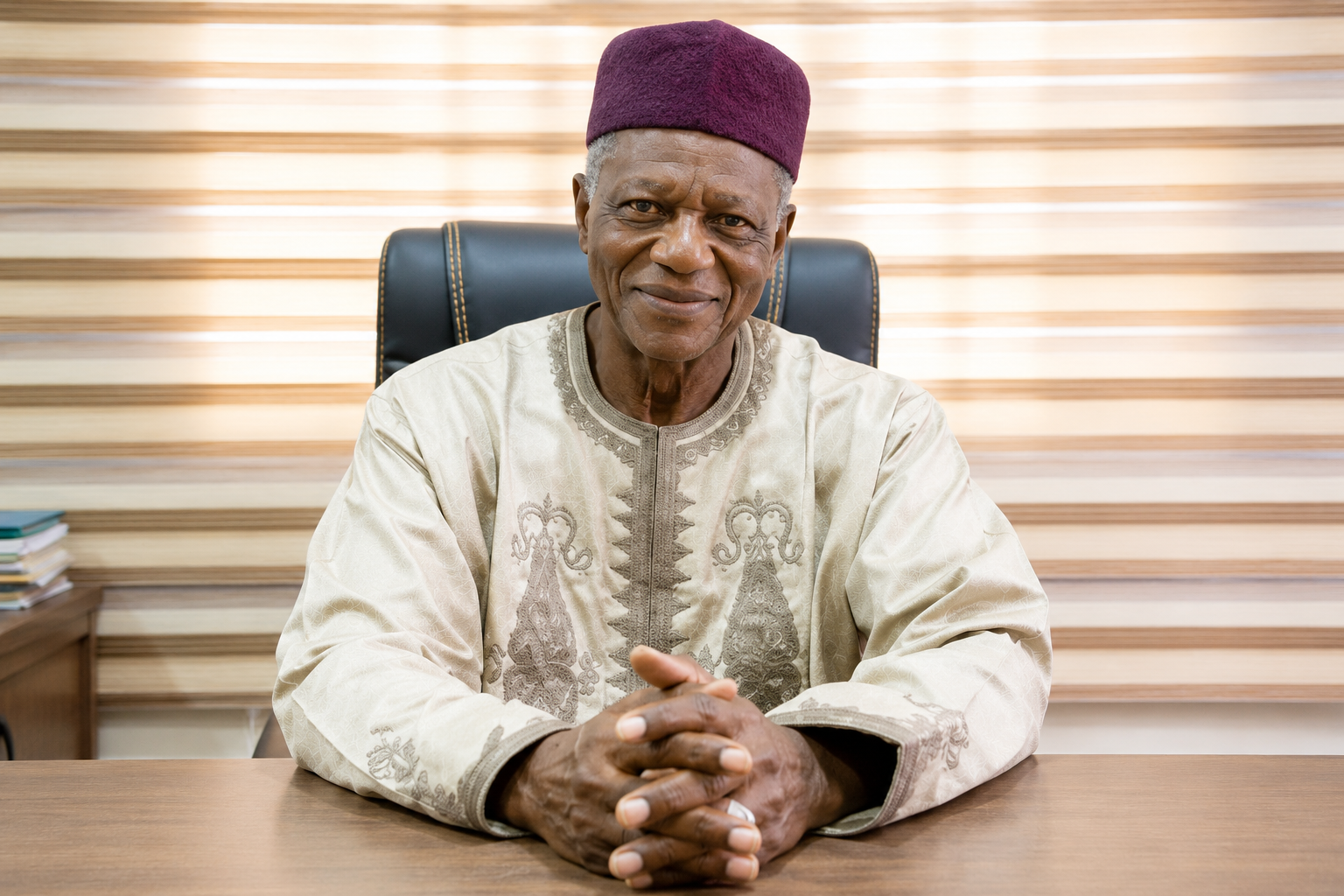
Professor Tijani Naniya, a respected historian at Bayero University Kano, argues that the expression “Hausa-Fulani” is less an ethnic reality than a political construction. Whether one accepts that interpretation or not, the debate itself reveals how historical identities are continually reinterpreted to serve contemporary political objectives.
A relationship forged over centuries
Long before Nigeria emerged as a modern state, Hausaland consisted of prosperous city-states including Kano, Katsina, Gobir and Zazzau. These kingdoms were connected by trade, Islamic scholarship and sophisticated political institutions.
Beginning around the fifteenth century, Fulani migrants—particularly Islamic scholars and clerics—settled throughout the region. Rather than replacing Hausa society, many integrated into it through religious institutions, intermarriage and administration. The distinction between settled urban Fulani and nomadic pastoral Fulani became increasingly significant, although it is often overlooked in contemporary political discourse.
The decisive turning point came with the early nineteenth-century jihad led by Usman dan Fodio. The resulting Sokoto Caliphate transformed northern Nigeria’s political landscape, installing Fulani-led emirates while governing overwhelmingly Hausa-speaking populations.
Religion became the great integrator. Islam offered not merely a common faith but also a shared legal system, educational tradition and political legitimacy. Over generations, ethnic distinctions blurred among many urban elites, even while separate cultural identities persisted, this long process of integration complicates simplistic ethnic classifications.
The politics of a hyphen
Professor Naniya contends that the compound label “Hausa-Fulani” gained prominence during the Nigerian Civil War of 1967-1970, when political actors outside northern Nigeria increasingly described the region as a single bloc.
Whether the exact origins of the expression lie in that period or evolved more gradually remains a matter for historians. What is less disputed is that the term became politically useful.
For federal politicians, treating northern Muslims as one constituency simplified electoral calculations.
For colonial administrators before independence, broad ethnic categories made governance more manageable.
For southern political rivals, the phrase came to symbolise what many perceived as northern political dominance.
The label therefore served different purposes for different actors. It reduced a remarkably diverse region to a single political identity.
Such simplifications are hardly unique to Nigeria. Across the world, political language often compresses complex societies into convenient categories. Yet convenience is not accuracy.
Unity or Uniformity?
Professor Naniya argues that most people in northern Nigeria make little practical distinction between Hausa and settled urban Fulani because both communities share language, religion and centuries of political integration.
His critics disagree.
Some argue that merging distinct ethnic identities obscures historical realities, marginalises minority experiences and reinforces political hierarchies inherited from the Sokoto Caliphate. Others contend that preserving separate ethnic identities strengthens rather than weakens democratic representation, the disagreement illustrates a broader dilemma.
Nations require shared identities to function politically. Yet excessive simplification risks erasing legitimate diversity, finding the balance is never easy.
When history meets security
The debate took a more troubling turn with the reported detention of activist Bitrus Masango, who publicly challenged the “Hausa-Fulani” concept.
Whatever one’s position on the historical argument, democratic societies face an important constitutional question.
Should controversial interpretations of history be answered through scholarship, or through state security agencies?
Governments unquestionably have a responsibility to prevent incitement to violence, particularly in countries where ethnic tensions have previously fuelled deadly conflicts. But democratic legitimacy also depends upon protecting lawful criticism, historical debate and freedom of expression.
If speech crosses into incitement, courts, not indefinite detention, should determine that boundary through transparent legal procedures.
Suppressing historical disagreement rarely eliminates it. More often, it drives debate underground while giving controversial ideas greater visibility.
The forgotten distinction
Perhaps the most valuable contribution made by Professor Naniya concerns an often neglected distinction between settled urban Fulani and nomadic pastoral Fulani.
In contemporary political rhetoric, crimes involving armed pastoralist groups are frequently attributed to the Fulani as a whole. Such generalisations ignore profound social, economic and historical differences within Fulani communities themselves.
Collective blame may satisfy political narratives, but it rarely survives careful historical examination, ethnic labels, once detached from nuance, become blunt political instruments.
Nigeria’s larger challenge
The controversy over “Hausa-Fulani” ultimately reflects a wider Nigerian dilemma.
Identity remains both the country’s greatest political resource and one of its greatest vulnerabilities.
Federal stability depends on recognising diversity while maintaining national cohesion. Yet politicians across the ideological spectrum continue to find electoral advantage in emphasising difference rather than common citizenship.
History becomes a battlefield because history legitimises power.
One side invokes centuries of religious integration. Another highlights distinct ethnic origins. Both draw selectively from the past to influence the present.
Neither history nor identity, however, should become matters for coercion.
Beyond the label
The real issue is not whether Nigerians should use the expression “Hausa-Fulani.” Languages evolve, identities overlap and political terminology inevitably changes over time.
The more important question is whether the state can tolerate disagreement about national identity without interpreting every historical dispute as a security threat.
Healthy democracies allow historians to challenge accepted narratives, activists to question political orthodoxies and courts to determine whether speech crosses legal boundaries.
Nigeria’s remarkable diversity has always been both its greatest complexity and its greatest strength, the challenge is ensuring that history remains a subject for debate rather than detention, for countries wrestling with questions of identity, that may be the most enduring lesson of all.