Mauritania and Senegal bet on GTA gas project to deliver power, revenue and regional influence
- Business and Networking
- July 4, 2026
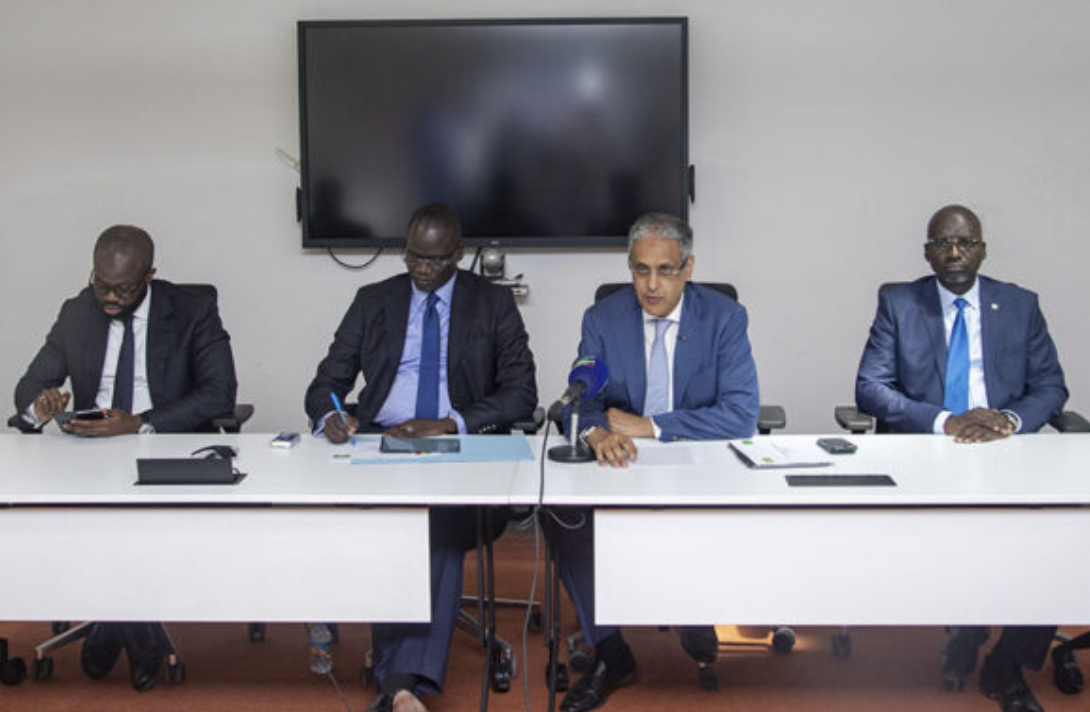

Nouakchott — Mauritania and Senegal have stepped up political and technical coordination around the Grand Tortue Ahmeyim (GTA) gas project, as both governments seek to turn one of West Africa’s largest offshore energy assets into a source of revenue, electricity and industrial capacity. At a ministerial meeting in Nouakchott, officials discussed how to accelerate bilateral cooperation, deepen energy integration and expand the domestic use of gas.
Located on the maritime border between the two countries, GTA is operated by BP, alongside Kosmos Energy, Mauritania’s SMH and Senegal’s Petrosen. The project’s first phase is expected to produce about 2.3 million tonnes of liquefied natural gas (LNG) a year, modest compared with African heavyweights such as Algeria, Angola and Nigeria, but enough to place Mauritania and Senegal on the continent’s gas map.
The talks signal a strategic shift. Gas is no longer being treated solely as an export commodity, but increasingly as a policy tool for economic transformation. Both countries want to channel part of GTA’s output into power generation, industrial supply, fertiliser production and energy infrastructure, lowering domestic energy costs and strengthening supply security.
Senegal also raised plans to connect its gas network to GTA infrastructure, a move seen as critical to linking offshore production to the domestic economy. For Nouakchott and Dakar, the project has become a test of whether shared natural resources can be converted into growth, jobs and greater regional geopolitical weight.
In Numbers
2.3 million tonnes a year: expected LNG output in GTA’s first phase, 2 countries: Mauritania and Senegal jointly developing the field, 4 key partners: BP, Kosmos Energy, SMH and Petrosen, 1 strategic project with export and domestic energy potential and 0 real precedents in the region for a cross-border offshore gas development of this scale
GTA could provide Mauritania and Senegal with a fresh source of foreign exchange, reduce dependence on imported fuels and support electrification and industrialisation. In a region where unreliable power remains a major brake on growth, the ability to turn gas into electricity and domestic industrial output may prove more important than export volumes alone.
Investors will be watching three things: the pace of infrastructure delivery, the timeline for connecting gas to domestic markets in Senegal and Mauritania, and whether both governments can balance LNG exports with local value creation.