João Lourenço’s reform gamble: How Angola Is rebuilding the state, and trying to transform the economy
- AngolaEconomic Outlook
- August 28, 2026
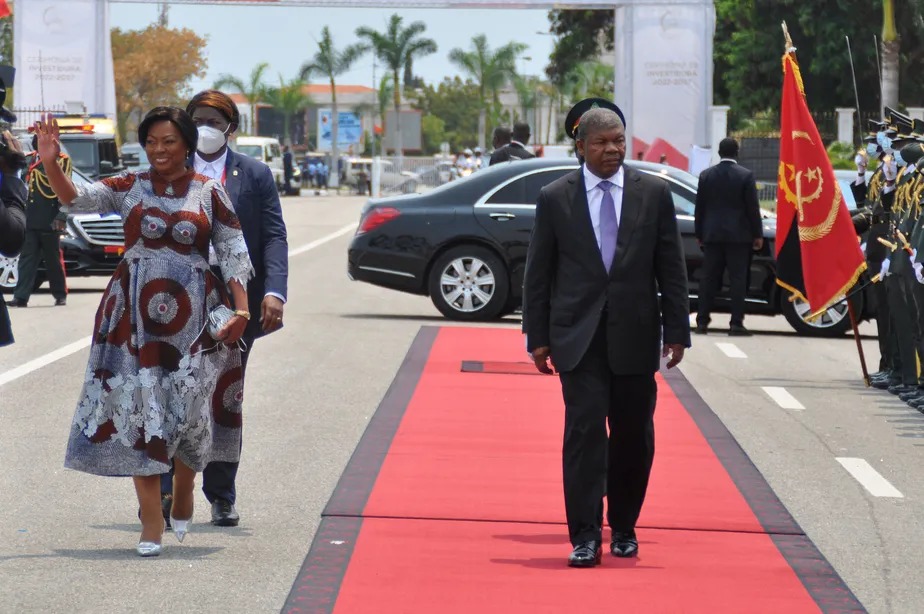

Since taking office in 2017, President João Lourenço has pursued one of Angola’s most consequential reform programmes since independence, confronting currency distortions, public debt, state dominance and oil dependence while directing billions of dollars towards power, water, healthcare, education and transport. The first phase stabilised the state. The next test is harder, turning reform into productivity, jobs and higher living standards.
LUANDA — When João Lourenço became president of Angola in September 2017, he inherited an economy already three years into the consequences of the oil-price collapse.
Foreign currency was scarce. Public debt was rising, the exchange-rate system was distorted. The state remained deeply embedded in the productive economy. Oil dominated exports and government revenue, while years of weak growth had exposed the vulnerability of a development model built around crude, nine years later, Angola looks markedly different.
The country has moved to a more flexible exchange-rate regime, introduced value added tax, strengthened central-bank independence, adopted fiscal sustainability and competition legislation, launched a sweeping privatisation programme and subjected state-owned enterprises to greater scrutiny.
It has simultaneously invested heavily in electricity, water, hospitals, schools, roads, airports and logistics while attempting to build a private sector capable of gradually replacing oil as the principal source of economic expansion.
The results are increasingly measurable.
Public debt stood at 51.3 per cent of GDP in 2025, according to the International Monetary Fund. Inflation, after reaching 31 per cent in July 2024, had fallen to 9.33 per cent by July 2026, according to Angola’s National Statistics Institute. Unemployment was measured at 21.5 per cent in the second quarter of 2026.
And in the first quarter of 2026, Angola’s economy expanded 5.32 per cent year on year, despite another contraction in oil. The non-oil economy grew 6.22 per cent.
The significance of Lourenço’s presidency therefore increasingly lies not in any single project or statistic, but in the attempt to change the economic architecture inherited in 2017.
His reform programme can be understood as a sequence, stabilise the state, reform institutions, build infrastructure, diversify production and convert economic reform into human development.
It is the last stage that will ultimately determine his economic legacy.
2017-2021: repairing the balance sheet
Lourenço’s first economic decision was essentially to accept that the old model had become unsustainable.
Angola could no longer defend an exchange rate disconnected from market conditions while simultaneously financing large fiscal deficits, servicing foreign debt and sustaining a state-dominated economy with oil revenues weakened by the commodity shock.
The administration moved towards a more flexible exchange rate, introduced VAT in 2019, strengthened the legal framework for public finances and increased the operational independence of the Banco Nacional de Angola.
In December 2018, Angola entered a three-year Extended Fund Facility with the IMF initially worth about $3.7bn. The programme was subsequently expanded during the pandemic, with cumulative disbursements reaching about $4.5bn.
Politically, these were difficult reforms.
Currency adjustment increased the domestic cost of imported goods. Fiscal consolidation restricted the government’s room for spending. Reforming subsidies imposed costs on consumers. Cleaning up banks and state enterprises challenged established interests.
But the strategy addressed structural imbalances rather than merely postponing them.
By 2025, public debt had fallen to 51.3 per cent of GDP. International reserves stood at about $15.9bn, equivalent to 7.4 months of imports. The IMF projects reserves of about $16.2bn in 2026.
That represents the first important feature of Lourenço’s reform record, his administration accepted significant short-term economic and political costs in an attempt to improve Angola’s longer-term financial position.
The reform is not complete. The IMF still considers sovereign financing pressures high and warns that government borrowing can crowd out both private credit and social expenditure.
But Angola is no longer managing precisely the same macroeconomic crisis it faced in 2017.
It is managing the consequences, and opportunities, created by the reforms.
From stabilisation to diversification
The second stage is more ambitious because it involves changing what Angola produces.
Oil remains central to the economy. The IMF estimates oil and gas exports at $28.1bn in 2025, while oil-related revenue amounted to 8.5 per cent of GDP.
But the direction of growth has begun to change.
In 2025, oil output contracted 5.2 per cent, while the non-oil economy expanded by the same 5.2 per cent. Overall GDP still grew 3.1 per cent.
The first quarter of 2026 provided an even clearer illustration.
GDP grew 5.32 per cent, even though petroleum contracted 0.21 per cent for a fifth consecutive quarter. Non-oil activity expanded 6.22 per cent.
Information and communications grew 27.63 per cent, transport and storage 16.12 per cent, fishing and aquaculture 8.73 per cent, and electricity, water and sanitation 8.15 per cent.
This is potentially one of the most important economic changes of the Lourenço era.
For decades, weak oil performance almost automatically meant weak Angolan growth. The first-quarter numbers suggest that relationship is becoming less absolute.
The IMF remains cautious. It forecasts overall growth of only 2.3 per cent in 2026, with non-oil growth at 2.4 per cent, while the Angolan authorities expect growth above 3 per cent, driven principally by agriculture, fisheries, construction and other non-oil activities.
The disagreement itself is instructive.
Angola’s economic future increasingly depends less on forecasting the next oil price and more on determining whether agriculture, manufacturing, logistics, telecommunications, electricity, construction and services can sustain expansion.
That is a profound change in the economic debate.
Infrastructure becomes economic policy
Lourenço’s reforms have not been confined to fiscal and monetary policy, the administration has increasingly treated infrastructure as part of the diversification strategy.
Angola now has around 6,300MW of electricity-generating capacity across 72 power plants, according to figures presented by the president in 2025. Electricity access stood at about 48 per cent, with more than 2mn households registered with the national distribution company.
That compares with an electrification rate of approximately 36 per cent in 2017.
Caculo Cabaça represents the next major leap.
The hydropower project is designed to generate 2,172MW, with initial production expected in 2027.
The importance of that investment is industrial as much as social.
Electricity is an input into almost every part of the diversification strategy, factories, irrigation, cold storage, mines, telecommunications networks, food processing and digital services.
In that sense, power policy under Lourenço is increasingly economic policy.
Water as infrastructure, and social reform
The same logic applies to water.
Urban water coverage increased from about 60 per cent in 2017 to 72 per cent in the first quarter of 2023, while drinking-water production in provincial and municipal capitals rose from approximately 828,000 cubic metres a day to 1.318mn cubic metres.
The next investments are considerably larger.
BITA is designed to supply about 2.5mn people in southern Luanda and is scheduled for completion by the end of 2026. Quilonga Grande is expected eventually to serve about 5mn people. Together, the projects could expand water capacity for roughly 7.5mn residents of Luanda and Icolo e Bengo.
In southern Angola, the challenge is different.
The Cafu system has brought water across approximately 165km of drought-affected territory and was already benefiting about 250,000 people and 240,000 cattle.
Larger storage projects are intended to change the economics of drought management itself.
Instead of repeatedly transporting emergency water and food by truck, the strategy is to create permanent reservoirs, canals and agricultural water systems.
That is a subtle but important feature of Lourenço’s approach, moving from recurrent emergency expenditure towards permanent productive infrastructure.
The social sector becomes the next reform frontier
The strongest case for assessing the Lourenço presidency as a reform project, however, may ultimately emerge outside conventional macroeconomics.
Healthcare provides one example.
By 2025, Angola’s public health network comprised 3,355 facilities and 44,222 hospital beds, including 1,609 intensive-care beds, according to government figures.
Between 2017 and 2024, 46,649 health professionals were recruited, including 3,828 doctors and about 27,000 nurses, an increase of 43.6 per cent in the health workforce. About 80 per cent were deployed to municipalities.
The geographic dimension matters.
New general hospitals have opened in Viana, Cacuaco, Cunene, Cuanza Sul and Cuanza Norte, alongside municipal facilities. Another 372 primary healthcare units are being developed under the Integrated Plan for Intervention in Municipalities, or PIIM.
Angola has also expanded specialised medicine.
By 2025, 35 haemodialysis units were operating across 12 provinces, while robotic surgery had begun at the Cardeal Dom Alexandre do Nascimento hospital complex.
Infrastructure alone, of course, does not prove better healthcare.
But some outcome indicators have moved in the right direction. Government data presented in 2025 showed infant mortality declining from 44 to 32 deaths per 1,000 live births, alongside improvements in maternal mortality and life expectancy.
The challenge now is to ensure that new buildings are matched by medicines, maintenance, trained specialists, reliable electricity and sustainable operating budgets.
That distinction, between constructing capacity and producing outcomes, will become increasingly important as Angola’s reform programme matures.
Education: turning debt savings into human capital
Perhaps the most revealing example of the next phase is emerging in education.
In 2026, Angola and the World Bank Group structured a debt-for-development transaction designed to refinance expensive commercial liabilities on better terms.
The innovation lies in what happens to the savings.
Most of the budget savings generated by the operation are intended to finance 30 additional secondary schools capable of serving more than 32,000 students.
In effect, Angola is attempting to turn debt savings into classrooms.
That represents an important evolution in the reform programme.
Debt management is no longer only about lowering a ratio on the finance ministry’s balance sheet. It can become a mechanism for reallocating resources towards human capital.
The wider World Bank Group package announced in March 2026 supports reforms intended to promote inclusive growth, employment and development of the Lobito Corridor. The World Bank’s existing Angola portfolio comprises 19 investment projects worth about $4.93bn, while the broader World Bank Group has almost $5bn through IBRD, alongside MIGA and IFC exposure.
That gives Lourenço’s government access not merely to financing but to an increasingly diversified development-finance architecture.
2026: putting social targets on the reform calendar
The 2026 Annual National Development Plan makes the next phase more measurable.
The programme contains roughly 8,000 activities, organised around 170 priorities, 50 programmes and more than 700 strategic objectives.
In education, the government plans to increase primary-school classrooms from 65,388 to 67,170 during 2026, award about 10,000 domestic higher-education scholarships and more than 200 scholarships abroad.
In healthcare, the plan envisages expanding hospital capacity from 7,304 to about 8,050 beds under the specific programme indicator used in the PADN.
Access to water and electricity is targeted at around 58 per cent, while approximately 270km of roads are scheduled for construction or rehabilitation, compared with 65km in 2025.
These are targets rather than completed achievements.
That distinction matters.
A reformist government should ultimately be judged not by the number of plans it publishes, but by the proportion it executes and the outcomes those programmes produce.
The government says implementation will therefore be tracked through quarterly reports, field inspections and periodic evaluations.
That creates a useful benchmark against which Lourenço’s final years in office can be assessed.
Lobito: the reform programme acquires a regional dimension
The Lobito Corridor adds another layer to the strategy.
Angola’s Atlantic railway and port infrastructure offers Zambia and the Democratic Republic of Congo an alternative export route for copper, cobalt and other commodities.
But Lourenço’s economic calculation appears to go further than transit fees.
The corridor can become an organising axis for agriculture, logistics, industrial parks, energy, telecommunications, warehousing, financial services and cross-border trade.
The IMF itself identifies the Lobito Corridor as one of the strategic initiatives capable of improving connectivity and supporting sustainable, inclusive growth.
For Angola, the real success would therefore not be measured by how many tonnes of Congolese copper pass through Lobito.
It would be measured by how much Angolan economic activity develops around that traffic.
That means farms supplying regional markets, processing plants near railway nodes, logistics companies, cold-storage facilities, industrial clusters and new urban economies along the route.
If that happens, geography itself becomes part of Lourenço’s diversification strategy.
The unfinished reform: financing the private economy
There is, however, a major constraint, the state cannot permanently be the principal engine of investment.
The IMF expects total investment to equal 11.4 per cent of GDP in 2026, of which private investment would account for only 7.6 per cent. Government capital expenditure is projected to decline from 5.3 per cent of GDP in 2025 to 3.7 per cent in 2026.
That makes private capital increasingly important.
Credit to the private sector grew 13.8 per cent in 2025 and is projected to increase another 11.6 per cent in 2026, but Angola’s financial system remains relatively shallow.
Meanwhile, the government’s own financing requirements risk absorbing capital that could otherwise finance businesses. The IMF explicitly warns that elevated fiscal financing needs have crowded out private credit and social expenditure.
This may become the most consequential unfinished reform of the Lourenço era.
Having begun reducing the state’s direct role in production through privatisation and market reform, Angola must now create a financial system capable of directing significantly more capital towards productive private enterprise.
The objective should be a fundamental reallocation:
less bank financing for recurrent state needs; more credit for agriculture, factories, exporters, technology companies and small businesses.
Without that transition, diversification will remain too dependent on public investment.
A reformer defined by sequencing
João Lourenço’s economic record is therefore best understood not as a collection of isolated policies but as a sequence.
First came stabilisation, exchange-rate reform, fiscal consolidation, the IMF programme, debt management and monetary tightening.
Then institutional reform, competition rules, privatisation, financial-sector reform, greater central-bank autonomy and changes in the management of state enterprises.
Then infrastructure, electricity, water, hospitals, roads, airports and logistics.
Now comes human capital and productive transformation, education, healthcare, skills, private credit, agriculture, manufacturing and employment.
That sequencing is what makes Lourenço one of the most consequential economic reformers in Angola’s post-independence history.
It does not mean every reform has succeeded, nor does it mean the social costs have disappeared.
Angola still faces substantial poverty, informality, unemployment and inequality. Oil continues to dominate exports. Public financing needs remain large. Foreign direct investment outside extractive industries needs to increase significantly.
The IMF forecasts growth of just 2.3 per cent in 2026, considerably below the 5.32 per cent year-on-year expansion recorded in the first quarter.
Yet reform should also be judged by the direction in which an economic system is moving.
On that measure, the Angola of 2026 is structurally different from the Angola Lourenço inherited in 2017.
The hardest part comes last
The first phase of Angola’s transformation was about repairing the balance sheet of the state, the second was about building physical assets, the third must be about increasing the economic value of Angola’s human capital.
That means a child gaining access to a better school; a rural community receiving reliable water and electricity; a farmer connecting to a market; a patient receiving specialist treatment without leaving the country; and a young graduate finding productive work in an economy no longer overwhelmingly dependent on oil, this is why