AfDB and African Deposit Funds target continent’s $402bn financing gap
- Economic Outlook
- September 10, 2026
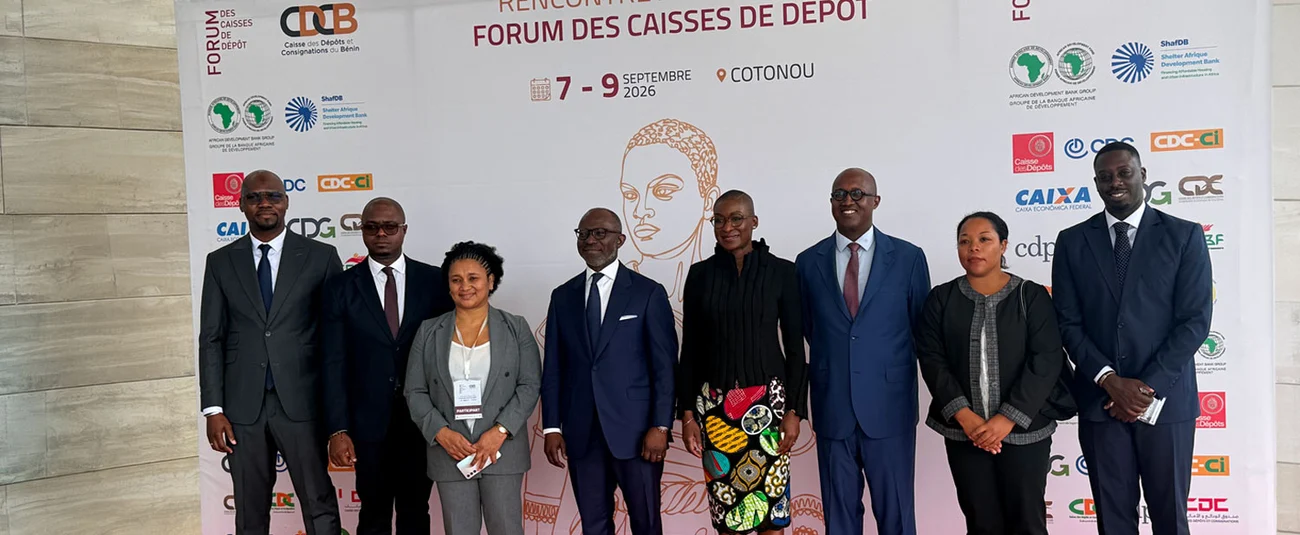

The Cotonou alliance seeks to convert part of Africa’s estimated $4tn pool of domestic institutional capital into infrastructure and productive investment, but has yet to disclose funding targets, projects or a deployment timetable.
LAGOS – The African Development Bank Group has agreed to deepen cooperation with the African Forum of Deposit Funds as part of an effort to mobilise long-term capital for infrastructure, industry, housing and business investment across the continent.
The agreement addresses a striking imbalance in African finance. The continent faces an estimated annual development-financing shortfall of $402bn, almost 14 per cent of projected gross domestic product by 2030, while pension funds, sovereign wealth funds, commercial banks and other domestic institutions hold an estimated $4tn in capital. Much of that money remains concentrated in government securities, short-term instruments or overseas assets.
The challenge is therefore not merely to generate more savings, but to transform existing resources into investible, patient capital.
Members of the African Forum of Deposit Funds are public financial institutions that collect and manage regulated deposits, savings and other long-term resources.
Unlike commercial banks, which largely fund themselves through shorter-term deposits, these institutions can invest over longer periods in projects such as power plants, transport corridors, industrial parks and affordable housing.
Under the Cotonou agreement, the forum’s members and the AfDB intend to co-finance projects, create investment vehicles and mobilise additional resources from pension funds, insurers, commercial lenders and private investors. Cooperation will also cover project preparation, risk mitigation, technical assistance and institutional capacity.
A growing search for African capital
The initiative comes as African governments face elevated borrowing costs, exchange-rate volatility and reduced fiscal space. Increased reliance on domestic banks to finance public deficits is also pushing up local interest rates and crowding out lending to companies.
By 2025, roughly half of public debt in sub-Saharan Africa was held domestically, with banks carrying a large and expanding share. The International Monetary Fund has warned that this creates a potential feedback loop in which sovereign financial stress weakens banks, restricts credit and further constrains economic activity.
Private credit has started filling part of the gap, but from a low base. Assets managed by Africa-focused private-credit funds rose from $1.8bn in 2020 to $5.6bn at the end of 2025, an increase of more than 200 per cent, yet still equivalent to only about 0.14 per cent of the continent’s estimated domestic capital pool.
“In a context marked by global economic uncertainty and the need to mobilise more resources for development, no institution can act alone,” said Ahmed Attout, director of the AfDB’s Financial Sector Development Department.
Maryse Lokossou, managing director of Benin’s Caisse des Dépôts et Consignations and chair of the forum, said combining the institutions’ expertise and investment capacity could accelerate projects with substantial economic and social impact.
From institutional alliance to projects
The AfDB’s Mission 300 partnership with the World Bank demonstrates the scale of Africa’s financing requirements. Launched in April 2024, the programme aims to connect 300mn Africans to electricity by 2030—about half the continent’s population currently without access.
Mission 300 is expected to require at least $90bn, the World Bank plans to provide $30bn-$40bn and the AfDB $10bn-$15bn, leaving a substantial amount to be mobilised from governments, development institutions and private investors.
Half of the new connections are expected to come from national grids and half from renewable-energy systems, including solar and wind-powered mini-grids.
The Cotonou partnership could support projects of this kind through local-currency loans, equity investment, guarantees and blended-finance structures. Its potential sectors include electricity, transport, digital infrastructure, irrigation, housing and manufacturing.
However, the partners have not disclosed a capital target, an initial project portfolio, expected investment returns or a timetable. Nor have they explained how risks will be divided between governments, deposit funds and private investors.
Currency exposure will be particularly important, a railway, power plant or industrial facility may generate revenue in naira, kwanzas or shillings while servicing debt in dollars or euros, a sharp depreciation can undermine an otherwise viable project.
The alliance forms part of the broader New African Financial Architecture for Development, intended to improve coordination between African financial institutions and reduce dependence on external capital. But its performance must be measured through capital committed and disbursed, projects reaching financial close, private investment mobilised, jobs created and infrastructure completed.
Cotonou has established the framework, the decisive test is whether the partnership can convert even a small portion of Africa’s $4tn institutional capital into productive assets without weakening depositor protection, pension security or public finances.