Femi Fani-Kayode: When a diplomat’s lack of decorum threatens national interests
- NigeriaPoliticsSouth Africa
- November 18, 2026

The controversial start to the Nigerian high commissioner’s mission in South Africa exposes the risks of nationalist rhetoric, diplomatic indiscretion and the escalation of media disputes into interstate tensions.
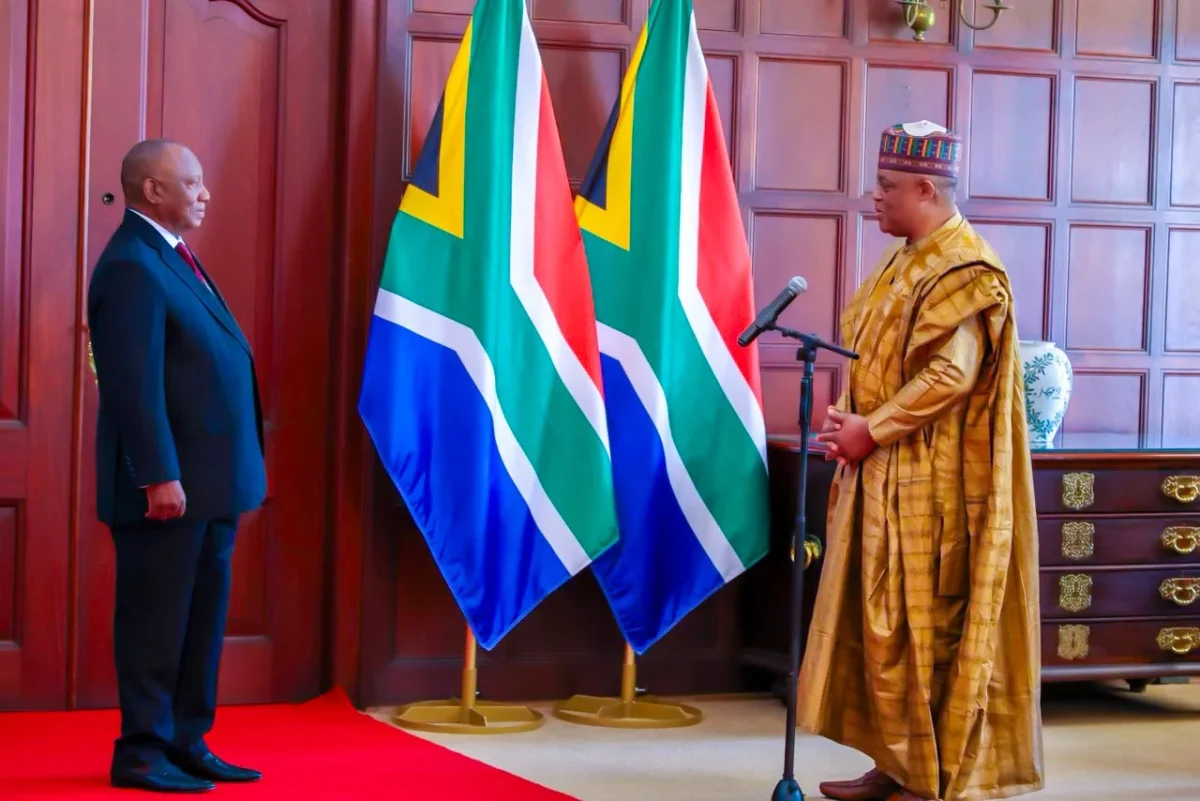
PRETORIA — The presentation of Femi Fani-Kayode’s letters of credence to South African President Cyril Ramaphosa, intended to mark a new chapter in relations between Abuja and Pretoria, has instead triggered a diplomatic controversy, raising questions about the judgement, political maturity and negotiating skills of Nigeria’s new representative.
Visibly angered by the alleged omission of his speech from the ceremony’s livestream, the diplomat publicly confronted South African officials, refused to entertain explanations and characterised the incident as an affront to the dignity of the Nigerian people.
“Nothing to explain. Fix the problem,” Fani-Kayode declared, in an exchange that contrasted sharply with the restraint, courtesy and discretion traditionally associated with diplomatic service.
The episode raises a fundamental question: to what extent does defending national interests justify conduct that risks undermining those very interests?
From a broadcasting disruption to a diplomatic incident
On November 13, 2026, at the Sefako Makgatho Presidential Residence in Pretoria, Ramaphosa received the credentials of 15 diplomatic representatives, including Nigeria’s new high commissioner.
Fani-Kayode subsequently claimed on X that Nigeria was the only country whose address had been excluded from the official livestream, suggesting deliberate discrimination and accusing South African officials of disrespecting his delegation.
However, the sequence of events raises questions about that interpretation. The broadcast disruption reportedly began during the address of French ambassador Antoine Michon, who preceded the Nigerian representative.
The South African presidency subsequently released footage containing Fani-Kayode’s speech, weakening, though not entirely disproving, the allegation of deliberate exclusion.
The diplomat also alleged that he had been subjected to unwanted physical contact during the incident. That accusation remains independently unverified and warrants clarification from the parties involved.
From public confrontation to formal diplomatic intervention
On November 15, the South African Broadcasting Corporation (SABC) reiterated its editorial independence from the presidency and expressed regret over the high commissioner’s refusal to grant an interview.
Vincent Magwenya, Ramaphosa’s spokesperson, publicly challenged Fani-Kayode’s account and criticised his approach to the matter.
The Nigerian diplomatic mission responded with criticism of the presidential spokesperson, escalating what had initially been a dispute over media coverage into a public exchange of accusations.
On November 17, the controversy acquired greater institutional significance when Zane Dangor, director-general of South Africa’s Department of International Relations and Cooperation (DIRCO), summoned Fani-Kayode for a formal meeting.
Dangor reminded the diplomat of Article 41 of the 1961 Vienna Convention on Diplomatic Relations, which establishes the institutional channels through which official business with the receiving state should be conducted.
Following the meeting, Fani-Kayode described the discussions as cordial and constructive, expressing willingness to overcome differences and strengthen bilateral relations.
A confrontational politician faces the demands of diplomacy
A former minister of culture and tourism and subsequently aviation under President Olusegun Obasanjo between 2006 and 2007, Femi Fani-Kayode has built a political career characterised by outspoken interventions, controversial statements and frequent media confrontations.
The transition from partisan politics to diplomatic representation, however, demands a fundamental adjustment in communication, negotiation and conflict management.
While politicians may employ public confrontation to mobilise supporters, diplomats are entrusted with preserving channels of communication, even when dealing with counterparts whose positions differ substantially from their own.
Failure to recognise that distinction risks turning personal political capital into a diplomatic liability for the state.
What is economically at stake between Abuja and Pretoria?
Nigeria and South Africa represent two of Africa’s principal centres of economic, political and diplomatic influence.
South Africa is a member of the G20 and BRICS, while Nigeria is a leading power within the Economic Community of West African States (ECOWAS) and holds BRICS partner-country status.
Their bilateral relationship extends far beyond the circumstances of a ceremonial diplomatic engagement.
South African government figures and international trade estimates illustrate the scale of this partnership:
More than 120 South African companies operating in Nigeria, including MTN, MultiChoice and Stanbic Bank.
Approximately $3bn in bilateral merchandise trade in 2024.
An estimated 48 per cent of South Africa’s crude oil imports sourced from Nigeria in 2024.
More than 34 bilateral agreements and memoranda of understanding concluded between the two countries.
Approximately 64 per cent of South Africa’s trade with West Africa concentrated in Nigeria, according to figures released by the South African presidency in November 2024.
On December 3, 2024, Ramaphosa and Nigerian President Bola Ahmed Tinubu co-chaired the 11th session of the Bi-National Commission in Cape Town, seeking to deepen co-operation across energy, telecommunications, manufacturing, financial services and infrastructure.
It is precisely this economic and institutional relationship that demands greater responsibility from the diplomatic representatives of both countries.
Nationalism as an instrument of confrontation
Perhaps the most troubling aspect of the episode is the attempt to equate a media controversy with the dignity of an entire nation.
Defending national honour is a legitimate responsibility of any diplomatic representative. Yet transforming an operational dispute into an alleged collective affront risks fuelling nationalist sentiment, reinforcing negative perceptions and encouraging hostility between populations.
In the case of Nigeria and South Africa, these risks are particularly significant given the history of xenophobic violence, migration-related disputes and sensitivities surrounding continental leadership.
As recently as July 2026, South African foreign minister Ronald Lamola travelled to Abuja as Ramaphosa’s special envoy to address bilateral concerns surrounding migration, governance and regional security.
Against this backdrop, Fani-Kayode’s mission should help reduce diplomatic vulnerabilities rather than introduce additional sources of tension.
Editorial independence and the limits of diplomatic authority
The controversy also highlights a fundamental principle of democratic institutions: the editorial independence of public broadcasters.
Representing a sovereign state does not confer upon a diplomat the authority to determine the editorial decisions of media organisations in the receiving country.
That does not absolve either the SABC or the South African presidency of responsibility for providing appropriate explanations regarding the broadcast disruption. Institutional transparency remains essential to public credibility.
There is, however, a substantial difference between requesting clarification, lodging a formal diplomatic complaint and publicly demanding changes to editorial procedures.
The confrontational tone adopted by some South African officials also did little to defuse the controversy. Diplomatic restraint is a responsibility shared by both parties.
Diplomatic intelligence above personal prominence
Modern diplomacy requires emotional intelligence, negotiating skills, intercultural awareness, strategic communication and a sophisticated understanding of the enduring interests of the state.
The Vienna Convention identifies the promotion of friendly relations and the development of economic, cultural and scientific co-operation as fundamental functions of diplomatic missions.
Fani-Kayode’s conduct in Pretoria reveals an apparent contradiction between the institutional responsibilities he has assumed and the communication methods employed in defence of Nigerian interests.
The use of social media as an extension of diplomatic activity demands particular caution.
An impulsive statement can acquire international significance within minutes, constrain governments’ negotiating flexibility and transform an administrative disagreement into a foreign policy dispute.
Nigeria does not need a representative who constantly demonstrates the intensity of his patriotism.
It needs a diplomat capable of converting the country’s economic, demographic and political weight into influence, investment, security and opportunities for its citizens.
Fani-Kayode must now demonstrate that his ability to build bridges outweighs his inclination towards public confrontation.
The true measure of a diplomat is not the volume of his voice, the extent of his media exposure or his ability to command attention. It is the intelligence, discretion and effectiveness with which he advances his country’s interests without compromising the strategic relationships he has been entrusted to protect.