Nigeria 2027: Opposition unity and electoral integrity shape the battle for power
- ElectionNigeria
- November 24, 2026

Political fragmentation, economic reforms, electoral violence and the deployment of artificial intelligence are reshaping the presidential contest in Africa’s most populous nation.
ABUJA — With less than two months until Nigeria’s presidential election, the country faces a complex political equation. As President Bola Ahmed Tinubu seeks a second term, six opposition forces are negotiating a co-operation agreement against a backdrop of political violence, persistent economic hardship and growing demands for electoral transparency.
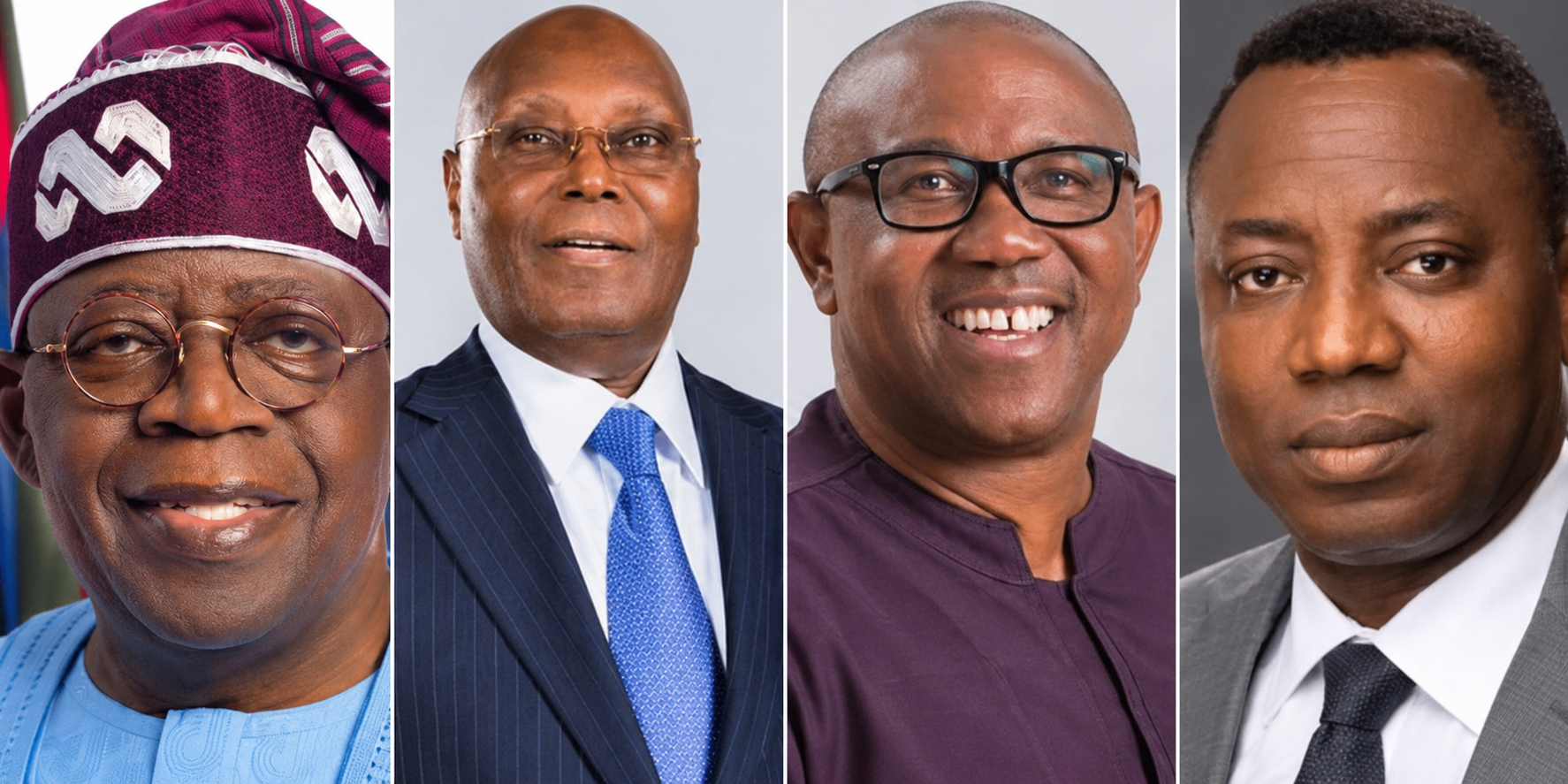
The postponement of an opposition summit in Abuja from November 23 to November 30 underscores the difficulties of reconciling the presidential ambitions of Atiku Abubakar, Peter Obi and Seyi Makinde, whose political organisations represent different regional, economic and social constituencies.
On November 22, Atiku publicly dismissed reports that he might withdraw in favour of Obi, highlighting the unresolved leadership question at the heart of the opposition negotiations.
Opposition fragmentation and the arithmetic of power
Coordinated by Salihu Lukman, the Coalition for Democracy brings together six political forces, including the African Democratic Congress (ADC), the Nigeria Democratic Congress (NDC) and a faction of the Peoples Democratic Party (PDP).
The agreement scheduled for November 30 rests on three instruments: a national democratic renewal pact, an opposition unity framework and a national reform programme.
Nigeria’s 2023 presidential election provides an important reference point for understanding the current negotiations.
| Presidential candidate | Votes | Vote share |
|---|---|---|
| Bola Ahmed Tinubu | 8,794,726 | 36.61% |
| Atiku Abubakar | 6,984,520 | 29.07% |
| Peter Obi | 6,101,533 | 25.40% |
| Rabiu Kwankwaso | 1,496,687 | 6.23% |
| Other candidates | — | 2.69% |
Source: 2023 presidential election results.
Although Atiku, Obi and Kwankwaso collectively secured approximately 60.7 per cent of valid votes, their combined electoral support cannot be assumed to transfer automatically to a single opposition candidate.
Electoral geography, regional and religious affiliations, the influence of state governors and party networks across Nigeria’s 36 states remain central to the distribution of political power.
Legal constraints further complicate negotiations. An opposition agreement reached after the statutory deadline for candidate withdrawals would not automatically alter the officially registered presidential candidates or ballot papers.
The economy as an electoral variable
Tinubu’s re-election campaign comes amid signs of macroeconomic stabilisation, but persistent pressure on household purchasing power.
Since taking office in May 2023, his administration has pursued structural reforms, including the removal of fuel subsidies, exchange-rate liberalisation and tax modernisation, aimed at addressing longstanding fiscal and monetary imbalances.
Real GDP growth
4.43%
Q2 2026
Headline inflation
14.06%
October 2026
Food inflation
19.13%
October 2026
Foreign exchange reserves
$55.2bn
October 30, 2026
Estimated poverty rate
63%
June 2026
People facing food insecurity
27mn
Autumn 2025 estimate
The figures illustrate the divergence between improving macroeconomic fundamentals and the economic realities confronting millions of Nigerians.
While the government emphasises fiscal sustainability, monetary stability and investment recovery, opposition parties have placed greater emphasis on the social costs of adjustment, affordability and household welfare.
The relationship between economic reform and living standards has consequently become a central feature of the presidential debate.
Political violence and institutional fragility
Nigeria’s National Peace Committee, chaired by former head of state Abdulsalami Abubakar, recorded 109 breaches of the national peace accord between August 19 and October 27, 2026, across 26 states and the Federal Capital Territory.
Kaduna, Edo and Enugu have emerged as areas of particular concern.
Allegations of political intimidation, restrictions on opposition campaigning and the misuse of state resources have intensified scrutiny of Nigeria’s electoral institutions.
Investigations into the perpetrators, organisers and potential financiers of political violence remain essential to safeguarding freedom of association, equal campaign opportunities and public confidence in the electoral process.
Artificial intelligence and electoral sovereignty
The proposed deployment of artificial intelligence by the Independent National Electoral Commission (INEC) has opened another front in the presidential contest.
In a petition dated November 17 and addressed to INEC chairman Joash Amupitan, Atiku called for an independent technical audit of algorithms intended to process electoral documents.
His concerns include the criteria used to identify irregularities, the traceability of automated decisions and the potential rejection of valid electoral records.
The dispute highlights a broader institutional challenge: how to reconcile technological innovation with electoral transparency, cybersecurity, data protection and human oversight.
Artificial intelligence could improve administrative efficiency, document authentication and the detection of inconsistencies. However, independent scrutiny and clearly defined accountability mechanisms remain important safeguards.
The allegations raised by opposition figures do not, in themselves, constitute evidence of electoral manipulation.
Incumbency and the internationalisation of political competition
Tinubu formally launched his re-election campaign in Kaduna on October 24. Reports that 32 of Nigeria’s 36 state governors support the president illustrate the geographical reach of his political network.
The contest has also extended into international lobbying and strategic communications.
An interview granted by Tinubu to American communications strategist Diana London triggered controversy over government expenditure on foreign lobbying services.
Documents filed with US authorities identify an initial payment of $4.5mn to DCI Group under a $9mn lobbying contract. London’s company reportedly received $662,000 in fees and expenses.
London denied personally receiving the $4.5mn, and no direct financial connection between that payment and the presidential interview has been established.
Atiku, who has also engaged lobbying services in Washington, demanded the disclosure of government contracts and the release of the full interview.
The controversy raises questions about the boundaries between public diplomacy, government communications, international reputation management and domestic electoral interests.
Three political and electoral scenarios
Opposition convergence: A formal co-operation agreement could establish shared policy commitments and electoral monitoring mechanisms without automatically changing registered presidential candidacies.
Continued fragmentation: Opposition candidates could maintain separate campaigns, competing through distinct political organisations, regional constituencies and economic programmes.
Post-election litigation: Disputes over documented irregularities, electronic transmission of results or interpretations of electoral legislation could result in judicial proceedings.
These scenarios are not mutually exclusive and do not constitute forecasts of the election outcome.
Timeline of major political and electoral developments
25 FEB 2023
Presidential election
Tinubu secures the presidency with 36.6 per cent of valid votes.
29 MAY 2023
Presidential inauguration
Tinubu takes office and launches his economic reform programme.
31 AUG 2026
G100 summit
Formation of the Coalition for Democracy in Abuja.
18 OCT 2026
Candidate withdrawal deadline
Reported expiry of the statutory withdrawal period.
24 OCT 2026
Re-election campaign
Tinubu launches his campaign in Kaduna.
17 NOV 2026
Electoral technology petition
Atiku demands independent scrutiny of INEC’s artificial intelligence systems.
28 NOV 2026
Electoral simulation
Scheduled nationwide voter accreditation exercise.
30 NOV 2026
Opposition summit
Scheduled signing of the political co-operation agreement.
16 JAN 2027
Presidential election
Scheduled presidential and National Assembly elections.
06 FEB 2027
State elections
Scheduled governorship and state assembly elections.
An election with geopolitical consequences
Nigeria’s economic, demographic, military and energy significance gives the presidential election implications far beyond its national borders.
Political stability in Abuja remains closely connected to the effectiveness of the Economic Community of West African States (ECOWAS), maritime security in the Gulf of Guinea, instability across the Sahel and international energy markets.
Nigeria’s strategic relationships with the United States, China and the European Union also reinforce the international significance of its democratic transition.
With 53 days until the scheduled presidential election, several questions remain unresolved. Can opposition parties establish a legally viable framework for political co-operation? Can INEC provide sufficient guarantees of technological transparency? Can judicial and security institutions address electoral disputes independently and effectively?
Nigeria’s 2027 presidential election will confront the country with a challenge that extends beyond the competition for political power: reconciling democratic competition, constitutional stability, economic recovery and electoral security.
For a country whose political trajectory profoundly influences West Africa, the credibility of the electoral process will carry lasting consequences for domestic governability, investor confidence and Abuja’s regional leadership.