Trump v Lula: Brazil’s election revives a love-hate relationship
- AmericaOpinionsOptinions & WorldWorld
- November 27, 2026

AFRICAHEADLINE | OPINION
Geopolitical & Strategic Intelligence
America’s pursuit of hemispheric influence, Brazil’s quest for strategic autonomy and China’s economic expansion expose the contradictions of an increasingly multipolar world.
AfricaHeadline | Geopolitical & Strategic Intelligence
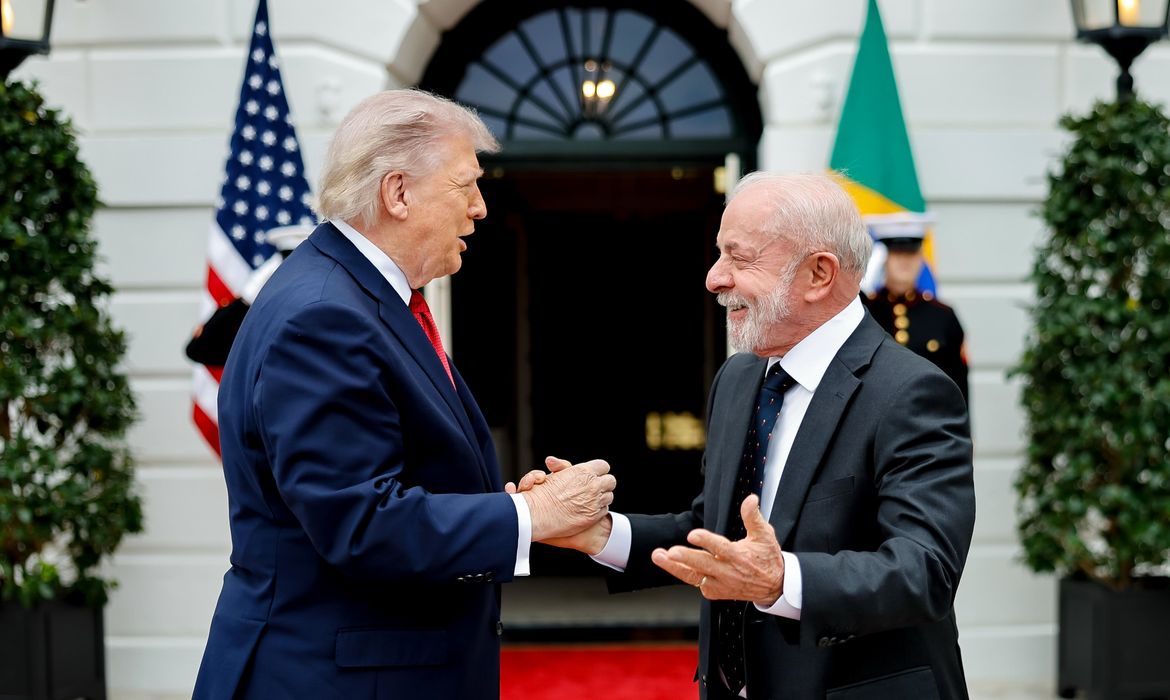
Donald Trump and Luiz Inácio Lula da Silva need not like each other to do business. Indeed, the relationship between America and Brazil is increasingly defined by the uncomfortable coexistence of ideological disagreement and economic necessity.
Lula’s electoral victory, the premise of this analysis, brings one of the Western hemisphere’s most complicated diplomatic relationships back to the negotiating table. Washington has considerable economic leverage over Brasília but covets its strategic resources. Brazil seeks greater diplomatic autonomy but cannot afford to disregard American capital, technology and markets.
Political scientists might describe this arrangement as asymmetric strategic interdependence. Diplomats might simply call it pragmatism.
Whatever the terminology, the relationship between the two countries offers a revealing illustration of how power is negotiated in the 21st century.
An election with continental consequences
Lula’s return to office for a fourth presidential term would have implications well beyond Brazil’s borders. It would preserve a foreign-policy doctrine that favours multilateralism, South-South co-operation and the diversification of international partnerships.
For Mr Trump, whose administration emphasises commercial reciprocity, industrial protection and American influence in the Western hemisphere, Brazil presents a complicated proposition.
It is too economically important to ignore, too diplomatically independent to take for granted and too deeply integrated into global supply chains to isolate without consequences.
The contest is not merely between two presidents. It concerns competing visions of how the Americas should engage with the rest of the world.
Two centuries of strategic disagreement
Ever since the Monroe Doctrine was articulated in 1823, America has regarded the Western hemisphere as an area of particular strategic interest.
Brazil, meanwhile, has cultivated a diplomatic tradition that prizes autonomy, regional integration and diversified international partnerships.
The creation of Mercosur in 1991, the emergence of the BRICS grouping and China’s economic expansion across Latin America have gradually widened Brasília’s diplomatic room for manoeuvre.
Mr Trump’s economic nationalism and Lula’s preference for multilateral engagement reflect different approaches to international affairs. Yet their disagreements are neither entirely new nor necessarily irreconcilable.
Geography may have made America and Brazil neighbours within the same hemisphere. Economics has made their relationship considerably more complicated.
A $135.7bn reason to keep talking
The strongest argument against a prolonged diplomatic rupture is found in the balance sheets.
According to the Office of the United States Trade Representative, bilateral trade in goods and services reached $135.7bn in 2025, an increase of 6.5% from the previous year.
American merchandise exports to Brazil amounted to $54.3bn, against imports of $39.9bn, generating a surplus of $14.4bn. America recorded a further surplus of $27.4bn in services.
Taken together, Washington enjoyed a bilateral surplus of approximately $41.8bn.
These figures complicate the economic rationale for an indiscriminate trade confrontation. Tariffs may provide Washington with negotiating leverage, but their consequences would extend to American exporters, manufacturers, investors and consumers.
Brazil cannot match America’s financial, technological or military capabilities. Its agricultural productivity, energy resources, mineral reserves and continental scale nevertheless provide bargaining assets that conventional measures of economic power tend to underestimate.
The arithmetic of economic coercion
Tariffs have become one of Mr Trump’s preferred instruments of economic diplomacy. Their effectiveness, however, depends on the structure of the industries they target.
Consider a hypothetical tariff imposed uniformly on the $39.9bn of Brazilian merchandise imported by America in 2025.
A levy of 10% would generate a gross annual customs liability of roughly $4bn. At 25%, that figure would rise to almost $10bn. At 50%, it would approach $20bn.
Such calculations are illustrative rather than predictive. They exclude exemptions, changes in demand, exchange-rate adjustments and the substitution of suppliers.
More importantly, tariffs are initially paid by importers. Their ultimate economic burden is distributed among producers, businesses and consumers according to market conditions.
The aerospace industry illustrates the dilemma particularly well. Brazilian aircraft manufactured by Embraer incorporate American components and support economic activity on both sides of the equator.
A tariff intended to protect American manufacturing could, under certain circumstances, increase costs for American airlines and undermine demand for American-made components.
Protectionism becomes considerably more complicated when the industries being protected are themselves international.
The Chinese elephant in the room
No serious examination of relations between Washington and Brasília can overlook Beijing.
China has become Brazil’s largest trading partner, absorbing roughly 30% of its exports in 2025, according to the figures cited in the underlying analysis. America accounted for approximately 12%.
The distinction between the two relationships matters. China’s demand is heavily concentrated in commodities, particularly soya beans, iron ore and crude oil. America remains an important source of investment, technology, financial services and industrial inputs.
For Brasília, the Chinese market offers commercial opportunities and diplomatic flexibility. It also creates vulnerabilities associated with excessive dependence on a single buyer and a relatively narrow range of commodities.
Replacing dependence on Washington with dependence on Beijing would not necessarily constitute strategic autonomy.
Brazil’s economic challenge is therefore twofold: to diversify its trading partners and to diversify what it sells them.
The dollar is not going away
The monetary dimension of this geopolitical triangle is less visible but no less consequential.
Brazil’s membership of the BRICS grouping and its participation in the New Development Bank provide opportunities to explore alternative financing arrangements and local-currency settlement mechanisms.
Yet talk of de-dollarisation often runs ahead of economic reality.
The depth of America’s capital markets, the liquidity of Treasury securities and the international use of the dollar continue to underpin Washington’s financial influence.
Trading in national currencies may reduce transaction costs and certain exchange-rate exposures. It does not automatically create an alternative global reserve currency.
For Brazil, the more practical objective is financial diversification rather than monetary confrontation.
The distinction matters. A country can seek greater flexibility within the international monetary system without attempting to dismantle it.
Oil beneath the Atlantic
Brazil’s emergence as a significant oil producer has added another layer to its geopolitical importance.
The development of its vast pre-salt reserves has strengthened Petrobras, expanded export revenues and increased Brazil’s relevance to international energy markets.
China is an important customer for Brazilian crude. American companies participate in exploration, technological services, equipment supply and energy investment.
Oil accounted for approximately 16% of Brazilian exports in 2025, according to the figures cited in the original analysis.
The sector illustrates the advantages of maintaining relationships with competing economic powers. Brazil can sell energy to China while attracting investment and technology from America.
Its vulnerability lies not simply in geopolitical competition, but also in commodity-price volatility, financing costs and the uncertainties surrounding the global energy transition.
Oil provides strategic leverage. It does not guarantee economic independence.
The minerals that matter
If oil helped define the geopolitics of the 20th century, critical minerals may play a similarly important role in the 21st.
Brazil accounted for approximately 93% of global niobium production in 2024, according to figures attributed to the United States Geological Survey. The country’s mineral production was valued at $50.3bn, while mineral exports reached $43.4bn.
Planned mining investment between 2025 and 2029 amounted to $68.4bn, including $2.2bn earmarked for rare-earth projects.
For America, Brazilian minerals offer potential alternatives to concentrated international supply chains.
For Brazil, the opportunity is considerably broader: domestic processing, technological development, industrial diversification and skilled employment.
The distinction between possessing minerals and controlling their value chains is crucial.
Countries that extract strategic resources do not necessarily capture the greatest economic benefits. Those that process them, develop the associated technologies and manufacture finished products often occupy more lucrative positions.
The geopolitical question is not merely who buys Brazil’s minerals, but who processes them, who owns the technology and who captures the profits.
The geopolitics of the South Atlantic
The relationship between America and Brazil extends beyond commerce.
Naval co-operation, maritime security, aerospace manufacturing and the protection of offshore energy infrastructure form part of a wider strategic relationship.
Brazil’s submarine-development programme, including its pursuit of nuclear propulsion, reflects a long-term ambition to strengthen maritime security and technological autonomy.
The South Atlantic Peace and Co-operation Zone, established in 1986 and comprising 24 African and South American countries, provides a multilateral framework for regional engagement.
Brazil’s strategic autonomy need not entail military confrontation with America. It can coexist with defence co-operation, technological partnerships and shared maritime-security interests.
The South Atlantic is not merely a geographical space separating two continents. It is an economic corridor connecting energy resources, agricultural production, maritime trade and emerging industrial ambitions.
The constraints of presidential power
Neither Mr Trump nor Lula governs in a political vacuum.
Legislatures, courts, financial markets, business associations and public opinion constrain presidential ambitions.
In Brazil, fiscal sustainability, exchange-rate stability, economic growth and relations with Congress will influence the government’s ability to pursue an ambitious international agenda.
In America, the interests of farmers, manufacturers, airlines, investors and technology companies may shape the political and economic costs of additional trade restrictions.
Presidents can announce tariffs. Businesses must contend with their consequences.
This distinction helps explain why diplomatic confrontation can coexist with continued commercial engagement.
What Africa should watch
For Africa, the relationship between America and Brazil offers a useful case study in the economics of strategic autonomy.
Angola possesses substantial energy and mineral resources. The Democratic Republic of Congo is central to international copper and cobalt supply chains. Zambia has considerable mining capacity. Mozambique possesses natural gas and graphite resources. South Africa combines mineral wealth with a relatively diversified industrial base.
Their shared challenge is to convert natural-resource endowments into productive capacity, technological expertise and sustainable employment.
Brazil’s agricultural research institutions, notably Embrapa, offer opportunities for scientific co-operation, agricultural productivity and food security across Africa.
The New Development Bank may provide additional financing opportunities, subject to eligibility requirements, project viability and institutional capacity.
For Angola, historical and linguistic ties with Brazil could facilitate partnerships in agribusiness, energy, logistics, technology and professional training.
The broader lesson is that competition among America, China and other economic powers creates negotiating opportunities for resource-rich countries. Capturing those opportunities, however, requires credible institutions, coherent industrial policies and the capacity to negotiate commercially sustainable agreements.
Natural wealth provides options. Institutional capacity determines how effectively those options can be exercised.
Three possible futures
Between 2027 and 2029, relations between Washington and Brasília could develop along three overlapping trajectories.
The first is strategic pragmatism: negotiated tariff reductions and greater investment co-operation in aerospace, energy, mining and technology.
The second is economic confrontation: additional trade restrictions, retaliatory measures, legal disputes and changes in investment decisions.
The third is deeper diplomatic diversification: expanded Brazilian engagement with China, the BRICS, Europe and Africa alongside continued economic relations with America.
These scenarios are not mutually exclusive. Governments may disagree over tariffs while co-operating on energy. They may compete technologically while maintaining financial relationships.
The indicators worth watching include tariff decisions, exchange-rate movements, investment flows, mineral-processing agreements, energy contracts and the frequency of high-level diplomatic engagement.
They may reveal more about the relationship’s direction than presidential rhetoric.
Rivals by ideology, partners by necessity
The relationship between Mr Trump and Lula captures a central paradox of contemporary geopolitics: economic interdependence has survived the resurgence of geopolitical rivalry.
America seeks to preserve its hemispheric influence, strengthen its industrial capacity and diversify its access to strategic resources.
Brazil seeks to translate its territorial scale, agricultural productivity, energy resources and mineral wealth into greater international bargaining power.
China complicates the equation by offering commercial opportunities, investment and industrial capabilities that neither Washington nor Brasília can afford to disregard.
The love-hate relationship between Mr Trump and Lula is therefore less about personal chemistry than about the competing demands of sovereignty, prosperity and international influence.
Their disagreements may generate headlines. Their economic interdependence will shape the substance of negotiations.
In an increasingly multipolar world, power is measured not only by the ability to impose one’s preferences on others, but also by the capacity to manage dependencies without surrendering autonomy.
That is a lesson worth studying in Brasília, Washington, Beijing, and across Africa.