Zambia tests strength of its democracy under economic pressure
- ElectionZambia
- August 13, 2026
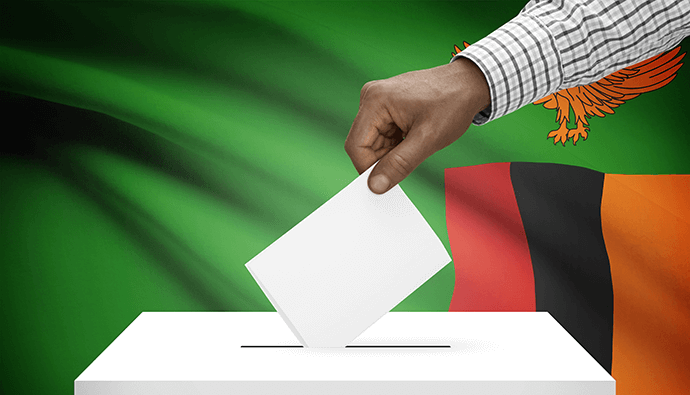

LUSAKA – Zambia holds general elections on Thursday in a test of whether one of southern Africa’s more stable democracies can channel mounting economic discontent through peaceful political competition, as President Hakainde Hichilema seeks a second term.
Millions of voters are choosing a president, lawmakers and local representatives in an election that pits progress in stabilising the economy against the difficulties facing many households, including high living costs, unemployment and unreliable electricity supplies.
Hichilema is campaigning on the restructuring of Zambia’s external debt, a return to economic growth and increased investment as some of the main achievements of his first term. For many voters, however, the central question is how far those macroeconomic gains have translated into jobs, incomes and improved living standards.
That gap between an improving economic picture and the daily experience of ordinary Zambians has turned the election into a judgement not only on Hichilema, but also on the country’s ability to hold governments accountable through the ballot box.
Zambia has one of the region’s stronger records of political alternation.
Kenneth Kaunda, who had governed the country since independence in 1964, accepted defeat in 1991 in its first multiparty elections in nearly two decades. The Movement for Multiparty Democracy, which took power that year, lost to the Patriotic Front in 2011. A decade later, Edgar Lungu conceded defeat to Hichilema in the 2021 election.
Those peaceful transfers have helped set Zambia apart in a region where disputed elections, constitutional changes and political crises have at times put democratic institutions under strain.
The test in 2026 is whether that tradition can withstand a more difficult economic and political environment.
About eight million voters are registered in a country of roughly 22 million people. Queues began forming at some polling stations before dawn as domestic and international observers monitored the vote.
The presence of observers and voter participation underscore the importance attached to the election, but civil rights organisations have also raised concerns about weaknesses in the political environment.
Freedom House classifies Zambia as “partly free” and has cited restrictions facing the opposition, arrests of government critics, limits on political rallies and pressure on journalists.
Those concerns mean that holding a competitive election alone will not be enough to determine the democratic quality of the process.
How the Electoral Commission of Zambia manages voting and counting, how authorities respond to complaints and how the courts handle any challenges will also be critical to the legitimacy of the result.
Economy dominates campaign
Hichilema came to power in 2021 promising to revive an economy weakened by debt, improve governance and attract investment.
His government made progress in restructuring Zambia’s external debt after years of negotiations with creditors, in one of the most closely watched sovereign debt workouts since the country became Africa’s first pandemic-era sovereign defaulter in 2020. The recovery, however, has been uneven.
Food prices, employment difficulties and electricity shortages continue to weigh on households. An energy crisis, exacerbated by drought that reduced hydropower generation, has hit businesses and consumers and exposed the vulnerability of an economy heavily dependent on power generated from the Zambezi River.
For Hichilema, the challenge is to convince voters that his reforms have begun rebuilding the foundations of the economy and need more time to deliver broader benefits.
For his opponents, the campaign offers an opportunity to argue that stabilising public finances means little to citizens still struggling to pay for food, electricity, transport and other essentials.
Copper puts Zambia at centre of minerals race
The election also comes as Zambia’s strategic importance is growing.
The country is one of Africa’s major copper producers, a metal crucial to power grids, electric vehicles, energy-storage systems and other technologies underpinning the global energy transition.
China has built a significant economic presence in Zambia, including in mining and infrastructure, while the United States and its partners are seeking to expand investment and diversify international supply chains for critical minerals.
The Lobito Corridor, which aims to connect the copper-producing regions of Zambia and the Democratic Republic of Congo with Angola’s Atlantic port of Lobito, has further increased the country’s strategic importance.
For Lusaka, that competition offers an opportunity to attract investment, increase copper production and develop infrastructure. It also places greater pressure on the government to ensure transparency in contracts, management of mining revenues and economic benefits for local communities.
Zambia’s economic success will depend partly on its ability to turn international demand for its mineral resources into jobs, tax revenues and industrial development without weakening the institutions responsible for holding the state to account.
The test begins after voting
A fragmented opposition could favour Hichilema, but a comfortable victory would not necessarily mean an absence of public discontent.
For analysts and observers, the credibility of the election will depend on the transparency of the count, the ability of parties and candidates to challenge alleged irregularities through legal channels and the neutrality of the security forces.
Recent history provides some grounds for optimism.
The 2021 election demonstrated that an incumbent president can lose and hand over power. That experience reduced the risk of the presidency being regarded as the permanent property of one party and helped establish political alternation as a normal part of Zambia’s political competition.
But democratic institutions are tested afresh at every election.
If Hichilema wins a second term, he will face pressure to turn macroeconomic stabilisation into growth capable of creating jobs, easing cost-of-living pressures and improving energy security.
If the opposition wins, another peaceful transfer of power would further strengthen Zambia’s democratic credentials.
With final results still pending at the time of this analysis, it is too early to declare the election an unqualified success.
More than determining who will govern the country, the vote will show whether Zambia can preserve one of its most important political achievements: a system in which governments can be judged, defeated and replaced at the ballot box.
On a continent where democratic institutions remain under pressure in several countries, the strength of Zambia’s model does not lie in the absence of economic hardship or political conflict.
It lies in the ability of citizens to respond to those pressures through the vote, and in ensuring that whoever wins remains subject to the law, the country’s institutions and the next election.