South Africa’s ANC retains electoral lead despite 14.82-point decline as opposition gains ground
- ElectionSouth Africa
- November 8, 2026

AFRICAHEADLINE | SPECIAL REPORT — POLITICAL ANALYSIS
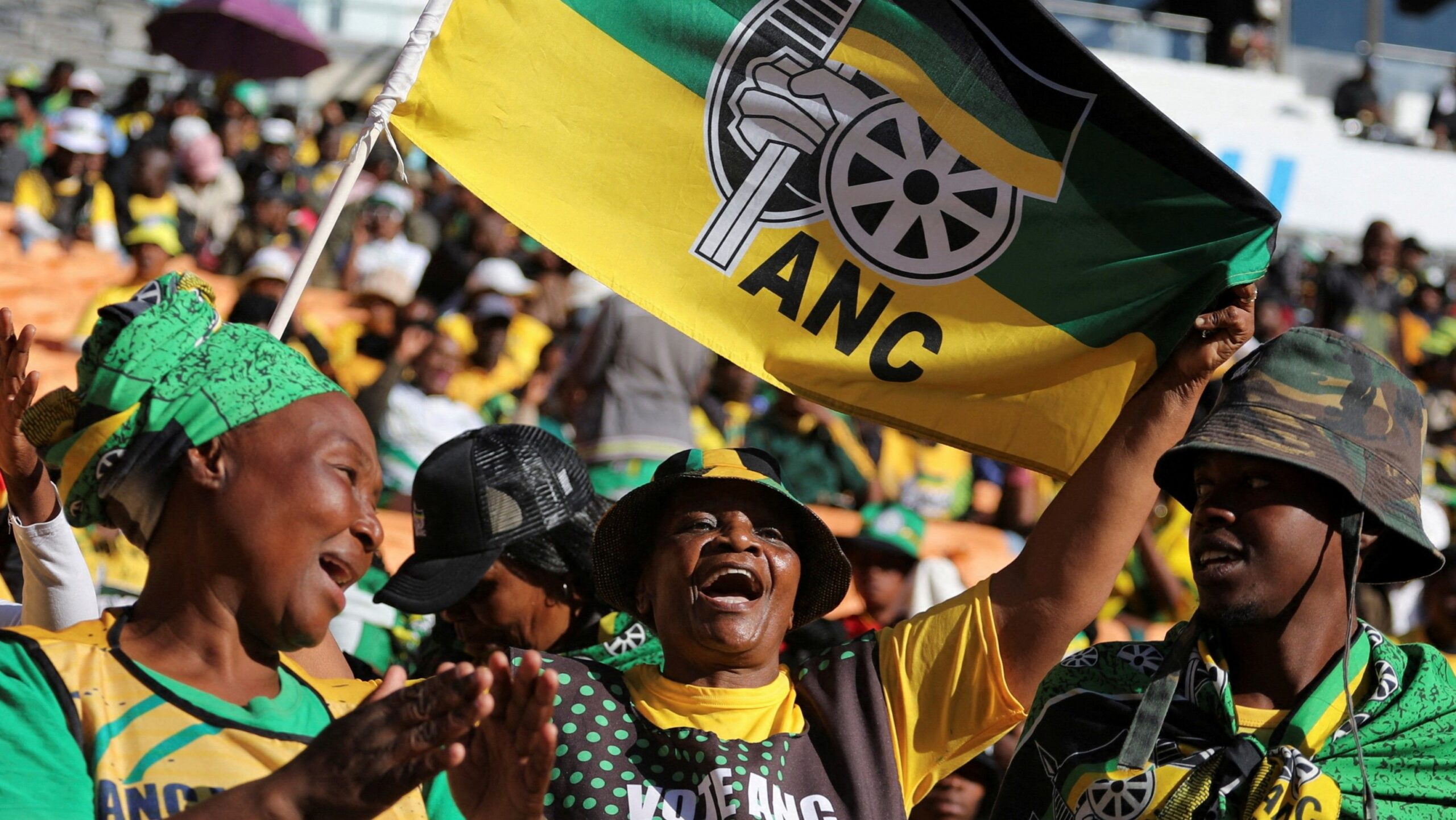
PRETORIA — With 99 per cent of votes counted in South Africa’s 2026 municipal elections, the African National Congress remains the country’s largest political force, securing 30.77 per cent of the vote despite substantial losses since 2021.
The Democratic Alliance has strengthened its position, while Jacob Zuma’s MK party has emerged as a major challenger. The results point to a more competitive political landscape but also underline the ANC’s enduring organisational strength and nationwide electoral reach.
JOHANNESBURG, November 8, 2026, South Africa’s African National Congress (ANC) has retained its position as the country’s largest political party, securing 9.15mn votes, equivalent to 30.77 per cent of valid ballots, according to provisional figures displayed on the Independent Electoral Commission (IEC) results dashboard, with 99 per cent of votes counted.
Despite a decline of 14.82 percentage points from the 2021 municipal elections, the ANC maintains a 6.14-point lead over the Democratic Alliance (DA), which secured 24.63 per cent, and a 21.01-point advantage over the uMkhonto weSizwe Party (MKP), which obtained 9.76 per cent.
The results highlight a significant redistribution of political support while confirming that the ANC retains the country’s largest electoral organisation and most extensive municipal representation.
ANC retains the largest municipal representation
One of the most significant outcomes for the ANC is its ability to preserve a commanding presence in local government despite declining voter support.
The party secured 3,235 municipal council seats, compared with 1,639 for the DA and 764 for MKP. Its representation remains greater than the combined total of its two closest competitors.
The ANC also leads in 127 municipal councils and holds outright control of 53, demonstrating the continued importance of its territorial organisation and established political structures.
In 2021, the party led in 167 councils, controlled 122 and held 4,548 seats. Although the losses are substantial, its continued leadership across more than 100 municipalities provides an important institutional foundation for political recovery.
The ANC’s experience in government, nationwide organisational networks and historical relationship with communities remain strategic advantages over newer political formations.
Electoral comparison: 2021–2026
Vote share and change in percentage points, calculated from the two supplied election dashboards.
| Party | 2021 | 2026 | Change |
|---|---|---|---|
| ANC | 45.59% | 30.77% | −14.82 pp |
| DA | 21.66% | 24.63% | +2.97 pp |
| MKP | — | 9.76% | New entrant |
| EFF | 10.31% | 6.22% | −4.09 pp |
| ActionSA | 2.33% | 5.67% | +3.34 pp |
| IFP | 5.64% | 4.70% | −0.94 pp |
| PA | 0.97% | 1.97% | +1.00 pp |
MKP makes strongest debut as ActionSA leads established-party gains
MKP represents the most significant new development, securing 2.9mn votes, 764 council seats and the lead in 19 municipalities, three of which it controls outright.
The party associated with former president Jacob Zuma has demonstrated its ability to challenge the ANC’s traditional support base, particularly in KwaZulu-Natal.
Among parties contesting both elections, ActionSA recorded the strongest increase in vote share, rising from 2.33 per cent to 5.67 per cent, a gain of 3.34 percentage points.
The DA gained 2.97 points, increased its representation from 1,497 to 1,639 seats and expanded the number of councils in which it leads from 24 to 30.
The Patriotic Alliance almost doubled its vote share, while Julius Malema’s Economic Freedom Fighters (EFF) suffered a 4.09-point decline and lost 426 council seats.
Three trends reshape South African politics
The first is growing electoral fragmentation, with medium-sized and regional parties capturing a larger share of political support.
The second is the increasing importance of coalition government. The gap between municipalities where parties lead and those they control outright suggests that electoral victories alone are no longer sufficient to guarantee governing authority.
The third is the growing influence of service delivery and economic performance on voting behaviour, particularly employment, electricity, water provision, infrastructure and municipal administration.
For the ANC, these developments present both risks and opportunities. Its institutional experience and nationwide political reach provide a potential platform for rebuilding public confidence, provided they translate into measurable improvements in governance.
ANC retains strategic advantage ahead of next political cycle
Despite its electoral losses, the ANC remains the only party to secure more than 30 per cent of the national municipal vote and over 3,000 council seats.
Its territorial presence and experience in national and local government provide an institutional foundation for organisational renewal, leadership development and more effective public policies.
The provisional results suggest that South Africa is experiencing a significant redistribution of political power rather than the immediate displacement of the ANC as the country’s largest political force.
The ANC’s central challenge will be to convert its electoral resilience into renewed public confidence, demonstrating that its political experience and organisational strength can deliver tangible economic and social improvements.
For South Africa, the broader question is whether intensified political competition will strengthen democratic accountability and public service delivery or deepen the instability associated with fragmented municipal coalitions.
AfricaHeadline Political Analysis | Source: Supplied IEC-labelled election dashboards for 2021 (100% counted) and 2026 (99% counted). Percentage-point changes calculated from the displayed figures. The 2026 results remain provisional and require independent verification and final certification before publication.