DRC: Jean-Pierre Bemba unveils strategic transport overhaul and accuses political-religious alliance of destabilization plot
- Central AfricaDemocratic Republic of the Congo (DRC)Politics
- June 13, 2025

Kinshasa | June, 2025 – AfricaHeadline
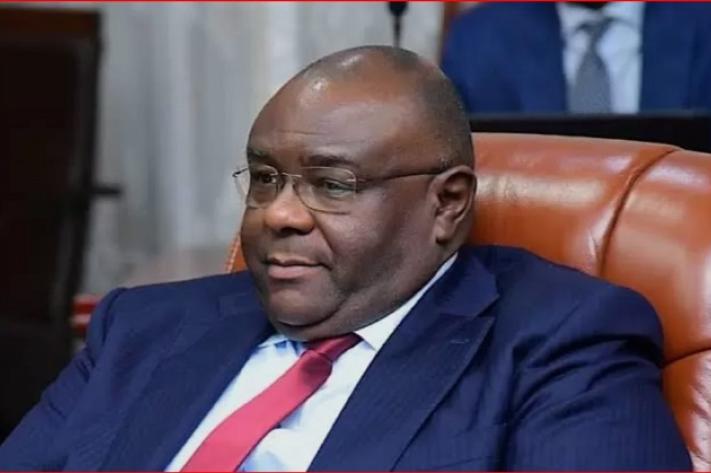
In a special broadcast aired on Top Congo FM, Jean-Pierre Bemba Gombo, Deputy Prime Minister and Minister of Transport of the Democratic Republic of Congo, gave an exclusive, wide-ranging interview addressing key national concerns.

AfricaHeadline Reports Team
editorial@dw-demosnewstaion.online
From major infrastructure upgrades to national security and political unrest, Bemba laid out both his vision and serious accusations.
Bemba confirmed the launch of a landmark project: the construction of a new international airport in Bioti, scheduled for completion in 2027. The airport, he stated, will be a symbol of the country’s economic ambitions and diplomatic vision, operated under full Congolese control and backed by a reputable international firm.
On the rail front, he highlighted the revival of the Kinshasa–Matadi railway, critical for freight transport, while admitting the financial constraints hindering broader network expansion. Plans to extend rail connections with foreign partnerships underscore the government’s strategic focus on rail as a key driver of national logistics.
River transport, vital for reaching remote areas, is another priority. The ministry is investing in modern passenger and cargo vessels, developed through public-private partnerships, alongside ongoing dredging operations to ensure navigability. Following recent deadly ferry disasters that claimed over 200 lives, Bemba announced stricter regulatory enforcement, heavier sanctions, and a crackdown on unsafe informal practices.
On security matters, Bemba revealed the temporary closure of the Goma and Bouavu airports, citing threats from armed groups. He also justified the ban on Rwandair flights over Congolese airspace, linking the decision to escalating diplomatic tensions with Rwanda. The moves reflect a regional security environment where aviation has become a sovereignty issue.
In a dramatic shift, Bemba accused former President Joseph Kabila, opposition leader Moïse Katumbi, and senior figures within the CENCO (National Episcopal Conference of Congo) of orchestrating a plot to overthrow President Félix Tshisekedi.
He claimed that these individuals launched massive cyberattacks on the national electoral system, financed destabilization campaigns, and coordinated efforts to undermine the presidency. Bemba alleged possession of concrete evidence, including data breaches and links to incitement campaigns aimed at delegitimizing the government and even physically targeting the head of state.
He further warned of coordinated disinformation and manipulation efforts by what he described as a politico-religious alliance, accusing them of electoral fraud and subversive planning.
Despite the gravity of his claims, Bemba voiced support for a national political dialogue, insisting it must be rooted in the legitimacy of the elected government. He reaffirmed his loyalty to President Félix Tshisekedi and the parliamentary majority, stressing the urgency of national unity to combat armed groups he labelled as “terrorist forces.”
Bemba’s high-profile media appearance marks a strategic pivot in government communication—a blend of infrastructure-focused optimism with sharp political confrontation. No longer just advocating for transportation reform, the minister is publicly naming enemies of the state, escalating a narrative of national defense.
In a nation still grappling with militia violence, institutional instability, and contested governance, Bemba’s stance sends a powerful but risky signal. Whether this tough line fosters national solidarity or deepens political rifts remains to be seen.
One thing is clear: in today’s Congo, transport infrastructure is no longer just a logistics challenge—it’s a political battlefield.