FILDA 2026 puts Angola’s diversification drive to the test
- AngolaEconomic
- July 21, 2026

5.3% economic growth, a stronger farm sector and 774,000 new formal jobs bolster the government’s case for reform. Weak investment and patchy data suggest the transition is still incomplete.
ACCRA — Angola arrived at the 41st edition of the Luanda International Fair (FILDA) with a stronger economic narrative than it has presented in years. Growth is accelerating despite a shrinking oil sector, agriculture has become a larger contributor to output, and private businesses account for the overwhelming majority of newly created formal jobs.
The challenge now is proving that these gains can outlast oil-price volatility and translate into sustained productivity, higher incomes and stronger investment.
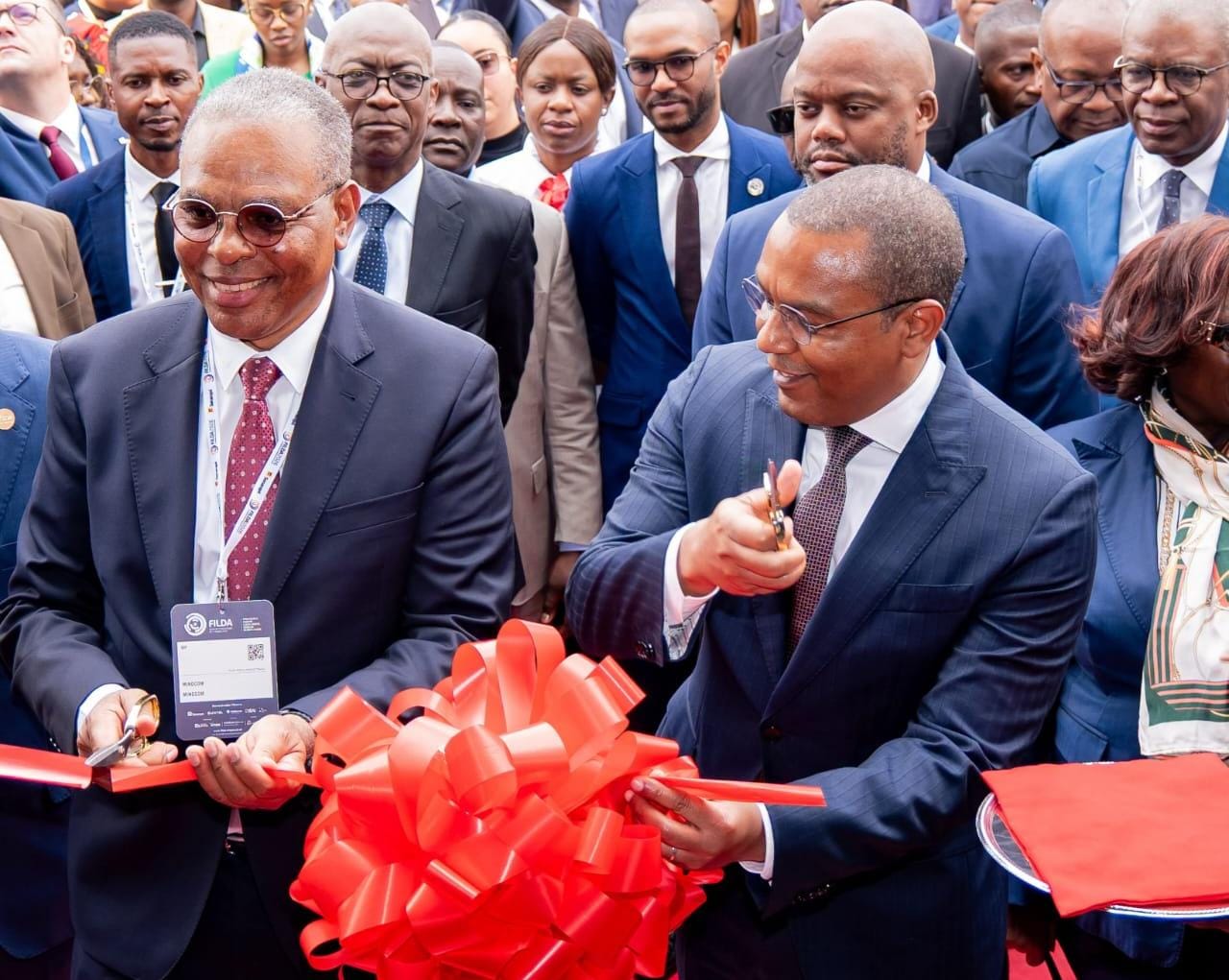
Opening FILDA 2026, Minister of State for Economic Coordination José de Lima Massano said gross domestic product expanded 5.3% year-on-year in the first quarter of 2026, the fastest pace among Southern Africa’s larger economies.
Official figures from Angola’s National Statistics Institute (INE) put growth at 5.32%, driven almost entirely by the non-oil economy. Non-oil activity expanded 6.22%, while the oil sector contracted 0.21%. On a seasonally adjusted quarterly basis, GDP rose 1.37%, indicating that the recovery continued into early 2026 despite softer crude production.
The numbers in context
| Indicator | Latest reading | Interpretation |
|---|---|---|
| GDP growth, Q1 2026 | 5.32% y/y | Strong expansion above recent annual trends |
| GDP growth, Q4 2025 | 5.7% y/y | Growth moderated slightly at the start of 2026 |
| Seasonally adjusted quarterly growth | 1.37% | Economy continued expanding sequentially |
| Non-oil sector | +6.22% | Principal engine of growth |
| Oil sector | −0.21% | Economy expanded despite weaker oil output |
| Agriculture’s share of GDP | 13.66% (2015) → 25.43% (2025) | Increase of 11.77 percentage points, roughly 86% |
| Formal jobs created | 774,000 (Jan. 2023–Jun. 2026) | Equivalent to about 18,400 jobs per month |
| Private-sector share | 95% | Around 735,000 jobs |
| Agricultural production (2024/25) | More than 30.4m tonnes | Output rose 8.5% |
| Gross investment | 10.39% of GDP (2024) | Continues to constrain productive capacity |
The first-quarter performance followed 4.95% growth in 2024, after just 1.32% in 2023, marking a sharp turnaround from the five consecutive years of recession Angola endured between 2016 and 2020.
Rather than signalling an acceleration, however, the figures suggest an economy becoming progressively less dependent on oil.
Agriculture emerges as a pillar of the economy
The most visible structural shift is taking place in agriculture. Government figures show agriculture’s contribution to GDP increasing from 13.66% in 2015 to 25.43% in 2025, an expansion of nearly 86% over a decade.
Revised annual national accounts placed agriculture and forestry at 19.42% of GDP in 2024, marginally ahead of oil extraction and refining at 19.09%. During the first quarter of 2026, agriculture and livestock represented 20.52% of economic output, compared with 15.78% for petroleum.
Differences between annual accounts, quarterly estimates and preliminary government figures complicate direct comparisons. The direction of travel, however, is increasingly clear: oil is no longer the country’s dominant economic activity in national accounting terms.
During the 2024/25 agricultural campaign, production exceeded 30.4 million tonnes, up 8.5%, supported by stronger harvests of maize, wheat, cassava, sweet potatoes, vegetables, fruit and coffee.
Yet recent data also underline the limits of the transition. Agricultural growth slowed from 4.3% in the final quarter of 2025 to 2.5% in the opening quarter of 2026.
A larger share of GDP does not necessarily imply higher productivity. Angola remains heavily dependent on imported food, seeds, fertilisers, machinery and logistics infrastructure.
Private employment strengthens the government’s case
Massano’s second key argument centred on employment. The minister said Angola generated approximately 774,000 formal jobs between January 2023 and June 2026, equivalent to an average of roughly 18,400 jobs every month.
If 95% were created by private companies, as the government stated, about 735,000 positions originated in the private sector, leaving around 39,000 attributable to public institutions or other employers.
Those figures are significant for a country with one of Africa’s youngest populations and a labour market still dominated by informality.
But the headline numbers reveal little about job quality, without detailed information on wages, sectors, contract duration, regional distribution and job retention, gross employment creation provides only a partial picture of labour-market health.
Nor is it yet clear whether job creation has kept pace with the number of young Angolans entering the workforce each year.
FILDA as showcase, and stress test
FILDA serves both as a celebration of entrepreneurship and a test of Angola’s ability to convert commercial interest into productive investment.
Previous editions illustrated both the event’s growing scale and the difficulties of measuring its economic impact. Official sources reported different exhibitor totals for the 2025 edition, reflecting varying methodologies and reporting dates. A final consolidated figure for FILDA 2026 has yet to be published.
That matters because the fair’s success should ultimately be judged not by exhibition space or visitor numbers, but by investment commitments, export contracts, technology transfers and the creation of domestic supply chains.
This year’s theme, “Produce and Innovate Locally, Compete Globally”, sets a higher ambition than import substitution alone.
Competing internationally requires reliable electricity, transport infrastructure, financing, technology and skilled labour alongside competitive manufacturing costs.
Investment remains the weakest link
Massano acknowledged those constraints, calling for greater investment in human capital, infrastructure, logistics, technology and innovation while accelerating administrative reforms and improving small-business access to finance.
The challenge is one of scale.
According to national accounts, Angola’s investment rate fell to 10.39% of GDP in 2024, while gross savings declined to 15.77%, the lowest level since comparable records began in 2015.
At the same time, labour compensation’s share of GDP dropped from 26.48% in 2015 to 19.46% in 2024.
Those figures point to an economy that has resumed growth and generated higher corporate surpluses, but still converts only a limited share of national income into productive investment or household earnings.
That distinction may ultimately determine whether Angola’s diversification proves structural or merely statistical.
FILDA 2026 therefore opens against a backdrop of cautious optimism. 5.32% GDP growth, 6.22% expansion in the non-oil economy and 774,000 new formal jobs provide the government with its strongest economic narrative in years.
The more consequential test lies ahead: whether agriculture, manufacturing and services can generate enough productivity, exports and fiscal revenues to sustain growth when oil prices, or oil production, once again come under pressure.