ANALYSIS | Angola turns the fight against disinformation into a national security priority
- AngolaPoliticsScience & Tech
- August 6, 2026

New Law Against False Information on the Internet places the country among Africa’s most comprehensive legal regimes for countering digital manipulation, artificial intelligence-driven deception and coordinated influence operations.
ACCRA — Modern warfare is no longer fought solely with soldiers, missiles or tanks. Increasingly, it begins with a manipulated video, a network of fake accounts, a convincing deepfake or a coordinated social media campaign capable of shaping public opinion, influencing elections, fuelling social unrest or undermining confidence in public institutions.
It is against this backdrop that Angola has enacted Law No. 6/26 of August 4 on False Information on the Internet, legislation that fundamentally reshapes how the state approaches digital security by placing the fight against online disinformation alongside the protection of public order, institutional stability and national sovereignty.
Published in the Official Gazette, the law establishes a comprehensive legal framework to prevent, detect and sanction the production and dissemination of false information online, applying to individuals, businesses, digital platforms and social media operators alike.
The legislation comes at a time when governments worldwide are adapting to a new strategic reality in which information itself has become a critical national asset. International security experts increasingly warn that artificial intelligence-powered disinformation campaigns and coordinated online influence operations have become central tools of hybrid warfare, combining cyber operations, psychological influence and digital manipulation to weaken states without conventional military confrontation.
That assessment underpins Angola’s broader digital strategy. Over recent years, President João Lourenço has consistently argued that digital transformation must be accompanied by stronger institutions and robust legal safeguards capable of protecting citizens, the economy and the state from emerging cyber threats.
The new legislation represents one of the clearest manifestations of that vision, forming part of a wider agenda that also includes the forthcoming Cybersecurity Law, the establishment of the National Cybersecurity Centre and the strengthening of national cyber incident response capabilities.
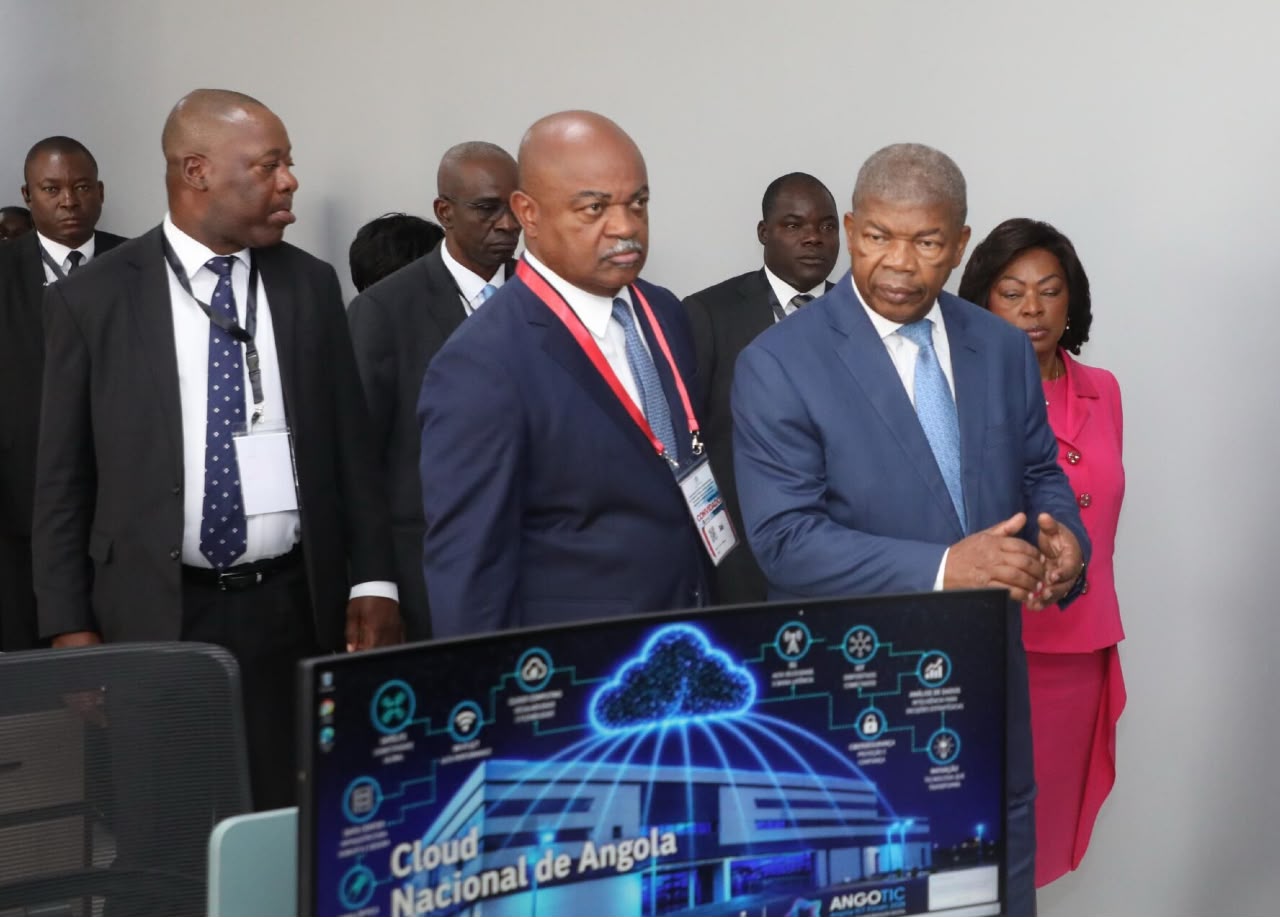
Operationally, the law reflects the strategy developed by the Ministry of Telecommunications, Information Technologies and Social Communication. Presenting the legislation before Parliament,
Minister Mário Oliveira said that “the world is moving towards regulating the digital environment so that societies can protect countries, organisations and, above all, their citizens,”
describing the law as part of a long-term strategy to build a safer, more transparent and more resilient digital ecosystem. Rather than relying exclusively on punitive measures, the framework combines prevention, digital literacy, international cooperation and technological accountability.
The scope of the legislation becomes evident in its definitions. Unlike many African laws that focus primarily on traditional “fake news”, Angola’s statute formally recognises concepts associated with the artificial intelligence era, including deepfakes, manipulated content, fabricated content, imposter content, artificial dissemination networks, artificial disseminators, algorithmic manipulation and undisclosed sponsored content. By embedding these concepts into domestic law, Angola has created a legal framework capable of addressing threats that only recently began appearing in legislation across some of the world’s most digitally advanced economies.
One of the law’s most significant provisions appears in Article 9, which shifts the focus away from punishing individual publishers alone and instead targets the technological infrastructure used to spread disinformation. The legislation explicitly prohibits fake accounts, undisclosed automated actors, coordinated artificial dissemination networks and unidentified sponsored content. In practical terms, Angola now legally recognises coordinated influence operations, large-scale networks of automated or fraudulent accounts designed to amplify narratives, manipulate online trends and distort public debate.
Another defining feature of the legislation is the level of responsibility placed on digital platforms. Articles 10, 11 and 12require online service providers to publish regular transparency reports detailing removed accounts, sponsored content, detected artificial networks, moderation methodologies and reporting mechanisms, while also submitting periodic reports to the national electronic communications regulator.
Platforms are further required to remove content classified as false, clearly label sponsored material and provide accessible appeal mechanisms for users. The provisions fundamentally redefine digital platforms not merely as technology intermediaries but as active participants in safeguarding the integrity of the online information environment.
The law also establishes one of Africa’s toughest enforcement regimes against organised digital manipulation. Articles 20, 21 and 29 classify the use of fake accounts, artificial dissemination networks, malicious algorithmic manipulation and coordinated disinformation campaigns as among the most serious administrative offences.
Corporate fines can reach 400 national minimum wages, while repeat offenders may face additional sanctions, including the temporary suspension of digital activities or, in severe cases, the closure of digital platforms. Individuals who intentionally produce or disseminate false information harming legally protected interests may also face criminal prosecution under Angola’s Penal Code, with enhanced penalties in specified circumstances.
Despite the strength of its enforcement mechanisms, the legislation seeks to preserve the balance between combating disinformation and protecting fundamental freedoms. It expressly incorporates the principles of legality, proportionality, necessity, freedom of expression and accountability, while clarifying that opinions, artistic expression, satire, religious content, fiction and literary works do not constitute false information for the purposes of legal sanctions unless accompanied by deliberate intent to deceive and objectively verifiable falsification.
The framework adopted by Angola signals a broader shift in regulatory philosophy. Rather than focusing exclusively on punishing those who publish false information, the law addresses the entire disinformation ecosystem, from digital literacy and civic education to platform transparency, technological oversight, international cooperation and accountability for the actors enabling coordinated influence campaigns.
As digital transformation accelerates across Africa alongside rising cyber threats and information manipulation, Angola’s Law Against False Information on the Internet positions the country among the continent’s most comprehensive legal frameworks for confronting a new generation of conflicts that are increasingly fought not on conventional battlefields, but through algorithms, online networks and the battle for public trust.