Africa’s empty chair
- OpinionsZimbabwe
- August 8, 2026

OPINION | AFRICA AND THE WORLD ORDER
Robert Mugabe saw clearly the injustice of a global order frozen in 1945. But the sovereignty Africa demands abroad will carry weight only when it is matched by responsibility, capacity and legitimacy at home.
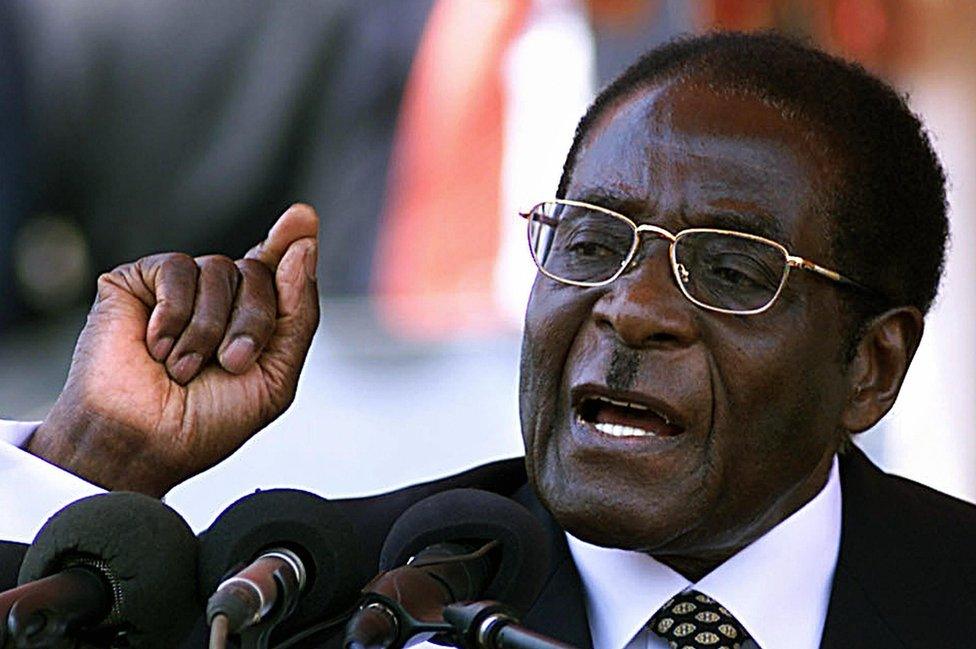
Some speeches fade with the applause, Robert Mugabe’s address to the 26th ordinary session of the African Union Assembly has not. Delivered in Addis Ababa in January 2016, as Zimbabwe’s president concluded his term as chairman of the continental body, it returned to one of Africa’s oldest grievances: the world claims that all states are sovereign equals, yet remains governed by a small, mostly nuclear-armed aristocracy. The African Union recorded the enthusiastic reception given to Mugabe’s demand for United Nations reform and permanent African representation on the Security Council.
The setting supplied an awkward irony, the summit inaugurated 2016 as Africa’s year of human rights, with particular emphasis on women’s rights. Mugabe, however, was an imperfect messenger for either cause. His role in Zimbabwe’s liberation struggle gave him historical authority. His government’s record of political violence, arbitrary detention and restrictions on civil liberties diminished his moral one.
Yet an argument does not become false merely because the man making it is contradictory. Mugabe could be gravely wrong about how Zimbabwe should be governed and still be right about how unequally the world was, and remains, governed.
The Security Council has 15 members, five, America, Britain, China, France and Russia, hold permanent seats and the power of veto. None is African. Africa, meanwhile, accounts for 54 of the United Nations’ 193 member states, more than a quarter of the General Assembly. The continent possesses vast populations, strategic waterways, critical minerals and a substantial share of the conflicts that occupy the Council’s attention. Yet when decisive meetings are held, Africa still enters the chamber more often as a subject than as an author.
This is not simply a matter of diplomatic furniture, the Council authorises peacekeeping missions, establishes sanctions, imposes arms embargoes and determines the international response to wars, coups and threats to peace. Its decisions can shape the political and economic fate of entire countries. A continent so frequently affected by those decisions cannot reasonably be excluded for ever from permanent membership.
Mugabe framed the contradiction in blunt terms. Either the veto is an indefensible relic and should be abolished, or, for as long as it exists, it cannot remain the hereditary privilege of the powers that emerged victorious from the second world war. The logic is difficult to dispute. The political obstacle is equally plain: international institutions are usually reformed by those seeking admission and protected by those already seated inside.
A decade after Mugabe’s speech, the architecture of global power remains largely intact. In May 2026 the African Union again demanded at least two permanent African seats, with all the privileges of permanent membership, including the veto for as long as other states retain it. It also called for five non-permanent African seats in an enlarged Council. The persistence of that demand is both an indictment of the international system and a measure of Africa’s limited ability to change it.
Africa’s case is compelling, though not uncomplicated, adding two more veto-wielding states would not automatically make the United Nations democratic. It might merely enlarge the club of the privileged. Genuine reform should not consist only of placing more chairs around the same table. It should also make the table more representative, transparent and accountable to those in whose name it acts.
Then comes the question African diplomacy often postpones: who would occupy the new seats?
Nigeria, South Africa and Egypt would present themselves as obvious candidates, other states could invoke regional leadership, demographic importance, diplomatic experience, economic weight or historical contribution to African liberation. A reform designed to correct Africa’s exclusion could therefore trigger one of the continent’s fiercest contests for prestige.
The best solution would preserve the principle that the seats belonged politically to Africa, even if they had to be occupied legally by individual states. Permanent African representatives should be answerable to a continental mandate, consult the African Union and be expected to defend agreed African positions. Otherwise, Africa might gain seats without acquiring an African voice.
That distinction lies at the heart of Mugabe’s argument, continental sovereignty is not created by combining dozens of national speeches. It requires coordinated diplomacy, credible institutions, independent financing, economic integration and the ability to implement decisions. A continent that negotiates in fragments turns its size into a statistic rather than a source of power.
The same is true of peace and security, Mugabe pointed to the AMANI Africa II exercises and the African Standby Force as evidence that the continent was preparing to respond more rapidly to its own crises. The exercise was intended to test the operational readiness of the force and its capacity to support multidimensional peace operations. The ambition was sound. A continent that depends indefinitely on foreign money, foreign aircraft, foreign intelligence and foreign logistics will rarely control the political terms of the missions conducted on its soil.
But an army announced in a communiqué is not yet an army capable of deploying. Effective intervention requires command structures, transport, communications, intelligence, medical support, reliable funding and, above all, political consent. Africa has often produced impressive frameworks whose operational strength is inversely proportional to the elegance of their acronyms.
There is also an old dispute at the centre of African diplomacy, governments tend to invoke non-interference when their own conduct is questioned and continental solidarity when they require assistance. The African Union must therefore define more clearly when sovereignty protects a population and when it merely protects a government.
This problem shadows Mugabe’s defence of Palestine and Western Sahara, the principle of self-determination is deeply embedded in Africa’s political memory. Much of the continent emerged from foreign rule through liberation movements, diplomatic campaigns and armed struggle. It is therefore natural that African institutions should support peoples whose political status remains unresolved.
But principles lose force when applied selectively, self-determination cannot be sacred when invoked against an adversary and inconvenient when it unsettles an ally. Nor can international law be treated as a weapon for use abroad and a nuisance to be avoided at home. A continent that demands consistency from great powers must practise it among its own members.
The most important part of Mugabe’s argument may, however, concern money rather than membership. He linked Agenda 2063, the African Union’s long-term blueprint for integration, inclusive development and collective prosperity, to the need for Africa to finance its own institutions. Grand declarations are easy to approve. Budgets are less poetic.
An organisation that relies heavily on external partners to fund strategic programmes may possess a flag, an anthem and an imposing headquarters, but its sovereignty will remain qualified. Donors do not always need to issue instructions. Influence can be exercised through the quieter decisions of what to finance, when to disburse and which priorities deserve support.
The African Union’s financial-reform programme aimed to have member states fund 100% of the organisation’s operational budget, 75% of its programme budget and 25% of peace-support operations. It also introduced measures to improve discipline, predictability and accountability in the payment and use of member-state contributions.
Such targets are not merely exercises in bookkeeping, Paying contributions to the African Union is an act of foreign policy. A government that declines to finance the institution speaking in its name is, in effect, outsourcing part of its sovereignty. There is something faintly absurd about demanding a permanent African veto in New York while allowing arrears to accumulate in Addis Ababa.
The same fragmentation appears in migration policy, Mugabe objected to Europe’s preference for inviting a selected group of African governments to discuss a phenomenon affecting the continent as a whole. His complaint was justified. Negotiating separately with countries of origin, transit and destination enables external partners to divide responsibilities and distribute financial incentives according to their own priorities.
Yet Africa cannot demand a coherent European migration policy while failing to construct one of its own. A serious continental approach would require compatible identification systems, labour-mobility agreements, protection for refugees, coordinated action against human trafficking and enforceable standards for the treatment of migrants within Africa itself.
Migration should not be reduced to a problem of border enforcement, it is also a consequence of unequal development, unemployment, political instability, climate stress and the enormous gap between the aspirations of Africa’s young people and the opportunities available to them. Arresting migrants at a frontier does not address the conditions that brought them there.
Mugabe understood the language of dignity better than most, he belonged to a generation for whom colonialism was not an academic abstraction but a functioning system of racial, political and economic power. That experience enabled him to identify the hypocrisy of an international order that proclaimed legal equality while practising geopolitical hierarchy.
But leaders of liberation movements have sometimes turned national sovereignty into the property of the ruling party. The independence of the state becomes confused with the permanence of its leaders. Foreign criticism is dismissed as neo-colonial interference; domestic criticism is treated as betrayal. An idea intended to liberate citizens is then used to discipline them.
This is where Mugabe’s speech should be revised rather than revered, sovereignty does not mean only preventing foreigners from deciding a country’s future. It also means enabling citizens to participate meaningfully in the decisions of their own state. Non-interference cannot become indifference to repression. Nor should African unity be built upon a pact of silence between governments.
The strongest African position would therefore combine external sovereignty with internal legitimacy. It would demand fair representation at the United Nations while defending constitutional government at home. It would resist unlawful foreign intervention while refusing to shelter leaders who abuse their citizens. It would call for international justice without treating domestic accountability as an imported idea.
Mugabe offered a largely correct diagnosis from a deeply compromised position. The international system remains unbalanced. Africa’s exclusion from the permanent membership of the Security Council is indefensible. Processes of decolonisation remain unfinished. Financial dependence constrains the African Union. External powers still find it easier to deal with African states separately than to confront a coherent continental bloc.
But reform in New York cannot substitute for reform in Africa, two permanent seats will not end wars, finance infrastructure, create functioning institutions or convert declarations into policy. An African veto may correct a historical injustice. It will not, by itself, cure the continent’s political weaknesses.
Nor should a permanent seat be regarded as the final prize, the real objective is the capacity to shape international rules before they are imposed, to mobilise African capital behind African priorities and to resolve African crises without waiting for permission or rescue from elsewhere.
Mugabe’s speech should therefore be neither canonised nor discarded. It was, in many respects, a perceptive diagnosis delivered by an unreliable physician. The illness nevertheless persists.
Africa’s empty chair at the Security Council remains plainly visible, tilling it is necessary, deciding who occupies it, under what mandate and in the service of which principles will matter even more.