Burkina Faso’s Sovereignty Gamble: Ibrahim Traoré, Russia and the Unfinished War for the Sahel
- Burkina FasoOpinions
- November 12, 2026
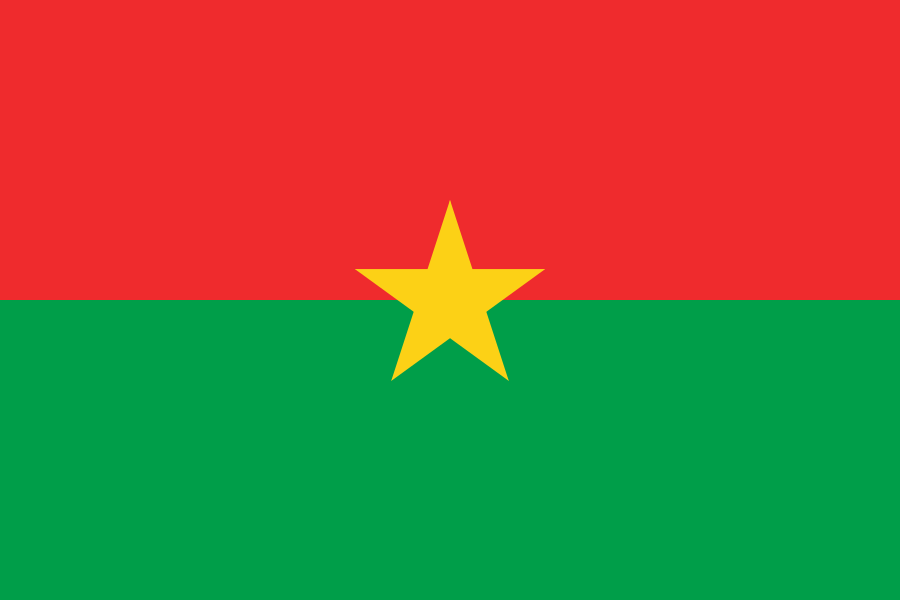

Four years after a military coup brought Ibrahim Traoré to power, Burkina Faso has broken with France, embraced new security partnerships and emerged as a symbol of African self-determination. Its economy is growing, but jihadist violence persists, political freedoms have narrowed and millions have experienced displacement. The question is no longer whether Traoré has changed his country’s international alliances. It is whether those changes have made the state more capable of protecting and providing for its people.
November 2026 | AfricaHeadline — Opinion
On 30 September 2022, Ibrahim Traoré, then a 34-year-old army captain, seized power in Burkina Faso with a promise that sounded familiar to a country exhausted by insecurity: the military would succeed where its predecessors had failed.
Eight months earlier, Lieutenant-Colonel Paul-Henri Sandaogo Damiba had overthrown the elected president, Roch Marc Christian Kaboré, invoking the same justification. Damiba’s inability to halt jihadist attacks became the rationale for his own removal.
Four years later, Traoré has transformed Burkina Faso’s diplomatic orientation. French troops have departed, Russia has become an increasingly important security partner, and the country has joined Mali and Niger in an alliance intended to reshape the balance of power across the Sahel.
The economy has also demonstrated resilience. According to the International Monetary Fund, real GDP grew by 5.3 per cent in 2025, compared with 4.8 per cent in 2024, while the fiscal deficit narrowed substantially.
Yet the conflict that brought Traoré to power remains unresolved. Armed groups continue to challenge state authority, civilians face serious protection risks and the political transition has moved further away from the electoral timetable originally envisaged.
The contradiction is central to Burkina Faso’s political experiment: the government has asserted greater independence in foreign policy while confronting persistent limitations on its ability to exercise authority throughout the national territory.
A revolution born from the failure of the state
Burkina Faso’s political upheaval cannot be understood without the deterioration of security that preceded it.
The jihadist insurgency expanded from 2015 onwards, exploiting weak state institutions, communal tensions and porous borders with Mali and Niger. By late 2021, attacks on military positions had exposed serious weaknesses in logistics, intelligence and operational coordination.
The November 2021 assault on the Inata military base, which killed 49 military police officers and four civilians, became a symbol of those failures.
Damiba’s January 2022 coup promised to restore order. His overthrow in September demonstrated how quickly military legitimacy could erode when security conditions failed to improve.
Traoré responded with expanded military recruitment, greater mobilisation of the Volunteers for the Defence of the Homeland (VDP) and efforts to acquire new equipment.
But the transition also became more politically restrictive.
In May 2024, national consultations extended military rule for five years. On 29 January 2026, the authorities approved the dissolution of political parties, arguing that the existing system required fundamental restructuring.
The government maintains that stabilisation must precede conventional electoral politics. Critics argue that restrictions on political competition and independent scrutiny weaken accountability precisely when the state is exercising extraordinary powers.
This tension is not unique to Burkina Faso. Across the Sahel, military governments have argued that the failure of civilian administrations to provide security justifies exceptional political arrangements.
Yet the underlying institutional question remains: can emergency authority be converted into durable governance without independent mechanisms capable of scrutinising its exercise?
The geopolitical rupture: France leaves, Russia advances
The departure of French forces in February 2023 marked a decisive change in Burkina Faso’s security relationships.
France had maintained extensive military cooperation across the Sahel, particularly through counter-terrorism operations. The persistence and geographical expansion of jihadist violence undermined confidence in the effectiveness of that approach.
Traoré’s government sought alternative partnerships, with Russia becoming increasingly prominent.
The change coincided with a broader regional realignment.
On 16 September 2023, Burkina Faso, Mali and Niger signed the Liptako-Gourma Charter, establishing the Alliance of Sahel States (AES). In July 2024, the three governments announced a confederation intended to deepen cooperation.
Their withdrawal from the Economic Community of West African States (ECOWAS) took effect on 29 January 2025.
The AES represents an attempt to construct a security framework outside the political structures that previously shaped regional cooperation.
Its military rationale is evident. Armed organisations operate across borders, exploiting differences in national capabilities and the difficulty of controlling vast territories.
But political alignment is not the same as military integration.
Effective cooperation requires intelligence-sharing, compatible communications systems, reliable logistics and the ability to sustain operations over time.
Russia’s growing role must be examined within that context. Military assistance can strengthen operational capacity, but long-term dependence on foreign equipment, maintenance and training can also create new vulnerabilities.
China’s engagement is more closely associated with trade, mining and infrastructure, while Turkey has expanded its defence-industry relationships across Africa.
These partnerships offer different opportunities and carry different forms of dependence. Without independently verified contract values, equipment inventories and financing terms, their relative benefits cannot be quantified reliably.
The central issue is therefore not whether Burkina Faso should work with Moscow, Beijing, Ankara or Western governments.
It is whether those relationships increase the state’s ability to act independently, diversify suppliers and develop national technical capacity.
The war that continues to define the country
The conflict remains the most immediate test of the government’s authority.
Jama’at Nusrat al-Islam wal-Muslimin (JNIM), affiliated with al-Qaeda, and Islamic State-linked organisations have used attacks, intimidation and disruption of supply routes to undermine state control.
Their operations demonstrate why the number of military engagements alone is an inadequate measure of security.
A government may retain a military presence in a locality while residents remain unable to travel safely, trade agricultural products or access public services.
The strategic importance of roads, markets and communications networks is therefore comparable to that of military positions.
The humanitarian consequences have been severe. More than two million people were recorded as internally displaced in earlier reporting periods, although registration gaps and changing access conditions make precise current comparisons difficult.
Civilian protection has also become a central concern.
On 2 April 2026, Human Rights Watch published an investigation documenting 1,837 civilian deaths in 57 incidents examined between January 2023 and August 2025. The organisation attributed more than 1,200 of those deaths to government forces and allied militias, with other killings attributed to JNIM.
These figures cover the incidents investigated, not all conflict-related deaths nationally. The findings include allegations of war crimes and crimes against humanity, which require independent judicial determination. The authorities have disputed allegations against their forces.
The implications extend beyond human rights law.
Counter-insurgency depends on intelligence from local communities. Civilian casualties, abuses and collective punishment can weaken trust and complicate the identification of armed networks.
Jihadist violence, meanwhile, can intimidate communities and disrupt the state’s ability to restore normal administration.
The relevant test is not simply whether territory is retaken, but whether civilians can return safely, schools reopen and local economic activity resumes.
Without those outcomes, military operations may produce temporary gains without establishing lasting security.
Gold, growth and the limits of economic sovereignty
The economic record provides a more complicated picture than either the government’s supporters or its critics sometimes acknowledge.
The IMF estimated that Burkina Faso’s economy expanded by 5.3 per cent in 2025, compared with 4.8 per cent in 2024. Average inflation fell from 4.2 per cent to minus 0.5 per cent, while the fiscal deficit narrowed from 5.8 per cent to 1.8 per cent of GDP.
The public debt ratio also declined, from 57.2 per cent to 52.1 per cent of GDP in the IMF’s June statistical framework. A subsequent debt sustainability assessment used a revised estimate of 53.4 per cent for 2025, illustrating why different statistical vintages should not be mixed without explanation.
The World Bank attributed the expansion partly to favourable agricultural conditions, government initiatives in farming and fisheries, resilient services and mining-sector reforms. Higher international gold prices also supported export earnings.
The scale of that commodity effect is striking. The IMF’s annual gold-price series rose from approximately $1,943 per troy ounce in 2023 to $3,218 in 2025, an increase of almost 66 per cent. That external windfall provided a substantial advantage to an economy in which gold is a major export.
The question is how much of this growth can become permanent productive capacity.
Gold generates foreign exchange and fiscal revenue, but mining alone cannot provide enough employment or economic opportunity for a population of more than 24 million. Agriculture remains essential to livelihoods, while energy, roads and industrial investment determine the potential for broader transformation.
The IMF’s earlier programme estimates anticipated a 37.2 per cent increase in goods exports in 2025, driven by gold sales. The underlying projection assumed a 31.4 per cent rise in gold prices and an 18.6 per cent increase in exported quantities. Those were forecasts, rather than subsequently audited outcomes.
The distinction between favourable commodity markets and domestic policy achievements is essential. Reforms can influence production, formalisation and revenue collection; they cannot determine the world gold price.
The financial relationship with the IMF is equally revealing.
On 26 June 2026, the Fund completed its fifth review of Burkina Faso’s Extended Credit Facility programme, allowing a disbursement of 60.2 million Special Drawing Rights. A separate resilience programme review unlocked another 16.42 million SDR.
This continued engagement does not contradict the pursuit of sovereignty. It demonstrates that political realignment and international financial cooperation can coexist.
Burkina Faso also remains a member of the West African Economic and Monetary Union, retaining the CFA franc despite leaving ECOWAS.
That distinction is more than technical. The country remains connected to a regional monetary system, bond markets and commercial relationships extending beyond the AES.
Indeed, the IMF’s debt analysis found that Treasury-bill issuance increased from 15.5 per cent of relevant domestic securities issuance in 2022 to 36.2 per cent in 2025, indicating a greater reliance on shorter-term instruments. This creates refinancing considerations even where the headline debt ratio is improving.
Sovereignty, in economic terms, is not the absence of creditors or trading partners. It is the ability to negotiate those relationships while maintaining financial stability and sufficient room for domestic policy choices.
One alliance, three different economies
The Alliance of Sahel States is often presented as a single political project. Its three members, however, have different economic structures, security pressures and resource endowments.
A comparison using the IMF’s 2026 regional dataset illustrates the differences.
| Country | Real GDP growth, 2024 | Estimated growth, 2025 | Projected growth, 2026 |
|---|---|---|---|
| Burkina Faso | 4.8% | 5.0% | 4.9% |
| Mali | 5.0% | 4.9% | 5.5% |
| Niger | 10.3% | 6.9% | 6.9% |
The table uses a single IMF/WAEMU statistical vintage for comparability. Burkina Faso’s separate June 2026 country assessment estimated 5.3% growth in 2025; the two estimates should not be treated as identical.
Niger’s growth has been influenced by oil-sector developments, while Mali and Burkina Faso remain strongly exposed to gold, agriculture and insecurity.
The figures illustrate why political alignment does not imply identical economic outcomes.
The AES also faces an enormous geographical challenge. Mali and Niger have vast territories, much of them sparsely populated, while Burkina Faso occupies a strategically important position between the central Sahel and coastal West Africa.
Their common security framework may improve coordination, but the economics of integration require roads, customs arrangements, energy infrastructure and reliable access to ports.
For Burkina Faso, those ports include Abidjan in Côte d’Ivoire, Tema in Ghana, Lomé in Togo and Cotonou in Benin.
The political break with ECOWAS has not removed these geographical dependencies. Nor has it eliminated the commercial interests shared by the AES and its coastal neighbours.
The strategic importance of the alliance will ultimately depend on what it can achieve beyond diplomatic declarations and military coordination.
The contest over Traoré’s image
Traoré’s international visibility has become a political phenomenon in its own right.
His speeches and public appearances circulate widely across African social media, often accompanied by references to Thomas Sankara and the language of anti-colonial resistance.
For some audiences, his leadership symbolises a challenge to inherited structures of foreign influence. For critics, the prolonged military transition and restrictions on political activity raise concerns about accountability and civil liberties.
Neither interpretation should be confused with a representative measurement of domestic opinion.
Digital engagement cannot establish the level of public support across Burkina Faso, particularly when independent political activity and reporting face constraints.
The information environment also creates opportunities for misinformation, selective presentation of battlefield developments and exaggerated claims about economic achievements.
For analysts, the distinction between strategic communication and independently documented results is indispensable.
A speech may articulate a political objective. It does not establish whether that objective has been achieved.
The people behind the geopolitical experiment
The most consequential question is also the least abstract: what has changed for ordinary Burkinabè?
The World Bank reported that, according to government figures, approximately 1.4 million internally displaced people had returned to their localities by September 2026. That is an important reported development, but returns alone do not establish whether every area is secure or whether families have regained adequate housing, livelihoods and public services.
The broader humanitarian burden remains substantial.
Displacement, school closures, interrupted agricultural production and restricted access to healthcare have imposed costs that cannot be fully captured by GDP growth.
The World Bank’s June economic update emphasised that the recovery would need to generate productive jobs and wider economic opportunities to become sustainable.
That distinction should be central to the debate about Burkina Faso’s future.
A stronger fiscal position creates opportunities for investment. It does not guarantee that the benefits reach remote communities. Higher gold revenues can support public spending, but they cannot substitute for functioning schools, clinics, agricultural markets and transport networks.
The relationship between security and development is equally important.
Without security, investment becomes more expensive and public services harder to deliver. Without employment and credible institutions, military gains may prove difficult to consolidate.
These are not separate policy challenges. They reinforce one another.
The real test of sovereignty
Four years after Traoré’s coup, Burkina Faso has undergone a significant geopolitical realignment.
France’s military presence has ended. Russia has become a more prominent security partner. The AES has introduced a new institutional framework in the Sahel. Mining reforms and favourable commodity markets have contributed to stronger economic performance.
At the same time, the insurgency persists, civilian protection remains a serious concern and political restrictions have narrowed the space for independent scrutiny.
The economic outlook contains both opportunities and risks. In its June 2026 assessment, the IMF projected growth of 5.3 per cent for the year, while the World Bank’s more recent country update pointed to a moderation towards 5.0 per cent. The difference reflects distinct forecasting exercises rather than a realised outcome.
There is no need to reduce this complex record to a simple narrative of national triumph or failure.
The historical comparison with Thomas Sankara helps explain Traoré’s political language, but it cannot substitute for an assessment of institutions, economic outcomes and public welfare.
The country’s future will be shaped by whether its security strategy enables communities to live and trade safely; whether mineral wealth finances productive investment; whether regional partnerships improve economic resilience; and whether the political system develops durable mechanisms of accountability.
Burkina Faso has demonstrated that it can change its diplomatic alliances and challenge longstanding relationships of power.
The more consequential question is whether those changes can help build a state capable of protecting its people, sustaining prosperity and establishing institutions that endure beyond the present military transition.