OPINION: Nigeria’s dollar cash drive puts its reserves to the test
- OpinionsOptinions & World
- November 26, 2026


AfricaHeadline OPINION | ECONOMIC ANALYSIS
With 86 bureaux de change initially eligible, the new rules allow up to $86mn in weekly cash deliveries. A 13-week stress scenario puts net central bank sales at $783mn. The actual cost will depend on how much foreign currency banks can source from the market.
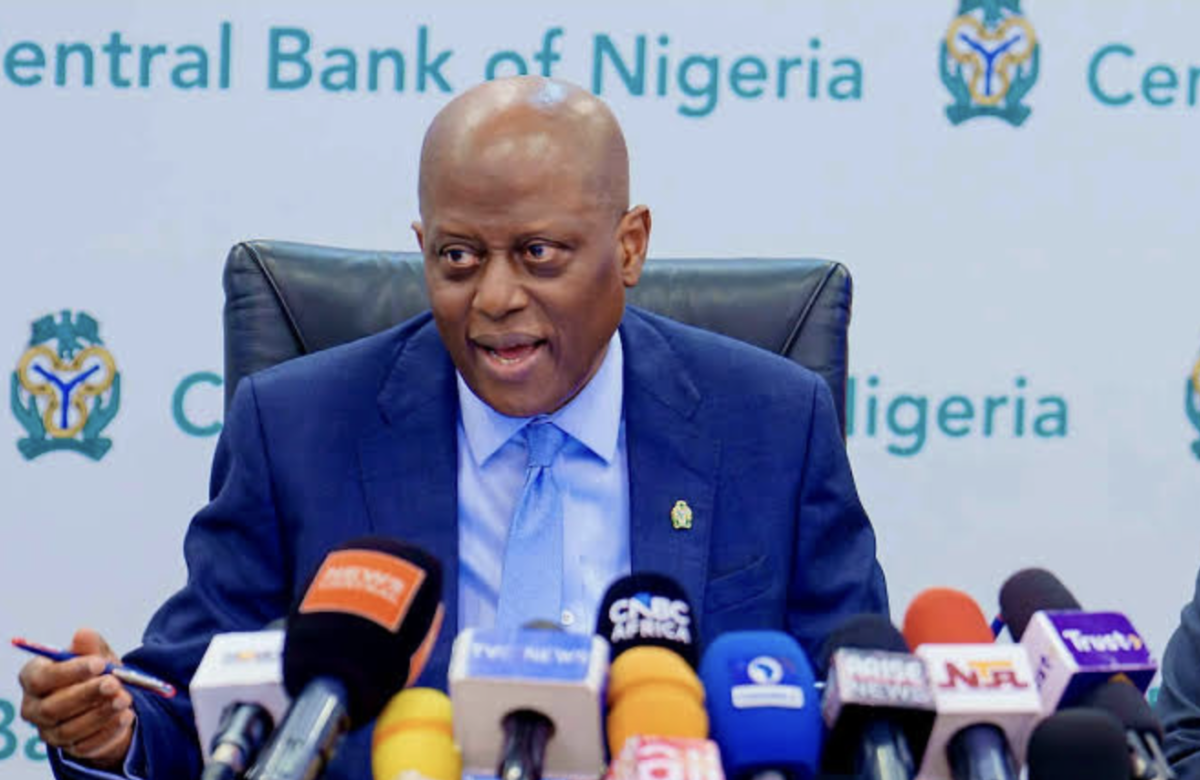
JOHANNESBURG — Nigeria has temporarily raised the weekly foreign exchange purchase limit for licensed bureaux de change from $150,000 to $1mn per operator.
Since November 25 2026, bureaux have been allowed to take the full value of approved purchases in dollar banknotes. Under the previous rules, they could receive only 25 per cent in cash, up to $37,500. On the day the measure took effect, the dollar traded at ₦1,397 on the official market and ₦1,455 on the parallel market, a premium of 4.2 per cent. The Central Bank of Nigeria (CBN) said the move was intended to meet seasonal demand for cash.
The central bank circulated a list of 86 eligible operators to authorised banks, according to BusinessDay. If every bureau used its full allowance, banks could deliver $86mn in notes each week, compared with $3.225mn if the same operators had fully used the previous cash limit.
The difference of $82.775mn measures the increase in authorised capacity. Actual withdrawals and the share funded by the central bank have yet to be established. The earlier $2.73bn stress estimate assumed 400 operators and would require a substantial expansion of the eligible list.
When cash deliveries become a draw on reserves
A bureau submits its request through the CBN’s electronic platform. An authorised bank confirms the transaction, settlement takes place two business days later and the operator’s account is debited when the notes are delivered. Where the dollars have already been bought from sellers in the market, delivery in banknotes may simply change the form of settlement.
The direct draw on reserves arises when the CBN makes net sales of its own foreign currency to cover a shortfall. The instructions sent to banks describe how the notes will be delivered but give no breakdown of how much the CBN may need to fund from its own holdings.
October provides a sense of scale. Credit Direct estimated that the CBN had intervened in the foreign exchange market to the tune of $1.98bn that month.
The Financial Markets Dealers Association reported more than $3bn in foreign exchange sales. The figures describe broader market activity using different measures.
Neither isolates net sales to bureaux de change. Calculating the additional cost of the new rule would require a baseline for what the CBN would have sold to those operators over the same period under the previous rules. That figure remains unavailable in the sources reviewed.
Four scenarios for the central bank’s balance sheet
The scenarios multiply the number of active bureaux by their average weekly withdrawals and the share covered by net CBN sales. The 13- and 26-week periods show how exposure could accumulate if the measure were extended. Each scenario is illustrative.
Full market funding. If all 86 operators withdrew an average of $500,000 a week, banks would deliver $43mn in notes. With the market supplying the entire amount, the CBN would make no net sales of its own dollars to finance those deliveries. Operators could receive $559mn in notes over 13 weeks under that assumption.
Limited take-up. If 40 operators withdrew an average of $250,000 a week, deliveries would total $10mn. With the CBN covering 20 per cent, net sales would reach $2mn a week, $26mn over 13 weeks and $52mn over 26 weeks.
Intermediate take-up. If 60 operators withdrew an average of $500,000 a week, deliveries would rise to $30mn. If the CBN covered 40 per cent, it would sell $12mn a week, or $156mn over 13 weeks and $312mn over 26 weeks.
Stress scenario. If all 86 bureaux used the full $1mn weekly allowance and the market supplied only 30 per cent, the CBN would sell $60.2mn a week. That would amount to $240.8mn after four weeks, $782.6mn after 13 weeks and $1.57bn after 26 weeks.
The scenario assumes full take-up and persistently weak market supply. With cash deliveries held constant, cutting the CBN’s share from 70 per cent to 30 per cent would bring 13-week net sales down to $335.4mn, a difference of $447.2mn.
Nigeria reported $54.02bn in gross external reserves as of November 17, equivalent to 10.26 months of imports. Net sales in the stress scenario would amount to 1.45 per cent of that balance after 13 weeks and 2.9 per cent after 26 weeks. The room for intervention also depends on how readily the assets can be used, foreign currency commitments and debt payments.
Governor Olayemi Cardoso reported $34.8bn in net foreign exchange reserves at the end of 2025. That figure illustrates the distinction between gross and net reserves, but its earlier date precludes a direct comparison with the November gross balance. The sources reviewed do not establish how much was immediately available for intervention in November 2026.
Angola shows how to broaden the supply of dollars
Angola offers a close parallel for Abuja. Its central bank abandoned the exchange rate peg in January 2018. The parallel-market premium fell from 151 per cent in December 2017 to 26 per cent by mid-October 2019. Over the transition, the weekly pace of reserve losses slowed from $134mn to $39mn, according to the IMF.
The adjustment carried a cost for buyers: a dollar became more expensive in kwanza terms at the official rate.
Angola then broadened the supply of foreign exchange. In January 2020, it allowed oil companies to sell foreign currency directly to the banks they dealt with. Electronic trading began in April and was extended to diamond companies at the end of June.
That experience offers a way to assess the CBN’s agreement with Nigeria’s state oil company, NNPC. If the agreement generates regular additional sales in the official market, banks can use those dollars to help meet demand from bureaux.
The relevant figure is the net additional volume actually traded. Angola also shows how hard the gains can be to sustain. An IMF assessment published in 2026 identified renewed shortages and parallel rates 15 to 30 per cent above the official rate in the period examined.
Ghana rebuilt reserves. Uzbekistan narrowed the parallel premium
Ghana shows how an additional source of foreign exchange can rebuild reserves. On the IMF programme definition, gross reserves rose from $1.5bn in 2022 to $6.4bn at the end of 2024, when they covered 2.5 months of prospective imports.
The Bank of Ghana’s gold purchase programme contributed to the recovery, and gold purchases and exports continued in the first half of 2025. The comparison gives Abuja a measure for judging new sources of dollar supply: the net foreign currency inflows they generate.
Uzbekistan shows what exchange rate unification can achieve, and what it can cost. In September 2017, the official rate moved from about 4,210 to 8,100 som per dollar as the authorities lifted restrictions on convertibility for current-account transactions.
The parallel-market premium virtually disappeared overnight. The official price of a dollar in local currency nearly doubled. Access to foreign exchange improved even as the adjustment raised its official price.
How to tell whether the policy is working
Nigeria’s own experience shows how briefly relief can last. In February 2024, the CBN announced sales of $20,000 per bureau.
The naira reached ₦1,119.49 per dollar in mid-April before weakening again in the second half of the month. The CBN cited a pause in capital inflows as a factor. On April 22, it announced another round of sales, this time of $10,000 per operator.
Egypt faced a different version of the problem. Its official rate remained broadly unchanged from March 2023 to March 2024 while banks struggled to meet demand for foreign exchange.
After currency unification, supported by external inflows, the IMF reported that the parallel premium fell below 2 per cent and daily interbank turnover rose from $20mn–$40mn to $300mn–$900mn. Both episodes show why exchange rates have to be read alongside foreign currency flows and banks’ ability to fill orders.
In the first two weeks, the CBN should track how many of the 86 operators collected notes, how much they received and how many transactions settled within two business days. A breakdown by region and operator would show whether the notes reached more customers or were concentrated among a handful of bureaux.
In weeks three and four, the focus should shift to the price customers pay and the margin bureaux earn over their acquisition cost. If the official rate moved from ₦1,397 to ₦1,430 per dollar and the parallel rate stayed at ₦1,455, the premium would fall from 4.2 per cent to 1.7 per cent.
In that example, customers in the parallel market would pay exactly the same. If more notes reach the bureaux and margins rise while acquisition costs stay flat, intermediaries may be capturing part of the benefit.
From week five through week 13, and as support is withdrawn, the question is how much demand the market can meet. If bureaux remain stocked while the CBN scales back net sales, private supply will be covering more of the demand. If shortages return as soon as the central bank sells fewer dollars, the policy will have bought time.
Its lasting value will depend on whether banks can turn exporters’ foreign currency earnings into a dependable supply of dollars and whether customers see the benefit at the counter.