Brazil heads to polls with Lula ahead as runoff gains momentum
- ElectionWorld
- October 4, 2026
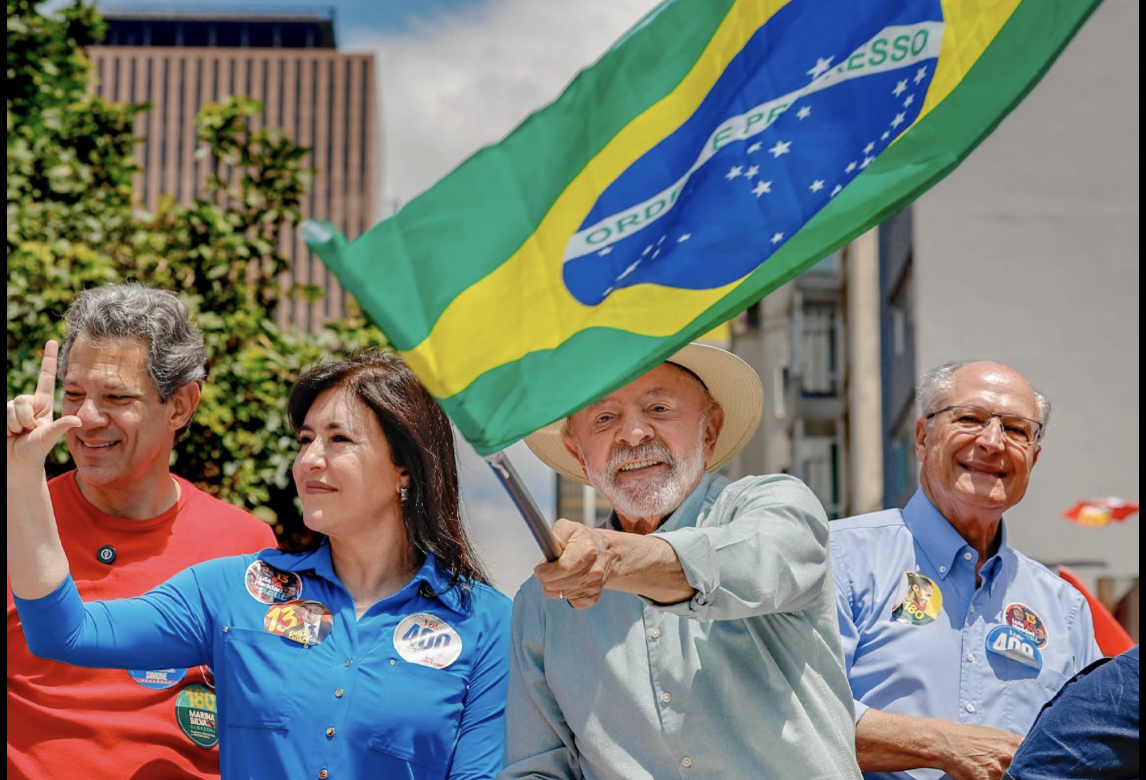

The latest polls put the Brazilian president ahead, but none gives him enough support to win in the first round. In a potential runoff against Flávio Bolsonaro, the gap is narrow.
BRASÍLIA — Brazilians go to the polls on Sunday to choose their president in an election that is increasingly pointing towards a runoff. Luiz Inácio Lula da Silva leads the main first-round polls, but none gives him enough votes to cross the 50% threshold required to avoid a second vote.
The first round takes place on October 4. If no candidate secures more than half of the valid votes, the two leading candidates will face each other again on October 25.
That possibility has become one of the defining features of the final days of the campaign. The immediate question is no longer simply who will finish first, but whether any candidate can secure enough support to end the presidential race on Sunday.
The latest surveys show Lula ahead, although the size of his lead varies significantly between polling organisations.
Datafolha puts the president at 45% of valid votes, against 42% for Flávio Bolsonaro. Quaest gives Lula 46% and Flávio 45%. The CNT/MDA poll has Lula at 47.8%, compared with 42.1% for the Liberal Party candidate. AtlasIntel/Bloomberg puts the two at 47% and 44.1%, respectively.
None of these results points to a first-round victory. Even the highest estimate for Lula leaves him below the 50% threshold needed to avoid a runoff.
A race that could start again
The uncertainty becomes greater when the pollsters simulate a second round.
In a direct contest between Lula and Flávio Bolsonaro, the latest surveys show the two candidates close together. Datafolha gives Lula 47% and Flávio 46%. Quaest puts Flávio at 44% and Lula at 42%. AtlasIntel / Bloomberg shows an almost exact tie, with Lula at 47.6% and Flávio at 47.4%.
The differences between the polls call for caution. The surveys were conducted at different times and use different methodologies, samples and margins of error. A lead of a few percentage points should therefore not be treated as a settled trend.
The UOL polling average also points to a narrowing contest. In the first round, Lula stands at an average of 40.5%, against 37.2% for Flávio. In a potential runoff, the gap falls to 45.1% versus 44.8%.
The most significant feature of the data is therefore the narrow distance between the two candidates in the second-round scenarios, rather than any clear indication of who would win.
The voters who could decide the election
A runoff would change the nature of the contest. Candidates eliminated in the first round would leave the race, but their voters would become a major target for both remaining campaigns.
The way those votes are redistributed could prove important, as could turnout and the behaviour of voters who remain undecided or are considering casting blank or invalid ballots.
Brazil’s regional political map will also matter. Lula retains stronger support among lower-income voters and in the Northeast, while Flávio Bolsonaro performs better among higher-income groups and in parts of the South and Southeast.
A runoff would force both candidates to reach beyond their traditional electoral bases. The campaign would shift from a contest involving several political alternatives to a direct choice between two presidential candidates.
The economic dimension
The election is also being closely watched by markets and businesses. Brazil is Latin America’s largest economy and one of the world’s major emerging markets, meaning that the outcome will shape expectations around investment, economic policy and the relationship between the executive and Congress.
A runoff would extend the presidential contest for another three weeks and leave open questions about the next government’s economic priorities, including fiscal policy, public investment and the regulatory environment.
It would nevertheless be premature to draw economic conclusions from the polls alone. Surveys measure voting intentions rather than actual results, and the relatively small gap between the candidates means that changes in turnout and the distribution of votes could have a significant impact.
Brazil therefore enters the first round with Lula ahead in the main polls, but without a lead large enough to rule out a second vote. If no candidate secures more than 50% of valid votes, the presidency will be decided on October 25.
For now, the clearest feature of the race is the absence of certainty: Lula starts the first round in front, but the available evidence leaves open the shape, and balance, of the contest that could follow.