Uganda: Museveni succession plan faces resistance within ruling party after 40 years in power
- PoliticsUganda
- November 12, 2026
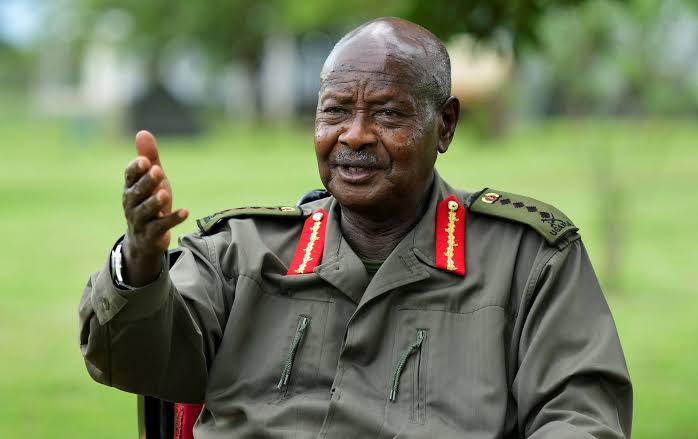

Senior figures in Uganda’s ruling National Resistance Movement have reportedly challenged a proposal to position army chief Muhoozi Kainerugaba as the country’s next president. The dispute raises questions about political succession, military influence and institutional continuity as East Africa’s emerging oil producer prepares for a new phase of economic development.
KAMPALA | November, 2026 | Political and Economic Analysis
KAMPALA — Four decades after Yoweri Museveni seized power in Uganda, a dispute over his political succession has exposed reported divisions within the ruling National Resistance Movement (NRM), raising questions about the future relationship between the presidency, the military and the party that has governed the East African nation since 1986.
Senior NRM officials reportedly resisted a proposal to endorse Museveni’s son, General Muhoozi Kainerugaba, as a potential presidential candidate for the 2031 election during a closed-door meeting of the party’s Central Executive Committee (CEC) on November 10. 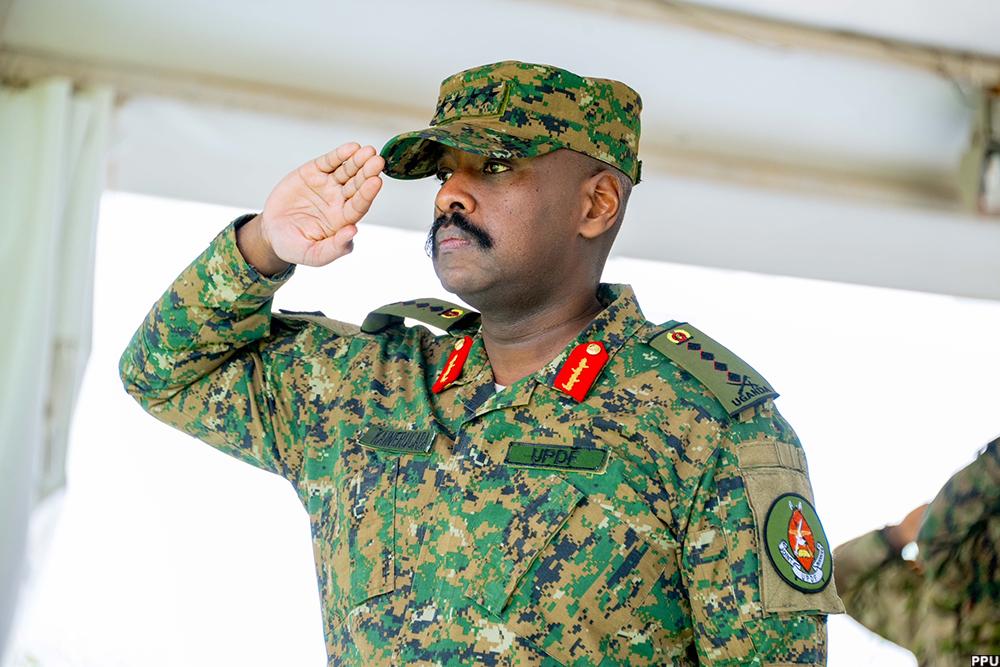
According to five sources cited by Agence France-Presse, the meeting ended before a vote could be completed. Of the committee’s reported 28 members, four had voted in favour of Kainerugaba and three against when proceedings were halted following objections from senior party figures.
The interrupted ballot does not constitute a formal rejection of Kainerugaba’s candidacy. Nor does it establish the position of the remaining committee members.
The account has also been disputed by figures associated with Kainerugaba’s political movement. On November 12, Daudi Kabanda, a senior official of the Patriotic League of Uganda (PLU), publicly rejected reports that the NRM had turned against the army chief.
The competing accounts underline the uncertainty surrounding a succession process that has yet to produce a publicly confirmed party decision.
For Uganda, the stakes extend beyond the political future of the president’s son. They concern how a governing movement built around one leader can manage an eventual transfer of power while maintaining civilian authority, military cohesion and economic policy continuity.
The debate comes as Uganda prepares for a potentially transformative period of oil production and infrastructure investment. In its July 2026 assessment, the International Monetary Fund projected real economic growth of 8.7 per cent in the 2025/26 financial year and 8 per cent in 2026/27, reflecting strong domestic activity and expectations surrounding the development of the petroleum industry.
Four decades of power and an unresolved succession
Museveni assumed power on January 26, 1986, following a guerrilla campaign led by the National Resistance Army, ending years of political instability and armed conflict.
His administration subsequently established a political system in which the NRM became the dominant governing organisation, while the military and security institutions retained considerable importance in the architecture of the state.
Constitutional changes have played a central role in the longevity of his presidency.
In 2005, Uganda removed presidential term limits. A further constitutional amendment in 2017 eliminated the upper age limit of 75 for presidential candidates.
Together, these reforms allowed Museveni to continue seeking re-election, but they did not establish an agreed mechanism for choosing his eventual successor.
The question has become increasingly prominent with the rise of Kainerugaba, 52, who was appointed chief of Uganda’s defence forces in March 2024.
His military career, combined with the political mobilisation undertaken by the PLU, has placed him at the centre of speculation about the country’s future leadership.
Yet military seniority, presidential family ties and electoral legitimacy are distinct sources of authority. A transition involving a serving military commander would require careful consideration of the constitutional and institutional boundaries between the armed forces and civilian politics.
Timeline: from Museveni’s rise to the November 2026 dispute
January 26, 1986 — Museveni takes power
The National Resistance Army establishes a new government following its military victory.
2005 — Presidential term limits abolished
Constitutional amendments remove restrictions on the number of presidential terms.
2017 — Presidential age limit removed
Parliament approves changes eliminating the upper age limit for presidential candidates.
March 2024 — Kainerugaba appointed army chief
Museveni names his son chief of the Uganda People’s Defence Forces (UPDF).
September 1, 2026 — Presidential ambitions emerge
PLU official Daudi Kabanda publicly signals Kainerugaba’s intention to contest the 2031 presidential election.
October 27, 2026 — Succession discussions
Museveni reportedly presents senior NRM officials with a paper concerning future leadership and his son’s qualifications.
November 10, 2026 — Committee meeting interrupted
Five sources cited by AFP describe objections to Kainerugaba’s proposed endorsement and an unfinished vote.
November 12, 2026 — Conflicting accounts
PLU officials dispute reports of a rejection, leaving the party’s formal position unclear.
2031 — Next presidential election horizon
The expected election becomes the principal reference point for the succession debate.
The October and November developments are based on attributed media reports and public statements rather than a complete, publicly released record of NRM proceedings.
Resistance within the NRM raises questions about political legitimacy
The November 10 meeting reportedly exposed concerns among senior NRM figures over Kainerugaba’s political approach, particularly his confrontational statements on social media.
One source quoted by AFP said the army chief’s public conduct had caused unease within sections of the governing party.
“The combative nature of the army chief has created uneasiness among some people. He is fighting and threatening people on social media.”
The source added that Kainerugaba should seek to persuade Ugandans rather than rely on coercion.
The concerns followed controversial posts attributed to the general, including threats directed at Vice-President Jessica Alupo over unsubstantiated allegations of a plot against the government.
Such episodes have intensified scrutiny of the relationship between Kainerugaba’s military responsibilities and his political ambitions.
Calvin Echodu, an NRM vice-chairman, reportedly proposed that Museveni remove his son from military command and assign him a civilian role, allowing him to acquire administrative experience and engage more directly with the population.
Echodu was also reported to have suggested that Museveni contest another presidential election in 2031, arguing that Kainerugaba was not yet ready to assume the presidency.
These remarks represent attributed positions within the party, not an adopted NRM resolution.
The disagreement highlights a central institutional distinction: command over the armed forces does not automatically translate into political endorsement or electoral support.
Even within a governing movement that has dominated Uganda’s political landscape for decades, leadership selection involves competing institutional interests, political calculations and formal procedures.
The military dimension: Kainerugaba, the UPDF and national security
Kainerugaba’s position as chief of the Uganda People’s Defence Forces makes the succession debate particularly significant for the country’s security establishment.
Before his appointment in March 2024, he held senior military responsibilities, including within Uganda’s special forces.
The UPDF plays a substantial role in Uganda’s security policy, both domestically and through regional deployments.
Ugandan forces have participated in African Union operations in Somalia and joint military operations with the Democratic Republic of Congo against armed groups, including the Allied Democratic Forces (ADF).
These commitments make continuity in military command an important consideration in any future political transition.
The institutional issue is not simply whether a senior military officer can pursue political office. It is how the military’s chain of command can remain separate from partisan competition while the officer concerned holds significant operational authority.
Regional media reports in early November indicated that Kainerugaba had spoken about leaving his position as defence chief in the coming months. Such statements, however, do not amount to an official retirement decision or establish a confirmed timetable for a change of command.
Three developments warrant particular attention: whether Kainerugaba formally leaves the military, whether he assumes a civilian government position, and how the UPDF’s leadership and regional commitments are managed.
There is currently insufficient public evidence to conclude that the reported NRM disagreements have disrupted military discipline or operational activities.
Uganda’s economy: rapid growth meets fiscal constraints
The succession debate is unfolding against a backdrop of economic expansion and substantial infrastructure investment.
Uganda has sought to strengthen its energy sector, develop petroleum production, improve transport infrastructure and expand agricultural and mineral exports.
The IMF’s July 2026 assessment projected robust growth but also identified fiscal vulnerabilities, including public debt, rising interest costs and uncertainties surrounding the timing of oil production.
Uganda: key macroeconomic indicators
Real GDP growth, FY2025/26
8.7%
IMF projection
Real GDP growth, FY2026/27
8.0%
IMF projection
Public debt, FY2025/26
55.1%
Estimated share of GDP
International reserves
$6.1bn
May 2026
Source: IMF, 2026 Article IV consultation, July 28, 2026. Financial-year estimates and projections.
The IMF estimated that Uganda’s fiscal deficit would reach 7.1 per cent of GDP in 2025/26, compared with 6 per cent in the previous financial year.
The figures illustrate the challenge facing policymakers: maintaining economic expansion while containing borrowing requirements and strengthening domestic revenue collection.
Political predictability matters in this environment because major investment projects, financing agreements and fiscal reforms extend beyond individual presidential terms.
Nevertheless, there is no verified evidence that the November succession dispute has caused measurable capital flight, a deterioration in financing conditions or the suspension of investment projects.
Oil production adds an economic dimension to the transition
One of Uganda’s most important development projects is the East African Crude Oil Pipeline (EACOP), a planned 1,443-kilometre pipeline linking the Lake Albert oilfields to the Tanzanian port of Tanga.
The infrastructure forms part of a wider strategy to establish Uganda as a petroleum producer and create new sources of export earnings and government revenue.
According to IMF projections, oil revenues could reach approximately 1.7 per cent of GDP in 2027/28, rising to 2.1 per cent in 2028/29 and 2.2 per cent in 2029/30, assuming the underlying production and price forecasts materialise.
These estimates remain sensitive to project schedules, international oil prices, production costs and the fiscal arrangements governing the sector.
The proximity of the oil development timetable to the 2031 presidential election raises a broader economic question: can Uganda establish institutions capable of maintaining fiscal and investment policy continuity regardless of who occupies the presidency?
The IMF has emphasised the importance of transparent oil revenue management, fiscal discipline and safeguards designed to preserve long-term economic stability.
The succession debate therefore intersects with a significant structural transformation of Uganda’s economy.
The central economic issue is not the identity of a prospective successor alone, but whether the country’s institutions can sustain policy commitments, manage petroleum income and maintain investor confidence across political transitions.
Regional geopolitics: Uganda’s strategic role in East Africa
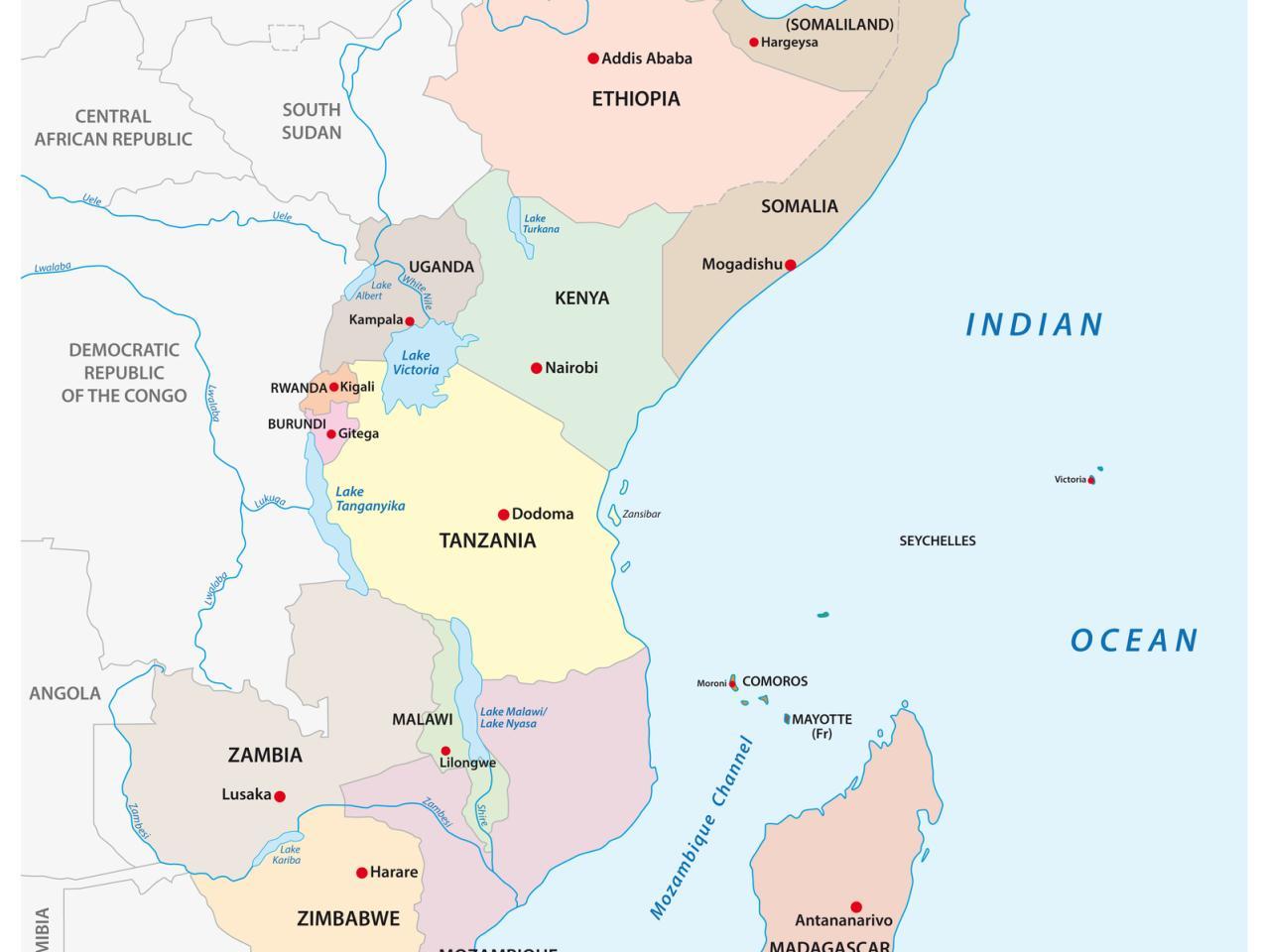
Uganda occupies a strategically important position between East Africa and the Great Lakes region.
Its borders with Kenya, Tanzania, Rwanda, South Sudan and the Democratic Republic of Congo place it at the centre of regional trade corridors, security cooperation and diplomatic initiatives.
Kampala has pursued a foreign policy combining economic integration with active participation in regional security operations.
In eastern Congo, Uganda has cooperated with Congolese authorities in operations against armed groups. In Somalia, Ugandan participation in African Union stabilisation missions has been an important component of the country’s defence policy.
These commitments are shaped by bilateral agreements, military institutions and regional organisations rather than presidential authority alone.
A future leadership transition could therefore attract close attention from neighbouring governments and international partners, particularly regarding the continuity of security cooperation and infrastructure investment.
There is, however, no confirmed evidence that the reported disagreements within the NRM have altered Uganda’s diplomatic relations or military commitments.
African succession precedents offer contrasting lessons
Uganda’s debate can be examined alongside other African political transitions, although the institutional circumstances differ substantially.
In Gabon, Ali Bongo Ondimba succeeded his father, Omar Bongo, following the latter’s death in 2009 and a subsequent presidential election. The family’s political continuity ended abruptly in August 2023 when a military coup removed Ali Bongo from office.
In Togo, Faure Gnassingbé assumed power in 2005 following the death of his father, Gnassingbé Eyadéma, amid a constitutional and political crisis.
In Chad, Mahamat Idriss Déby took control of a military transitional council following the death of his father, Idriss Déby, in April 2021. He was subsequently declared the winner of the 2024 presidential election.
These cases illustrate different forms of political succession involving family relationships, military institutions, constitutional procedures and electoral competition.
They do not establish a common trajectory for Uganda.
Unlike those transitions, Museveni remains in office, and no formal decision has been publicly confirmed designating Kainerugaba as his successor.
The comparison nevertheless highlights the importance of the procedures through which political authority is transferred, rather than family relationships alone.
Three institutional paths towards 2031
The available evidence points to three possible institutional approaches under discussion, without establishing which will ultimately be adopted.
Presidential continuity. Museveni could seek another term, an option reportedly supported by some senior NRM officials. Such a decision would depend on his own intentions and the applicable party and electoral procedures.
A civilian political role for Kainerugaba. The general could leave military command and take up administrative responsibilities, as reportedly suggested by Calvin Echodu. Such a move would create an opportunity to develop civilian political experience, but would not guarantee his nomination.
A broader internal selection process. The NRM could consider other candidates or adopt procedures intended to produce a wider party consensus. No publicly confirmed decision establishing such a process has emerged from the reported November meeting.
Each option would require formal political decisions, and none can be treated as an established outcome.
What the November dispute reveals
The significance of the November 10 meeting lies less in the incomplete vote count than in the public emergence of conflicting accounts of the succession debate within the ruling party.
Four votes in favour and three against cannot establish the position of a 28-member committee. Nor can the suspension of proceedings be interpreted as a definitive rejection.
The subsequent public objections by PLU officials underline the distinction between anonymous accounts of closed-door discussions and formally adopted party decisions.
NRM Electoral Commission chairman Tanga Odoi had also challenged suggestions that earlier discussions in October amounted to an official succession endorsement.
These disagreements are politically relevant because they show that the question of future leadership is being discussed by different figures associated with the governing movement.
Yet they do not establish that Museveni has lost control of the party, that the military is divided or that a leadership transition is imminent.
Those conclusions would require evidence beyond the accounts currently available.
The challenge of institutional continuity
Forty years after Museveni took office, Uganda faces a question that extends beyond the ambitions of one prospective successor.
The country must eventually navigate a transfer of presidential authority within a political system shaped by the long-standing relationship between the NRM, the presidency and the armed forces.
At the same time, it is seeking to consolidate economic growth, expand petroleum production and strengthen its role in regional trade and security.
The ability to sustain those objectives will depend on the effectiveness of public institutions, the predictability of political procedures and the continuity of economic and security commitments.
The November dispute does not, on the available evidence, amount to a political or military rupture. It does, however, demonstrate that the succession question remains unresolved within the governing party.
For Uganda and its regional partners, the central issue is therefore not simply whether Muhoozi Kainerugaba will succeed his father.
It is how a country governed by the same president since 1986 will eventually organise a transfer of power, and whether its political institutions can ensure that the continuity of the state does not depend on the continuity of a single presidency.