Angola at 51: How João Lourenço’s nine years in power have reshaped the economy and the State
- AngolaPolitics
- November 11, 2026
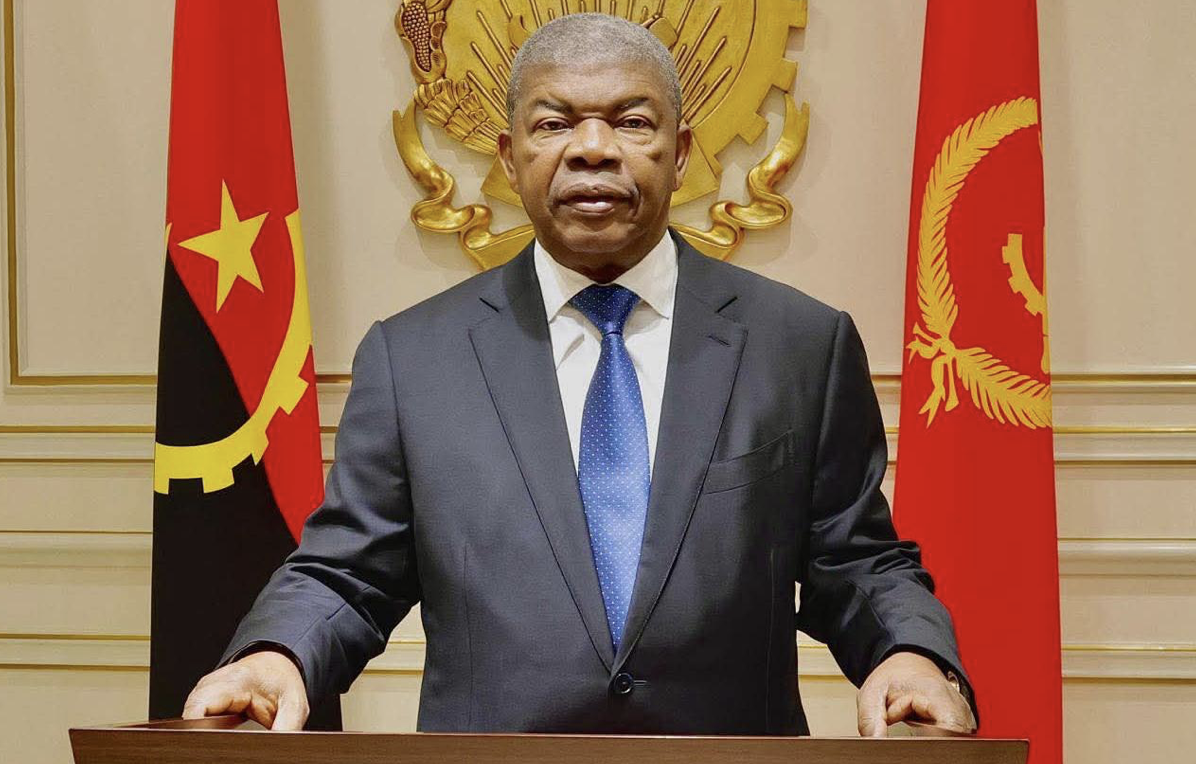

From anti-corruption reforms and fiscal consolidation to economic diversification, infrastructure investment and digital transformation, Angola marks 51 years of independence with a stronger macroeconomic outlook. Yet the country’s next challenge is to turn institutional reform and economic recovery into lasting prosperity for its citizens.
AFRICAHEADLINE | SPECIAL REPORT | NOVEMBER, 2026
LAGOS — Angola marks the 51st anniversary of its independence on Wednesday amid a period of economic recovery, institutional reform and renewed efforts to diversify an economy long dominated by oil. Nine years after President João Lourenço took office, the country has made progress in restoring fiscal stability, strengthening public financial management and expanding investment in infrastructure and essential services.
Since assuming power in September 2017, Lourenço has pursued an economic agenda centred on fighting corruption, reducing sovereign debt vulnerabilities, attracting private capital and creating a more competitive domestic economy.
The results have been significant in several areas. Economic growth has returned after years of recession, inflation has slowed, public debt has fallen sharply relative to gross domestic product, and non-oil industries have become increasingly important contributors to economic activity.
But the transformation remains incomplete. Angola continues to face high unemployment, widespread poverty, significant dependence on hydrocarbon revenues and persistent inequalities in access to public services.
The central question is no longer whether the country has undertaken reforms. It is whether those reforms can deliver sustained improvements in productivity, household incomes and living standards.
Economic recovery gathers momentum as non-oil sectors expand
Angola’s economic performance has undergone a marked shift since Lourenço inherited an economy weakened by the collapse in global oil prices, foreign exchange shortages and mounting fiscal pressures.
A series of monetary, exchange-rate and public finance reforms helped restore a measure of macroeconomic stability, supported by debt restructuring and efforts to improve fiscal discipline.
After emerging from a prolonged recession in 2021, Angola recorded real GDP growth of 1.09 per cent that year, followed by 3.56 per cent in 2022, 1.32 per cent in 2023, 4.95 per cent in 2024 and 3.13 per cent in 2025.
The recovery accelerated in 2026. According to Angola’s National Statistics Institute (INE), GDP expanded 5.32 per cent year on year in the first quarter and 8.74 per cent in the second.
More importantly, non-oil activity grew 9.24 per cent in the second quarter, outpacing the 5.64 per cent expansion recorded in the oil sector.
The figures point to a gradual rebalancing of economic activity, with agriculture, manufacturing, transport, commerce and telecommunications contributing to growth.
Although the quarterly performance is encouraging, it does not establish a full-year growth rate or mean that Angola has overcome its dependence on oil revenues and exports.
Public debt reduction strengthens fiscal position
Fiscal consolidation has been one of the defining features of Lourenço’s economic programme.
In his State of the Nation address on October 15, 2026, the president said public debt had declined from 115.9 per cent of GDP in 2020 to an estimated 51.2 per cent in 2026 , a reduction of 64.7 percentage points.
Public debt/GDP, 2020
115.9%
Public debt/GDP, 2026 estimate
51.2%
The decline reflects debt management measures, fiscal adjustments and changes in the size of the economy, although exchange-rate movements and nominal GDP growth have also influenced the ratio.
International reserves stood at approximately $16.2bn, according to figures presented by the president, providing an estimated eight months of import cover.
The government’s economic policy, coordinated by Minister of State for Economic Co-ordination José de Lima Massano, has placed particular emphasis on fiscal sustainability, prudent debt management, productive investment and strengthening domestic financing mechanisms.
The improvement in debt metrics has increased Angola’s capacity to manage external shocks. Nevertheless, debt-servicing costs, exposure to international capital markets and the country’s dependence on oil-related fiscal revenues remain important risks.
Inflation slows, offering relief to businesses and households
Inflation has been another major test of Angola’s economic management.
Consumer price growth slowed to 8.16 per cent year on year in October 2026, compared with 17.43 per cent a year earlier, according to INE figures.
The decline represents a significant improvement in price stability, creating a more predictable environment for investment and business planning.
However, food and non-alcoholic beverage prices continued to rise by 9.28 per cent year on year, while education costs increased 15.82 per cent.
The figures underline a distinction between lower inflation and lower prices. Although the pace of price increases has moderated, many households continue to face pressure on disposable incomes.
Sustained improvements in purchasing power will depend on wage growth, productivity gains and greater domestic production of essential goods.
Anti-corruption campaign changes the governance landscape
Lourenço’s anti-corruption drive has been among the most politically consequential initiatives of his presidency.
Since 2017, authorities have pursued investigations into alleged misappropriation of public funds, launched asset-recovery proceedings and introduced measures aimed at improving transparency in state-owned enterprises and public procurement.
The campaign marked a departure from aspects of the political and economic system that had developed under former president José Eduardo dos Santos, whose 38-year rule ended in 2017.
Asset seizures, judicial proceedings and investigations involving politically connected business interests signalled a greater willingness by the authorities to challenge established networks of influence.
The reforms have also sought to strengthen financial oversight and improve accountability in the management of public resources.
Yet the long-term effectiveness of the campaign cannot be measured solely by the value of assets identified or seized.
A comprehensive assessment requires a distinction between assets frozen, assets recovered through final judicial decisions and funds actually returned to the public treasury.
The durability of the reforms will ultimately depend on judicial independence, consistent enforcement, transparency and the prevention of new forms of political or commercial favouritism.
Healthcare investment expands national capacity
Public healthcare has received substantial infrastructure investment during Lourenço’s presidency.
According to figures presented in the October 2026 State of the Nation address, 736 healthcare facilities were built between 2017 and the first quarter of 2026, increasing the national network from 2,612 to 3,348 units.
That represents an expansion of approximately 28 per cent.
The investments have included general hospitals, municipal facilities and primary healthcare centres, alongside recruitment and training programmes designed to strengthen the health workforce.
The expansion reflects an effort to improve access to medical services outside major urban centres and reduce pressure on referral hospitals.
However, infrastructure growth alone does not establish improvements in healthcare outcomes.
The next phase will require sustained investment in medical supplies, equipment maintenance, specialist training and the quality of primary care.
Reductions in maternal and infant mortality, improved treatment access and more equitable geographical coverage will provide stronger measures of the sector’s performance.
Education and skills development become economic priorities
Education has increasingly been positioned as a central component of Angola’s long-term economic transformation.
Government investment has focused on school construction, rehabilitation of educational facilities, teacher training, vocational education and technical skills development.
The strategy reflects the demands of a young population and an economy seeking to expand beyond hydrocarbons.
Manufacturing, commercial agriculture, logistics, digital services and financial technology require a workforce with stronger technical and professional qualifications.
Closer co-operation between educational institutions and businesses could help address skills shortages and improve employment prospects.
Nevertheless, the quality of learning, school completion rates, access to education in rural areas and the transition from training into employment remain critical challenges.
Agriculture and manufacturing underpin diversification strategy
Diversification has been a central objective of Lourenço’s economic policy, reflecting the vulnerability created by Angola’s heavy dependence on oil exports.
The government has introduced programmes intended to stimulate domestic production, reduce import dependence and increase non-oil exports.
These include the Production Support, Export Diversification and Import Substitution Programme, known as PRODESI, and PLANAGRÃO, a national initiative to increase grain production.
Additional programmes have targeted fisheries, food processing, industrial development and agricultural value chains.
The initiatives aim to expand local production, strengthen food security, reduce foreign exchange demand and create employment opportunities.
The strong performance of non-oil activity in the second quarter of 2026 provides an encouraging indication of the economy’s productive potential.
However, a lasting transformation will require improvements in productivity, energy reliability, transport infrastructure, access to finance and export competitiveness.
Import substitution will be economically sustainable only if domestic industries can produce competitively without relying indefinitely on protection or public subsidies.
Lobito Corridor positions Angola as a regional logistics hub
The Lobito Corridor has emerged as one of Angola’s most strategically important infrastructure projects.
Connecting the Atlantic port of Lobito to the Democratic Republic of Congo and Zambia, the transport network could strengthen Angola’s position in regional and international supply chains.
The corridor has attracted interest from international investors and development partners, including the United States and European institutions.
Its strategic importance extends beyond the transport of copper, cobalt and other minerals from Central Africa.
Industrial parks, logistics platforms, agricultural processing facilities and commercial services could develop along the route, creating opportunities for domestic businesses and employment.
For Angola, the economic opportunity lies not simply in collecting transit revenues but in building industrial and service activities around the corridor.
Its long-term contribution will depend on investment execution, transport efficiency and the ability to integrate local producers into regional value chains.
Digital transformation seeks to modernise public administration
Digital government has become an increasingly prominent component of Angola’s public-sector reform agenda.
Programmes covering digital identity, electronic signatures, interoperability, cybersecurity and remote access to government services are intended to simplify administrative procedures and reduce transaction costs.
The initiatives could improve the relationship between citizens, businesses and public institutions by making services more accessible and administrative processes more transparent.
Digital systems may also strengthen public financial management through improved payment traceability, data integration and expenditure monitoring.
For businesses, streamlined licensing, registration and compliance procedures could reduce administrative barriers and improve the investment climate.
The benefits, however, will depend on implementation, cybersecurity safeguards, reliable telecommunications infrastructure and the digital inclusion of communities outside major urban centres.
Private investment gains importance as the state reforms its economic role
Lourenço’s administration has sought to increase private-sector participation through privatisation, financial-sector reform and improvements in the business environment.
The government’s privatisation programme has aimed to reduce direct state involvement in selected commercial activities while encouraging investment and competition.
According to official figures, financing extended to economic operators increased from Kz4.4tn in 2022 to Kz8.9tn in May 2026.
The financial inclusion index reached 54.8 per cent, according to figures presented in the State of the Nation address.
The expansion of financial services and credit availability could support small and medium-sized enterprises, agricultural producers and emerging industrial businesses.
But financing growth will need to be accompanied by lower borrowing costs, stronger credit assessment and improvements in the operating environment.
A more competitive private sector will also require predictable regulation, effective contract enforcement and greater confidence in commercial institutions.
Employment and poverty remain the central development test
Despite macroeconomic progress, Angola continues to face significant social challenges.
According to INE, unemployment stood at 21.5 per cent in the second quarter of 2026.
The country’s monetary poverty rate was estimated at 40.6 per cent in the 2018–19 household survey, although that historical figure cannot establish the poverty rate in 2026.
The persistence of unemployment and informal economic activity illustrates the difficulty of translating aggregate growth into broad-based improvements in living standards.
For a country with a young and expanding population, employment creation will be among the most important measures of economic success.
The expansion of manufacturing, agriculture, construction, logistics and digital services offers potential opportunities, but sustained progress will depend on investment, workforce skills and business productivity.
Ultimately, stronger GDP growth will have limited social impact unless it generates better-paid jobs, improves household purchasing power and expands access to essential services.
National reconciliation adds a political dimension to reform
Alongside economic policy, Lourenço has pursued initiatives intended to strengthen national reconciliation and acknowledge difficult chapters of Angola’s political history.
These have included public recognition of victims of past political conflicts, commemorative initiatives and the inauguration of a memorial dedicated to victims of political violence in October 2026.
The measures form part of a broader effort to promote historical recognition and national unity in a country shaped by decades of conflict.
Their long-term significance will depend on public trust, institutional accountability, respect for fundamental rights and the consolidation of political pluralism.
From macroeconomic stability to broad-based prosperity
Angola’s economic trajectory since 2017 suggests that the country has made progress in addressing several structural weaknesses inherited from earlier periods.
Public debt has declined relative to GDP, inflation has moderated, non-oil sectors have gained momentum and investment in infrastructure and public services has expanded.
The government has also sought to strengthen economic institutions, attract private capital and reposition Angola within regional trade and investment networks.
Yet important vulnerabilities remain.
Oil continues to play a dominant role in export earnings and government finances. High unemployment, poverty and uneven access to public services continue to constrain development outcomes.
The next stage of reform will therefore be judged less by the number of initiatives announced than by their measurable impact on productivity, household incomes and economic opportunity.
Angola’s agricultural potential, mineral resources, Atlantic coastline, logistics infrastructure and young population provide substantial opportunities for future growth.
Realising that potential will require sustained fiscal discipline, stronger institutions, more effective public investment and a private sector capable of creating competitive businesses and formal employment.
Independence at 51: A new phase in Angola’s development
Fifty-one years after achieving independence from Portugal on November 11, 1975, Angola is navigating another important phase in its economic and institutional development.
Political independence established national sovereignty. The end of the civil war in 2002 created the foundations for reconstruction. The reforms introduced since 2017 have sought to strengthen macroeconomic stability, modernise state institutions and diversify the productive economy.
Lourenço’s nine years in office have brought identifiable changes in economic management, governance priorities and infrastructure investment.
Those achievements provide grounds for cautious optimism, but they do not amount to a completed economic transformation.
The defining test of Lourenço’s legacy will be whether Angola can convert fiscal stability, institutional reform and non-oil growth into lasting improvements in employment, incomes and living standards.
For Angola, the challenge of the next decade is to ensure that the economic foundations built since 2017 deliver a more diversified, productive and inclusive economy, one in which the benefits of growth extend beyond the state and major industries to the wider population.