Angola’s digital sovereignty: An imperative for government
- AngolaScience & Tech
- August 25, 2026
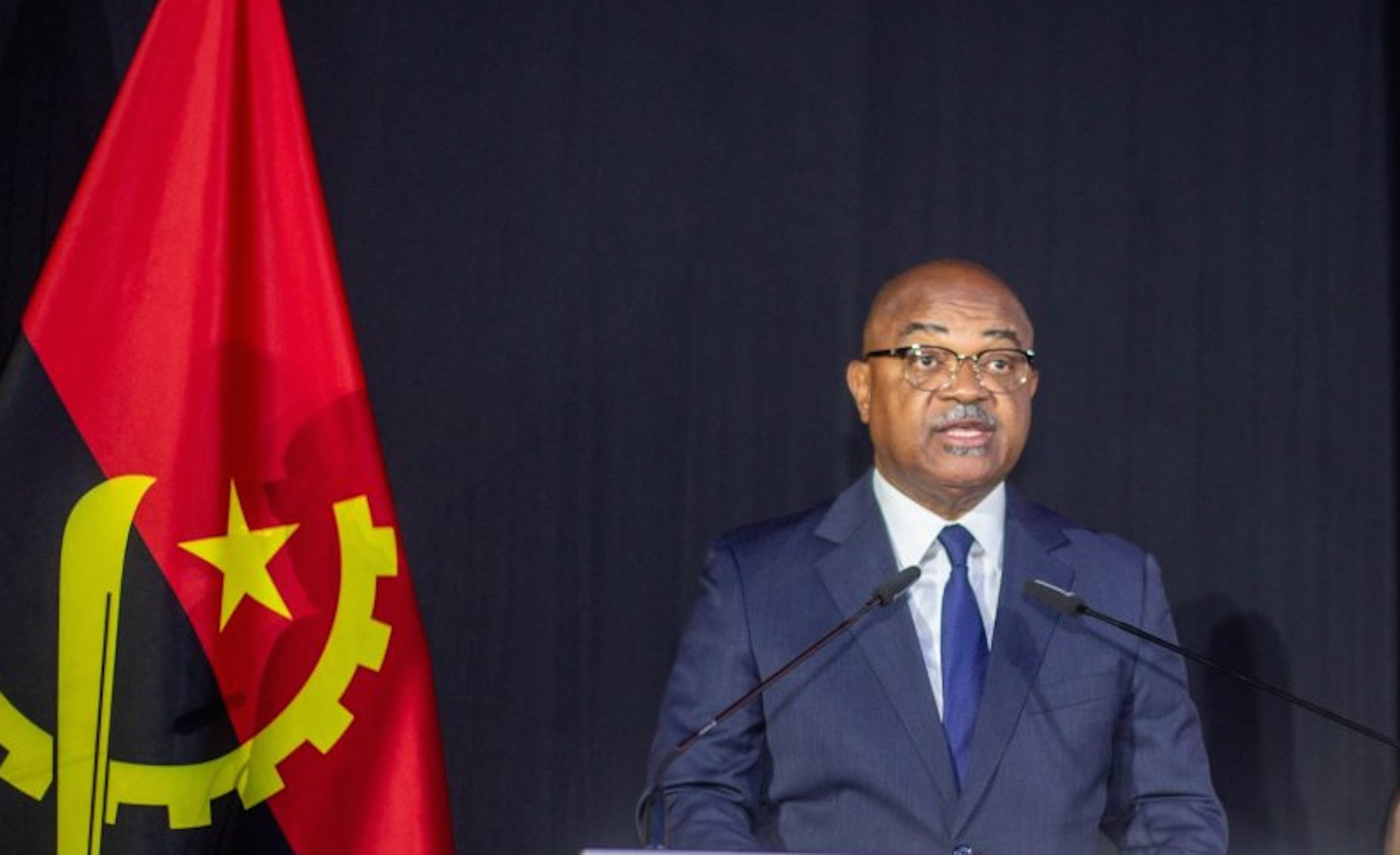

Sovereignty has always meant a state’s ability to decide its own future, protect its territory, defend its institutions and uphold the rights of its citizens. In the 21st century, however, a growing share of national life now unfolds in a territory without physical borders: cyberspace.
By Mário Augusto da Silva Oliveira
Minister of Telecommunications, Information Technology and Media
It carries public administration data, family communications, banking transactions, health records, educational content, economic information and the systems underpinning energy, transport, justice and security.
It is in this context that digital sovereignty must be understood, not as technological isolation or as Angola closing itself off from the world, but as the Angolan state’s effective ability to govern its digital space, protect essential data and infrastructure, choose technologies in line with the national interest, train skilled professionals, ensure continuity of services and participate in the digital economy with security, dignity and strategic autonomy.
Digital sovereignty is therefore not a luxury reserved for the most technologically advanced countries. It is an imperative for every state seeking to preserve genuine independence.
A country may enjoy formal political sovereignty while remaining excessively dependent on networks, data centres, satellites, platforms, software and expertise controlled beyond its reach. Reducing that vulnerability is both a responsibility today and a safeguard for future generations.
A step-by-step process under President João Lourenço
Since 2017, President João Manuel Gonçalves Lourenço’s administration has linked information and communication technologies to state reform, economic diversification, social inclusion and Angola’s international standing. This evolution can be understood in four complementary stages.
- Infrastructure and market opening: building the foundations
The first stage required strengthening the physical foundations of connectivity. Without national fibre-optic networks, submarine cables, data centres, transmission systems, well-managed radio spectrum and mobile coverage, digital transformation would remain little more than an aspiration.
The Government therefore continued to expand and modernise the National Terrestrial Fibre-Optic Network, connect Angola to international submarine cables and develop mobile broadband networks. The arrival of a new mobile operator increased competition and broadened the range of services. The shift to next-generation networks created the conditions for faster services, business digitisation and applications in health, education, agriculture, industry and public administration.
In this area, submarine cables are strategic assets for Angola’s digital sovereignty. WACS connects Angola to Africa’s west coast and Europe, providing a vital route to major international data and content hubs.
SACS, which entered service in 2018, established the first direct, high-capacity submarine link between Africa and South America, connecting Luanda to Fortaleza, Brazil, reducing latency and allowing part of the traffic to bypass Europe.
Angola’s participation in 2Africa, a system spanning about 45,000 kilometres and regarded as the world’s largest open-access submarine cable system, expands the capacity, diversity and redundancy of routes linking Africa, Europe and Asia.
Together, these infrastructures reduce dependence on a single international route, improve resilience to faults or disruptions and strengthen Angola’s position as a regional telecommunications and data-transit hub.
This infrastructure is not merely for phone calls or access to social media. It is a national digital highway. Just as physical roads carry people and goods, telecommunications networks carry information, knowledge, public services and economic value. Defending them therefore means defending the country’s day-to-day functioning.
- Space capability and communications autonomy: the Angosat-2 milestone
The second stage was marked by Angosat-2 entering service. After contact with Angosat-1 was lost, the Angolan state maintained its strategic vision and turned a setback into an institutional lesson.
Angosat-2 expanded the country’s sovereign communications capacity, with particular importance for remote communities, border areas and places where terrestrial networks are more expensive to deploy.
The satellite supports telecommunications, institutional connectivity, telemedicine, distance learning, observation and digital inclusion. The Conecta Project puts that capability to practical use by bringing internet access to schools, hospitals, public spaces and previously unconnected communities, including through Angosat-2 capacity.
In 2024, the Government reported that schools and public spaces in 10 provinces had internet access under these initiatives, alongside telemedicine centres in six provinces.
The strategic value of the National Space Programme is not limited to the equipment in orbit. It includes the Mission Control Centre, the training of Angolan engineers, knowledge transfer and the ability to plan space services around national priorities.
This, too, is digital sovereignty: owning infrastructure, but above all mastering the knowledge needed to operate it, maintain it and turn it into benefits for the population.
- Digital transformation of the state: putting technology at the service of citizens
The third stage marks the transition from connectivity to digital government. The Public Administration Digital Transition Agenda 2027, the GOVERNO.AO Agenda, approved a portfolio of more than 200 initiatives designed to make public services simpler, faster, more transparent and more accessible.
Its core elements include interoperability between public systems, digital identity, electronic payments, electronic signatures, paperless processes and a single window for different services. The principle is straightforward: citizens should not have to act as couriers between institutions of the same state, repeatedly submitting documents the administration already holds. Secure interoperability allows public bodies to exchange only the data strictly required, in compliance with the law and the right to privacy.
The planned Digital Public Infrastructure, with interoperability and data-integration solutions, should serve as the common backbone on which different sectors build services. National Broadband, the National Data Centre and the National Cloud complete the architecture: connectivity to carry data; data centres and cloud systems to host and process it; identity to authenticate users; interoperability to enable communication; and cybersecurity to provide protection.
The 2023–2027 White Paper on Information and Communication Technologies, approved by Presidential Decree No. 272/24, sets out this vision and aligns the sector with the 2023–2027 National Development Plan. Meanwhile, the Digital.ao ecosystem and startup incubation and financing programmes aim to empower young Angolans to create technology, businesses, applications and jobs.
It is worth recalling a statement by President João Lourenço at the G77+China Summit in Havana in 2023: ‘Angola has made investment in science, technology and innovation one of its priorities,’ as a strategy for tackling the challenges of diversification, productivity, competitiveness and the digital and energy transitions. The statement makes clear that technology policy is not merely sectoral; it is part of the national development strategy.
- Security, trust and regulation: protecting what has been built
The more the state, businesses and families depend on digital systems, the greater the potential impact of an attack, fraud, data leak or deliberate disinformation campaign. Digitising without protection would simply shift vulnerability from paper to the network. The most recent phase of governance has therefore consolidated the legal and institutional pillars of digital sovereignty.
In 2022, President João Lourenço told the National Assembly: ‘We will prepare the National Cybersecurity Strategy, focused on safeguarding and defending critical infrastructure and vital information services.’
That commitment took shape in 2025 with the National Cybersecurity Strategy, the National Cybersecurity Council and the National Cybersecurity Centre. In 2026, the framework advanced with Parliament’s approval of the Cybersecurity Law and the entry into force of Law No. 6/26 on False Information on the Internet.
The two laws and their practical relevance to digital sovereignty
The two laws address different but complementary dimensions. The Cybersecurity Law chiefly protects systems and services; the Law on False Information chiefly protects the integrity of the information space and the rights exercised within it. One safeguards infrastructure; the other addresses deliberate conduct that undermines public trust.
The Cybersecurity Law: prevention, resilience and response
The Cybersecurity Law received final approval from the National Assembly on 12 August 2026, with 104 votes in favour and 54 against. At the time of writing, it was awaiting presidential assent and publication in the Official Gazette. That distinction is legally necessary because parliamentary approval and entry into force are separate stages.
The legislation establishes Angola’s national legal framework for cybersecurity and protects the confidentiality, integrity and availability of networks and information systems. In simple terms:
– Confidentiality means data may be viewed only by those authorised to do so;
– Integrity means data and systems cannot be improperly altered;
– Availability means services must remain accessible when society needs them.
The law applies to the public administration, critical-infrastructure operators, essential-service providers and digital-service providers. It sets out risk-based security requirements, incident prevention and management, vulnerability reporting, auditing, business continuity, accountability and penalties.
In practice, an entity responsible for energy, telecommunications, banking, health, transport or public databases cannot simply install computers and hope nothing happens. It must identify risks, adopt technical and organisational measures, appoint responsible officials, test systems, maintain continuity plans, train staff and report significant incidents to the competent authorities. If a hospital suffers an attack that blocks clinical records, digital sovereignty is reflected in the country’s ability to detect the attack, contain the damage, recover the data, maintain patient care and investigate the incident.
The National Cybersecurity Centre is expected to coordinate prevention, monitoring, alerts and response, while the National Cybersecurity Council provides high-level strategic coordination. National and institutional incident-response teams turn security into a permanent operational capability. The central principle is clear: reacting after an attack is not enough; the country must anticipate, test, cooperate and recover.
Law No. 6/26: responsibility in the information ecosystem
Law No. 6/26 of 4 August, on False Information on the Internet, entered into force upon publication. It defines false information, or fake news, as the deliberate dissemination of false, misleading, fabricated, impersonated or manipulated content intended to deceive, improperly influence public opinion or harm fundamental rights and constitutionally protected values.
The decisive word is deliberate. A good-faith mistake, an opinion, political criticism, clearly identifiable satire or a debatable interpretation is not automatically equivalent to an intentional act of falsification. Legitimate enforcement of the law must establish the elements set out in the legislation and respect the Constitution, the right to be heard, the right to a full defence, freedom of expression, freedom of the press and the principle of proportionality.
The law applies to individuals and legal entities that produce or disseminate false information in Angola and may cover acts committed abroad when directed at an Angolan audience.
It addresses phenomena such as deepfakes, inauthentic accounts, manipulated content and artificial dissemination networks. It also sets transparency and cooperation obligations for digital platforms and provides for administrative, civil and criminal liability, depending on the nature and seriousness of the conduct.
Consider an AI-generated video falsely attributed to a public official and announcing the collapse of a bank. Coordinated dissemination could trigger mass withdrawals, economic losses and public disorder. In another example, false public-health guidance could put lives at risk. The law seeks to enable a proportionate response to such conduct by holding intentional perpetrators accountable and requiring platforms to cooperate.
But defending information sovereignty cannot be reduced to sanctions. The best defence against disinformation begins with timely public information, open data, professional journalism, media literacy, independent fact-checking and citizens able to assess sources.
A well-informed society is harder to manipulate. Enforcement should therefore be accompanied by institutional transparency, clear criteria, oversight, access to justice and public accountability. Security and freedom are not enemies: in a constitutional order, they reinforce each other when the law is necessary, precise, proportionate and subject to oversight.
How ICTs serve the national interest
Information and communication technologies defend the country’s core interests whenever they:
- ensure sovereign communications among institutions, provinces and citizens;
- protect personal data, public records and strategic information;
- ensure continuity in energy, banking, health, transport and telecommunications;
- bring public services closer to communities and reduce bureaucracy, costs and opportunities for corruption;
- connect schools, hospitals, rural communities and border areas, helping to close the digital divide;
- support economic diversification, startups, innovation and youth employment;
- strengthen the ability to prevent, detect and respond to attacks;
- protect public debate from deliberate manipulation operations without suppressing legitimate criticism;
- keep essential data and capabilities within Angolan territory and jurisdiction; and
- enable Angola to cooperate internationally without surrendering sovereign decision-making over its interests.
Sovereignty through openness, capability and responsibility
Angola’s digital sovereignty will not be achieved through a single satellite, one law or one data centre. It emerges from the coordination of infrastructure, legislation, institutions, human expertise, domestic industry, digital education, scientific research and international cooperation.
The course begun and deepened under President João Lourenço follows a coherent sequence: connect the country; expand competition and access; acquire space capability; digitise the state; integrate services; protect infrastructure; hold harmful conduct to account; and train Angolans to design, operate and defend the ecosystem.
The next challenge is to turn every project into a reliable service, every investment into national expertise and every rule into balanced institutional practice. Results must be measured: effective coverage, quality and affordability of access, service availability, incident-response times, the number of professionals trained, technology companies created and citizen satisfaction.
Angola must remain open to innovation, investment and cooperation, while being sufficiently prepared to ensure that no external dependency, cyberattack or information manipulation compromises the functioning of the state or the rights of its people.
That balance, between openness and autonomy, innovation and security, freedom and responsibility, defines modern digital sovereignty.
Digital sovereignty requires Angola to have the capacity to manage, protect and commercially develop its cables, landing stations, data centres and the traffic that flows through them.
Ultimately, digital sovereignty is citizens’ sovereignty: the right to access, create, communicate and prosper in a secure digital environment; the right to trust state services; and the right to know that the nation’s essential data, networks and institutions are protected. For Angola, it is therefore a historic imperative.